
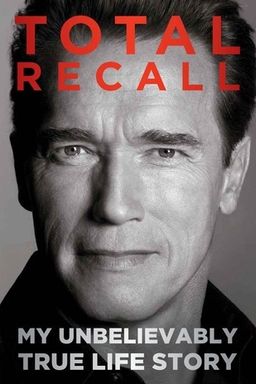
Total Recall cover

Total Recall

by Arnold Schwarzenegger

Total Recall chronicles Arnold Schwarzenegger''s inspiring journey from a small Austrian village to Hollywood stardom and political leadership. Discover how his unyielding determination and adaptability led to transformative success across multiple fields, offering powerful lessons in ambition and resilience.

Discipline, Reinvention, and the American Dream

What drives a person from a rural Austrian village to global stardom, business success and political leadership? Arnold Schwarzenegger’s life story argues that discipline and vision, not extraordinary luck, lie at the core of sustained achievement. His memoir traces how a boy hardened by postwar scarcity becomes a bodybuilder, entrepreneur, actor, investor, governor and reformer—all through relentless adaptation and self‑reinvention. The unifying thread is simple but challenging: use structure and imagination to transform constraints into engines of growth.

Born in 1947 in Thal, Austria, Arnold learns early that deprivation can fuel ambition. His father’s strict police‑drill order and his mother’s frugality set the rhythm of work and perseverance. Carrying coal, chopping wood, and improvising for limited resources make him view effort as normal. Films of America—its freedom and abundance—become his inner horizon, a visual north star guiding every decision.

Hunger and Habit

Scarcity in Thal teaches that strength and imagination can expand one’s world. Young Arnold learns the link between small economic exchanges and progress—selling ice cream at Thalersee or polishing boots for coins. Each task is an experiment in agency. Even his early hustles foreshadow the systematic entrepreneurship that will define his later years. By his teens, he already speaks in the language of goals, not wishes.

Discipline and Experimentation

As the memoir unfolds, you watch Arnold recreate himself through structured practice: training his body in the Austrian woods, mastering tank mechanics in the army, rehearsing each movement in front of mirrors, then later repeating acting lines or stump speeches with the same rigor. Each new identity—bodybuilder, actor, businessman, governor—follows the same loop: learn the fundamentals, practice them obsessively, promote results and adapt again.

He never abandons the core rule he invented in Thal: routine is liberation. It sounds paradoxical but works because routines eliminate distraction. In the gym or during political crises, he builds checklists, sets quantitative goals and measures progress relentlessly. (Note: the book echoes modern performance psychology by James Clear and Anders Ericsson—deliberate practice reforms instinct.)

Reinvention in Motion

Arnold’s story is not linear; it’s an upward spiral. Each turn—emigration, competitions, acting, politics—recycles earlier lessons: engineering, visualization, publicity and calculated risk. The tank corps toughens him; bodybuilding gives him tools of measurement and showmanship; entrepreneurship teaches operations and leverage; acting trains communication; politics fuses them all into leadership. Throughout, he carries the immigrant’s playbook: observe, imitate, internalize and then outperform the natives on their own field.

Ambition Meets Ethics

The book also confronts contradictions—steroid use, business failures, scandal and secrecy. Yet the narrative insists that acknowledging flaws and learning publicly renews credibility. Each fall reorganizes his base for the next ascent. His resilience is procedural: analyze the damage, repair relationships, and start a new project that reestablishes purpose. That steady renewal process—seen after his heart surgery and public scandal—illustrates how strength is less about muscle than about elastic recovery of will.

From Private Habit to Public Mission

Later sections expand private ambition into civic goals: creating after‑school programs, leading California through crisis, and championing environmental reforms. He converts personal discipline into organizational discipline. Where the gym taught him repetitions, government teaches compromise; where acting taught him image management, politics teaches him institutional design. In effect, he scales his self‑training model to societal systems: visualize, build coalitions, iterate, communicate results.

Taken together, Schwarzenegger’s memoir reads like a treatise on self‑construction under extreme visibility. It shows that motivation alone isn’t enough; you need an infrastructure of habit, constant learning, and the courage to outgrow earlier identities. For readers, the final implication is both moral and practical: anyone can start from scarcity, but only those who systematize effort—turning aspiration into frameworks—can transform the dream of freedom into sustainable achievement.


Forging Will and Identity

Arnold’s first shaping came through austerity and repetition. Growing up in post‑war Thal, he experiences rationing and strict parental discipline. His father Gustav’s drills—rise early, finish chores, obey hierarchy—merge with his mother’s thrifty pragmatism to form a blueprint of self‑sufficiency. Carrying coal, fetching water, biking miles to gymnasiums—all this cultivates endurance and the mental reflex to convert boredom into productivity.

Scarcity as Teacher

Where others saw deprivation, young Arnold discovered training grounds. He watches American newsreels in Graz’s cinemas, seeing Tarzan and Eisenhower, and imagines himself part of that cinematic vastness. This vision becomes his magnet: America equals possibility. The idea of immigration precedes the act—it fuels every decision until he crosses the Atlantic.

His small hustles—selling ice cream, working in sawmills, saving to buy a tracksuit—signal an entrepreneurial mind long before success. More than money, these jobs teach pattern recognition: find a need, act boldly, and reinvest gains. These lessons echo later in his mail‑order enterprises and real estate plays.

The Tank and Responsibility

Army service strengthens both his frame and his temperament. Driving a 50‑ton Patton tank forces focus and technical care; a single missed brake leads to disaster, as when his tank slid into a lake and he had to organize recovery. That near‑failure teaches ownership: when things break, fix them methodically. This same problem‑solving mindset later surfaces in film production and governance. The tank crew’s hierarchies also train him to lead by demonstration rather than demand—an ethic that recurs in gyms and cabinets alike.

Lesson

Discipline isn’t merely enforced from outside; it is engineered internally through routines that survive new environments.

By the time Arnold leaves Austria, he possesses three vital assets: a disciplined body, mechanical know‑how, and a mental model—envision the goal, map its steps and carry out the plan regardless of discomfort. These habits, born of scarcity, set the foundation for everything from bodybuilding victories to political endurance decades later.


Building the Body and the Brand

In Munich gyms and later in Venice, Arnold refines himself from an eager learner into a master strategist of training and image. His fascination with Reg Park, Steve Reeves and Joe Weider’s magazines gives him a self‑education in both physiology and marketing. He becomes a scientist of muscle: experimenting with volume, drop sets, recovery, nutrition and posing like a performance art. Each innovation serves both physical growth and publicity impact.

Science Behind Strength

Arnold’s double‑split routines, calf specialization and 'shock' principles reveal curiosity at work. He treats the body as a laboratory: measure, adjust, repeat. Unlike contemporaries who simply lifted heavier, he combines powerlifting intensity with aesthetic sculpting. Even acknowledging steroid use, he frames it as an era’s context and later supports anti‑doping reforms. The essential takeaway is iterative experimentation: copy, test, refine and document—methods that later apply equally to acting rehearsal or fiscal policy.

From Body to Business

Arnold quickly grasps that fame without structure evaporates. In Munich he publishes mail‑order booklets, manages Universum gym and learns promotion—guerrilla posters, press stunts, photo ops. When he moves to America, he scales this formula: teaching seminars, endorsing products and investing earnings into rental properties. The principle: performance generates credibility; packaging converts it to income.

His collaboration with Franco Columbu in masonry and real estate marks the start of financial independence. Arnold treats every enterprise like weightlifting—progressive overload. One building becomes two, one brochure becomes a product line. By mastering fulfillment and PR, he transforms personal reputation into a compounding brand years before influencer culture existed.

Principle: Pair craft mastery with entrepreneurial distribution; otherwise excellence remains invisible.

The outcome is a dual identity—athlete and marketer—capable of earning not only trophies but equity. This fusion of muscle and marketing sets the stage for the cultural breakthrough that follows with Pumping Iron.


Media, Spectacle, and Mainstream Breakthrough

The 1977 documentary Pumping Iron transforms bodybuilding from underground sport to artful spectacle—and Arnold from athlete to cultural icon. Through George Butler and Charles Gaines, the sport gains narrative: rivalry, humor, humanity. The film humanizes strength and reframes physical aesthetics as creative performance, much as Warhol reframed consumer culture as art.

Story as Vehicle

Audiences connect more to characters than to measurements. The Arnold–Lou Ferrigno rivalry provides emotional structure, translating competition into storytelling. PR strategist Bobby Zarem amplifies reach—museum events at the Whitney, celebrity screenings and a Cannes stunt with Crazy Horse dancers. This multiplatform publicity establishes a blueprint for modern sports marketing: create a narrative, stage unique imagery and distribute widely.

Acting as Reinvention

After Pumping Iron, Arnold pivots deliberately into acting. From Hercules in New York to Stay Hungry, he studies diction with Robert Easton, emotional technique with Eric Morris and scene rhythm from Bob Rafelson. His willingness to slim down, unlearn bodybuilder poses and embrace coaching demonstrates ego control—an essential reinvention principle. He weaponizes difference: keeps the accent, refines the charisma, and turns apparent limitations into brand identifiers. (Note: much as Sean Connery’s brogue or Stallone’s slur became trademarks.)

By the time Conan and Terminator arrive, Schwarzenegger has perfected a hybrid persona—mythic power plus light irony—that appeals across audiences. Every public act, from talk shows to bodybuilding expos, now reinforces a single distinctive image.

Insight: Turn the qualities others call obstacles—accent, size, origin—into your brand assets; consistency converts oddity into familiarity.

Through spectacle and smart self‑promotion, Arnold executes the transition from athlete to entertainer, teaching that fame built on authenticity and narrative coherence endures beyond any single domain.


Enterprise and Investment Mindset

Behind fame lies an operator thinking like an investor. Schwarzenegger’s financial independence begins with small apartments and matures into partnerships with developers like Al Ehringer. He leverages the same principles that shaped his physical training—measured risk, incremental gains, and expert mentorship.

Scaling Real Estate

Arnold’s Santa Monica expansion demonstrates compound leverage: use the profit from one building to finance the next; exploit historic tax credits to boost returns; partner with locals for execution. Main Street redevelopment combines community benefit with financial gain—a precursor to impact investing. Administrative rigor—filing systems, delegation to Ronda Columb—keeps ventures disciplined, converting celebrity cashflow into durable assets.

Institutional Investing and Risk

Later, under adviser Paul Wachter, he treats capital like a renewable engine: diversify, secure governance, and structure downside protection. Ventures from Planet Hollywood to leasing a Boeing 747 embody both ambition and caution. The restaurant chain’s boom and bankruptcy reinforce his key rule—own but understand operations. The 747 lease shows how he applies real‑estate logic to aircraft: buy, lease, manage residual value. Each project, win or loss, refines his literacy in risk versus reward.

Guiding Rule

Fame generates access; structure preserves wealth. Use experts and insist on equity rather than one‑off endorsement checks.

Through disciplined investment, Arnold ensures independence from Hollywood’s volatility, proving that strategic business management can extend artistic freedom rather than limit it.


Leadership, Service, and Political Transformation

Schwarzenegger’s civic journey mirrors his career arc: start local, learn by doing, then institutionalize solutions. His after‑school initiative—sparked by visits to East L.A.’s Hollenbeck Youth Center—evolves into California’s Proposition 49, funding years of after‑school programs for millions. The practical formula: observe a working model, expand through partnerships, then legislate permanence.

From Citizen to Candidate

Public service leads naturally into politics. During the 2003 recall of Governor Gray Davis, Arnold recognizes an opening for reform. He assembles bipartisan advisers (Warren Buffett, George Shultz), campaigns via pop‑culture channels, and translates charisma into credibility. His slogan “Join Arnold” reflects inclusiveness over partisanship. The campaign fuses showmanship with policy literacy—a rare mix in modern politics.

Governing by Initiative and Pragmatism

In office, he functions like a systems mechanic. When legislative gridlock stalls reforms, he uses California’s direct‑vote initiatives as leverage to negotiate bipartisan deals on workers’ compensation, infrastructure and climate policy. He recruits talent across party lines, favoring competence over ideology. His wildfire and disaster responses reflect his training ethos—rehearse scenarios, act decisively, and reduce bureaucratic lead time. This is governance as disciplined improvisation.

Governance Insight: Leadership under pressure is less about ideology and more about logistics—knowing whom to call, how fast to move and when to improvise.

By applying athletic preparation to bureaucracy, Schwarzenegger redefines the role of a celebrity executive: use popularity not for ornament but as tactical leverage to push practical reforms.


Resilience, Family, and Ethical Repair

No success story is complete without collapse and repair. Arnold’s memoir exposes vulnerability: his brother’s death, his father’s passing, the heart‑valve surgery and later the scandal of his hidden child. These moments transform the theme from ambition to moral endurance.

Health and Mortality

Facing congenital heart disease in 1996, he chooses a tissue valve to preserve physical freedom, accepting the risk of repeat surgery. His secrecy towards family before the operation reflects the old reflex of internal control—but recovery teaches transparency. The media fallout and insurance panic temporarily derail projects like Terminator 3. His counterstrategy—visible rehabilitation—turns healing into public narrative, demonstrating how managing perception can safeguard one’s career.

Family Crisis and Accountability

Years later, revelations about his son with housekeeper Mildred force confrontation. The memoir’s candor distinguishes confession from excuse: secrecy spared pain short‑term but inflicted greater harm later. Through counseling and deliberate restitution—financial support, open conversations, stable rituals—he begins reconciliation with Maria Shriver and their children. This episode reframes leadership as personal responsibility.

Moral Principle: Strength also means admitting fragility; the same discipline used for training can rebuild trust when guided by honesty and repetition.

Through illness and scandal, Schwarzenegger illustrates emotional intelligence learned the hard way: acknowledge faults promptly, communicate directly, and apply procedural rigor to healing as once applied to weights or policy.


Rules for a Life of Action

The memoir closes with distilled principles—ten rules that unify his decades of transformation. These are not abstractions but verified habits.

Key Principles

  • Own the whole game: Choose equity and responsibility over easy endorsement.
  • Hear 'yes' in every 'no': Resistance signals importance; refine, don’t retreat.
  • No Plan B: Commitment focuses the mind; alternatives dilute intensity.
  • Repetition beats inspiration: Make excellence habitual through drills and rehearsal.
  • Stay hungry: Curiosity must outlive achievement.

These maxims reflect his synthesis of physical, mental and moral disciplines. Whether negotiating with bankers or lifting barbells, he keeps the same metric: execution over talk. His reverence for figures like Gorbachev and Mandela also shows admiration for leaders who risk popularity to achieve structural change—a secular form of courage he aspires to emulate in politics.

Final Thought: Build a system around your drive. Passion fades; systems endure.

Thus, Schwarzenegger’s lasting gift is procedural: show up, measure progress, reinvent often and never outsource ownership of your life. Every transformation—from Thal to California—starts the same way: visualize a version of yourself not yet real and train until it exists.

Dig Deeper

Get personalized prompts to apply these lessons to your life and deepen your understanding.

Go Deeper

Get the Full Experience

Download Insight Books for AI-powered reflections, quizzes, and more.