
Idea 1
Technology, Power, and Responsibility
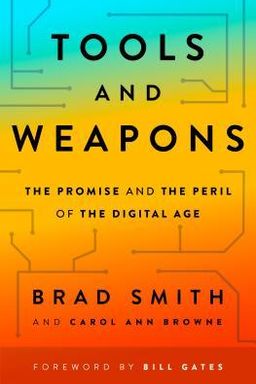
How can you govern technology that has outgrown traditional institutions? In Tools and Weapons, Brad Smith argues that code now rivals law and politics as a force shaping civilization. The book’s central claim is that technology—especially digital computation and AI—has become both humanity’s most powerful tool and its most dangerous weapon. To live responsibly in this new era, citizens, companies, and governments must all confront how innovation alters privacy, safety, labor, and democracy.
Smith, Microsoft’s president, blends corporate insider detail with legal and geopolitical analysis. He invites you into data centers, courtroom battles, cyber crises, and diplomatic negotiations—each scene revealing how modern technology is physical, political, and moral. The narrative argues that with great computational power comes global responsibility to create law, transparency, and ethics that keep pace with innovation.
The Physical Cloud and Global Reach
Smith begins by demystifying the cloud. Far from an abstract concept, it’s a network of fortress-like data centers—two million square feet at Quincy, Washington, with bulletproof doors and diesel generators. These centers house your emails, bank records, and medical files. The sheer scale—hundreds of sites in dozens of countries—illustrates that global computing is now critical infrastructure, connecting over a billion users. This physical reality anchors the book’s ethical debates: the cloud isn’t vapor; it’s territory governed by law.
Surveillance, Privacy, and Accountability
After Edward Snowden’s 2013 leaks exposed NSA surveillance, Smith recounts Microsoft’s legal defense of customer privacy. The company demanded warrants before releasing data, sued to lift gag orders, and accelerated encryption. The narrative traces privacy back to John Wilkes and James Otis, whose resistance to general warrants birthed the Fourth Amendment. Today’s equivalent debate—cloud-based privacy—asks whether governments can inspect millions of digital records without oversight. Smith’s position is clear: the rule of law must govern surveillance, not unilateral executive power.
Balancing Safety and Liberty
You see privacy battles translated into emergency practice—a kidnapping case from 2002, where tracing Hotmail accounts was crucial, illustrates the moral complexity of technology in life-and-death events. Microsoft’s Law Enforcement and National Security (LENS) team operationalizes thousands of global warrants, navigating privacy, jurisdiction, and oversight. The emotional and legal tension—defending lives without betraying rights—embodies the book’s thesis that public safety cannot be detached from liberty. Each request tests principles and engineering limits simultaneously.
Cybersecurity and Collective Defense
From WannaCry and NotPetya, the book chronicles how leaked government exploits turned into global ransomware crises. Hospitals darkened, ships halted, and corporations froze. Microsoft’s decision to patch even pirated systems underscored a moral pivot: defend humanity first, profits second. Out of these events grew the Cybersecurity Tech Accord and Paris Call—industry and diplomatic commitments to treat cyberspace as a shared civil domain requiring international norms. Smith even proposes a Digital Geneva Convention to protect civilians online, drawing parallels to humanitarian law.
Ethics, AI, and Human Values
Smith argues AI has triggered a new industrial revolution based on cognition and perception. He traces deep learning’s technical rise and the ethical imperatives that followed. Studies like Buolamwini and Gebru’s Gender Shades exposed algorithmic bias and forced companies to confront fairness. Microsoft articulated six guiding principles: fairness, reliability & safety, privacy & security, inclusiveness, transparency, and accountability. These form the moral scaffolding for the AI age. (Note: Eric Horvitz helped pivot attention toward real-world ethics over speculative singularity fears.)
Democracy and Global Governance
Elections and free discourse are now vulnerable to cyber intrusion. The book showcases Microsoft’s Digital Crimes Unit, which neutralizes malicious domains used by Russian actors, and programs like AccountGuard and ElectionGuard to safeguard campaigns and ballot integrity. The message: technology firms must act as civic guardians, not spectators. Extending that principle globally, Smith calls for digital diplomacy—“tech ambassadors” and cooperative frameworks among nations—to prevent technology from being a new theatre of war.
Economic Inclusion and the Human Factor
Beyond geopolitics, Smith examines domestic divides—Republic, Washington’s broadband deserts and America’s talent gaps. Microsoft’s Airband Initiative and TEALS program link connectivity with education, proving that opportunity in the digital era requires both access and skill. He connects this to historical analogies of automation, from horse-drawn fire engines to motor vehicles, showing that innovation needs active adaptation, retraining, and forward-looking social policy.
The Global Challenge Ahead
Ultimately, Smith cautions that technology governance is a shared obligation. The book concludes with an urgent call for cooperation: combine agile regulation, corporate accountability, and multilateral diplomacy to manage the double-edged nature of innovation. You are left with both hope and warning—the cloud, AI, and data can elevate humanity, but only if governed by ethics, transparency, and law as powerful as the technology itself.