
Idea 1
Why Big Data Is Too Big to Ignore
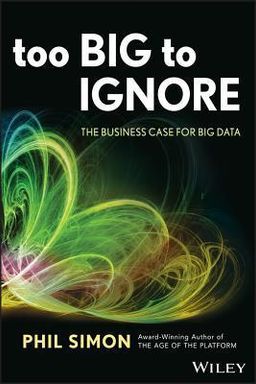
Can data really tell you how to run a business, where to invest, whom to hire, or even what kind of music you should listen to? In Too Big to Ignore, author and technologist Phil Simon argues that data has become so vast, so varied, and so fast-moving that ignoring it is no longer an option. Big Data isn’t just a buzzword—Simon contends it’s a global shift that’s reshaping how organizations make decisions, solve problems, and even understand the world.
Simon’s central claim is simple yet profound: we are living through a revolution, a “Data Deluge” that rivals the industrial revolution in its potential to transform business, science, and society. Organizations that learn to harness data creatively—like Target predicting pregnancies or Boston crowdsourcing pothole reports—gain extraordinary insight and efficiency. Those that don’t will fall behind. The volume, velocity, and variety of modern information, now streaming from phones, sensors, social networks, and cloud systems, are too great and too valuable to ignore.
The New Data Reality
Simon opens with a vivid reminder that Big Data isn’t theoretical—it’s here, quietly influencing everyday life. A baseball manager uses obscure statistics to build a winning team. Insurance companies track drivers in real time to price policies fairly. Governments crowdsource infrastructure problems through citizen smartphones. These examples show that the old modes of decision-making—intuition, limited reports, small samples—are obsolete. The real differentiator now is how well you capture and interpret unprecedented quantities of data to make smarter choices.
The Three V’s and Why They Matter
Simon organizes Big Data around Douglas Laney’s famous framework: volume (huge quantities of information), velocity (data moving faster than traditional systems can handle), and variety (multiple types, from tweets to photos to transactions). These qualities mean old tools—spreadsheets, relational databases—are no longer enough. We need new technologies like Hadoop, NoSQL, and machine learning that can process unstructured data and extract meaning from it. But Simon emphasizes that technology is only half the story; culture, mindset, and curiosity determine whether tools become transformative or merely decorative.
An Accessible Revolution
What sets Simon apart from other data evangelists (like Viktor Mayer-Schönberger or Nate Silver) is his accessibility. He doesn’t expect you to be a scientist or a mathematician. The point of Big Data is not that every company needs a PhD statistician—it’s that everyday professionals can now access insights once unimaginable. Free and open-source tools like Hadoop or crowdsourcing platforms make it possible for small startups, schools, and governments to compete with tech giants on intelligence.
Why “Too Big to Ignore” Matters
For Simon, Big Data is more than technical progress—it’s a paradigm shift. Like electricity or the internet, it forces every sector to reinvent itself. Healthcare firms use data to track disease patterns. Retailers personalize promotions by predicting behavior. Scientists collaborate across global databases that make previously invisible patterns clear. Ignoring these trends means forfeiting innovation, efficiency, and foresight. Simon advises readers—from CEOs to educators—to embrace data literacy as a core professional skill. Big Data, he insists, isn’t optional; it’s the new basis of competitive advantage and collective understanding.
What You’ll Learn
Throughout the summary, you’ll explore how data evolved from early spreadsheets to today’s unstructured flood; how organizations can demystify Big Data without drowning in it; and what tools, techniques, and cultural shifts make it work. You’ll see case studies—from Quantcast’s advertising algorithms to NASA’s crowdsourced innovation contests—showing the practical rewards of embracing Big Data. You’ll also confront critical issues: privacy, ethics, and the need to balance automation with human judgment. In the end, Simon’s argument is both pragmatic and visionary: Big Data will only grow larger and more intelligent, and stasis is not an option.