
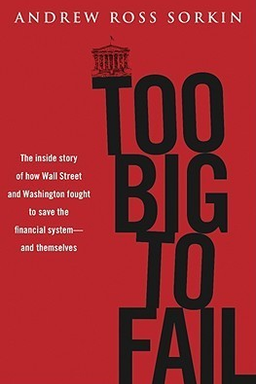
Idea 1
The Anatomy of a Financial Collapse
How does a modern financial system implode under its own design? This book traces the 2008 crisis from its deepest roots—subprime mortgages and securitization—to the desperate weekend rescues and global political fallout that redefined financial governance. You watch how leverage, opacity, and moral hazard combine to turn innovation into destruction.
From easy money to tangled risk
It begins with housing. Banks made subprime loans to borrowers with weak credit, bundled them, and sold the bundles worldwide as mortgage-backed securities. Wall Street convinced itself that engineering could transform risk into safety—an illusion that collapsed when housing prices turned. As firms like Lehman, Merrill, and AIG bought pieces of each other’s complex derivatives, systemic exposure grew invisible but deadly. (Note: similar illusions about diversification have driven other market bubbles, from dot-com stocks to crypto tokens.)
Leverage and the invisible multiplier
At debt-to-equity ratios of 30 to 1, even a small decline wipes out capital. Lehman’s loss of confidence spiraled instantly as overnight lenders refused to roll repos. Short-term funding fragility—borrowing short and investing long—amplified every rumor and price dip. The result was liquidity evaporation so fast regulators could not catch up.
The human element and leadership failure
Richard Fuld’s Lehman culture prized loyalty and aggression. That loyalty blinded the firm to contrarian voices who saw the dangers in real estate exposure. CFO Erin Callan, handpicked for trust rather than technical mastery, briefly steadied markets with confidence calls but could not fix capital weakness. As internal dissent vanished, governance failed precisely when clarity mattered most. (Context: similar patterns appear in Enron’s collapse, where loyalty substituted for oversight.)
Government improvisation under fire
You then follow policy leaders—Hank Paulson, Tim Geithner, and Ben Bernanke—improvising tools faster than politics can accept them. Bear Stearns’ rescue becomes precedent, its $30 billion backstop sparking cries of moral hazard that haunt later decisions. Paulson’s “bazooka” metaphor—obtain authority so markets calm—illustrates the communication paradox: words can stabilize or destabilize depending on timing. Each intervention tests the limits of law, politics, and faith in markets.
Global repercussions and the contagion chain
When Lehman fails, contagion races through money markets, prime broker accounts, and CDS spreads. AIG’s hidden guarantees trigger collateral calls of billions within days. Morgan Stanley loses $20 billion of client funds overnight. The Reserve Primary Fund “breaks the buck,” forcing Treasury to guarantee every money market fund using obscure Gold Reserve Act powers. Runs don’t happen only to banks—they happen to every leveraged node of the system.
The cycle of narrative and perception
Rumors and short sellers magnify instability. David Einhorn’s public critique of Lehman’s accounting accelerates its demise. CNBC leaks about possible rescues move stocks by triple digits. Information becomes liquidity: confidence or fear directly affects solvency. Markets prove social as much as numerical.
Policy evolution and legacy
The response evolves from ad hoc rescues to institutional reform. Fannie and Freddie’s conservatorship shows a decisive state takeover; AIG’s $85 billion loan structured with warrants marks the shift from private exemplars to public stewardship. Paulson’s TARP—$700 billion of asset purchase authority—becomes both symbol and instrument of crisis containment. Each episode raises enduring debates about moral hazard, political accountability, and the role of government in capitalism.
The lasting lesson
Modern finance’s strength—speed, innovation, interconnection—is also its fragility. Complexity hides leverage; leverage hides vulnerability. The book’s ultimate insight is that without transparency, governance, and liquidity backstops, the next crisis will not look different—it will only arrive faster.