
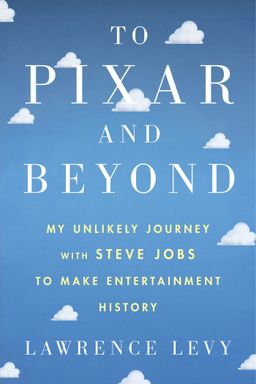
To Pixar and Beyond cover

To Pixar and Beyond

by Lawrence Levy

To Pixar and Beyond reveals the gripping story of how Lawrence Levy and Steve Jobs turned Pixar from a struggling entity into an industry titan. Through strategic decisions and creative genius, they crafted a billion-dollar animation empire, offering readers invaluable lessons in innovation, leadership, and the balance of art and business.

Balancing Creativity and Business: Pixar’s Transformative Journey

Have you ever wondered how a small, struggling company can become an icon of creativity and innovation? In To Pixar and Beyond, Lawrence Levy invites you into the boardrooms, late-night strategy sessions, and personal friendships that transformed Pixar from an obscure graphics outfit into one of the most successful and beloved entertainment studios in history. Levy contends that Pixar’s ascent wasn’t just about cutting-edge computer animation—it was about navigating the tension between the messy, soulful forces of creativity and the hard realities of business growth.

This book is both corporate odyssey and human narrative. Levy tells the inside story of how he and Steve Jobs partnered to reinvent Pixar’s business model, win independence from Disney, launch a record-breaking IPO, and eventually negotiate Pixar’s landmark sale back to Disney in a way that preserved its soul. But beneath these business milestones lies a deeper meditation on balance—between art and profit, control and trust, ambition and humility.

The Tug-of-War Between Art and Commerce

Levy opens by showing Pixar as a company frozen between worlds. Once merely a division within George Lucas’s studio, Pixar was hemorrhaging money when Jobs bought it. Its engineers were pushing computer graphics technology to dazzling new limits, yet no one could make the numbers work. Steve Jobs had already poured nearly $50 million into Pixar without a clear business trajectory. By the mid-1990s, Pixar’s team—artists, animators, dreamers—felt caught between their passion for storytelling and the plain truth of business survival. Levy was brought in to fix that paradox.

Working alongside Pixar’s co-founder Ed Catmull and creative visionary John Lasseter, Levy saw the delicate balance they were trying to preserve: protect Pixar’s creative family while building a sustainable enterprise. This tension became Pixar’s defining struggle. As the book unfolds, you see that the genius of Pixar lies not in removing that friction but embracing it. Levy compares the dynamic forces at work to tectonic plates—one carrying creative integrity, the other bearing the pressure of survival. When they grind against each other, new mountains arise.

A Story of Unlikely Partnerships

At the heart of this story is Levy’s partnership with Steve Jobs. Jobs had always been infamous for his intensity—brilliant, mercurial, and combative—but Levy met a more grounded, curious version. Together, they debated strategies late into the night, often walking the streets of Palo Alto as they tried to envision a future where a small animation studio could compete with mighty Hollywood. The irony, Levy notes, is that Pixar would ultimately become the creative force that revitalized Disney itself, the company it once struggled against for legitimacy.

What makes their collaboration compelling is Jobs’s evolution. Through Pixar, Levy believed Jobs discovered something he had long missed at Apple—a lesson in humility, trust, and creative collaboration. As Pixar’s films found success, Jobs began to let go of his obsession with control. He learned to rely on others and to value the unpredictable brilliance of artists. Levy describes this as the transformation that later made Jobs’s second act at Apple possible.

The Bigger Philosophy: The Middle Way

What distinguishes To Pixar and Beyond from mere business memoirs is its philosophical depth. Toward the end of the book—and in Levy’s own life after Pixar—the narrative expands into Buddhist philosophy and the concept of the Middle Way. Through this lens, Levy reflects on Pixar’s story as a metaphor for balance: the harmony between discipline and imagination, between ambition and grace. He suggests that every great endeavor—a business, a film, a life—requires walking the middle path between extremes.

Levy’s lessons transcend corporate strategy. They speak to anyone striving to balance creative passion with practical needs. Whether you lead a team, run a project, or nurture your own craft, the deep question remains: How can you protect creative authenticity without losing sight of the real-world constraints that make success possible? Pixar’s answer was its culture—a system built not on hierarchy or fear, but on respect, collaboration, and the trust to fail productively.

Why This Story Matters to You

In reading Levy’s account, you’re not just witnessing movie history; you’re learning how great organizations—and lives—are built at the crossroads of opposing forces. The Pixar journey reminds you that structure and innovation, logic and wonder, must coexist. It shows that genuine creativity doesn’t emerge from chaos alone but from the discipline and trust that make a creative community thrive. Ultimately, Levy contends that the art of balancing creativity and commerce is the art of living a meaningful life. Pixar’s story, like its films, begins and ends with heart.


Steve Jobs and the Second Act

You may know Steve Jobs as the visionary founder of Apple, but in To Pixar and Beyond, Lawrence Levy reveals how Pixar reshaped Jobs’s legacy—and even his approach to leadership. When Levy met Jobs in 1994, he was not the triumphant innovator of the iPhone era. He was a fallen star who had poured millions into projects that failed to take flight. Pixar was his last hope, though even Jobs didn’t yet understand how filmmaking could redeem his reputation.

Rebuilding Trust and Reputation

Pixar was hemorrhaging money when Levy arrived. Jobs had invested nearly $50 million, funding Pixar’s payroll with personal checks, but the company had little to show for it. Hollywood didn’t take Jobs seriously, and Pixar’s employees felt alienated by his reputation as a domineering owner. Levy thus entered as a bridge—a translator between Jobs’s intensity and Pixar’s creative soul. His calm analytical style helped Jobs trust his team’s artistic process without imposing top-down control.

Over time, their collaboration softened Jobs’s hard edges. Levy recounts how Jobs learned to see Pixar not just as a tech startup, but as a creative community. When Pixar’s directors asked for artistic freedom, Jobs eventually agreed, granting Lasseter’s story team full control over creative decisions. This move was revolutionary. It marked the first time Jobs truly delegated authority, a transformation that later informed his leadership style at Apple’s revival a few years later.

Lessons in Patience and Ego

Through Pixar, Jobs experienced humility. Gone were the days of dictating every design pixel. Films required patience—years of development, endless iteration, and creative conflict. Levy describes this as the crucible where Jobs learned emotional intelligence through constraint. He had to respect creative autonomy and endure uncertainty, recognizing that true innovation emerges from trust rather than domination.

Pixar also gave Jobs redemption. The success of Toy Story made him a billionaire overnight, turning the failure of NeXT and his exile from Apple into a story of perseverance. Later, the experience of running Pixar next to Levy—balanced, authentic, collaborative—prepared him to lead Apple’s rebirth in 1997 with empathy and purpose rather than ego.

Pixar’s Influence on Jobs’s Renaissance

When Jobs returned to Apple after selling NeXT, Pixar’s success gave him credibility. He had learned that great art and great products share the same DNA: clarity of vision and respect for the creative process. Levy writes that Pixar taught Jobs the “Middle Way” of leadership—a synthesis of creative intuition and disciplined execution. The empathy, patience, and trust that Pixar inspired in him shaped the philosophies that later powered Apple’s golden age. Pixar didn’t just change animation; it healed and redefined Steve Jobs himself.


The Four Pillars That Built Pixar

Lawrence Levy often said Pixar’s future rested on four pillars—foundational principles that turned its dream of computer animation into a thriving enterprise. These weren’t abstract ideas; they became the blueprint for transforming Pixar from a bleeding startup into a sustainable studio capable of producing artistic and commercial victories. You can think of them as cornerstones for any creative organization that wants to marry innovation with profit.

1. Increasing the Profit Share

Pixar’s original agreement with Disney was crippling. Levy discovered that Pixar would earn less than 10% of profits from its films—despite Disney reaping brand credit and sequels. This imbalance meant Pixar could make masterpieces and still go bankrupt. The first pillar was obvious yet audacious: negotiate a true 50/50 profit share. Achieving that required leveraging Toy Story’s success and convincing Disney to treat Pixar as an equal partner rather than a junior contractor. Years later, this became reality through the groundbreaking co-production agreement that gave both companies equal billing (Disney • Pixar) and fair shares.

2. Financing Its Own Productions

Levy knew Pixar had to control its destiny. If Disney funded the films, they controlled creative and release decisions. Pixar needed independence—and that required raising $75–$150 million through an IPO. The public offering of 1995, launching around Toy Story’s release, gave Pixar the war chest to co-invest with Disney and secure creative authority. That financial autonomy became essential to preserving Pixar’s culture, proving that artistic freedom demands economic independence.

3. Making Films More Often

Before Levy arrived, Pixar made one film every four years—a pace that guaranteed bankruptcy between releases. He urged the team to scale production, aiming eventually for one film every 18 months. This required tripling the studio’s size and creating in-house training through Pixar University. Ed Catmull hired talent like Randy Nelson and Sarah McArthur to build the infrastructure for continuous filmmaking. It was a logistical miracle: expanding capacity without compromising creativity. You can compare this to an artist turning their passion into a professional routine—making creativity reliable without losing its spark.

4. Building the Pixar Brand

Finally, Jobs and Levy knew Pixar had to emerge from Disney’s shadow. As long as audiences saw “Walt Disney Pictures presents…” on films that Pixar actually made, the studio’s true identity would stay hidden. This was perhaps the hardest battle. Disney’s CEO Michael Eisner initially refused equal branding. Levy and Jobs risked the deal entirely to demand parity. Their persistence paid off with the 1997 co-branding agreement—the first time in history Disney allowed another studio’s logo to share top billing. As Levy writes, “Never again would we be seen as inferior.” That achievement secured Pixar’s place as a household name.

Together, these pillars created a framework every creative business can learn from: claim fair value, secure independence, scale smartly, and build your identity boldly. Pixar’s triumph wasn’t accidental—it was engineered through these deliberate choices that honored art and economics equally.


The Art of Negotiation: Disney and Pixar

The heart of Levy’s corporate storytelling lies in Pixar’s tense negotiations with Disney—a saga of pride, principle, and creativity versus corporate politics. For nearly a decade, Pixar’s future depended on its partnership with Disney, which owned distribution rights, marketing, and most of the profits. Levy turns this story into a masterclass on negotiation: knowing when to push, when to pause, and when to walk away.

Understanding Leverage and Momentum

Levy distinguishes leverage (power) from negotiation (technique). Pixar had little leverage initially—no track record, one hit film, and dependency on Disney’s distribution network. But Toy Story’s success changed everything. It gave Pixar cultural clout, creative credibility, and financial strength. Levy and Jobs used that newfound leverage strategically, crafting clear negotiating pillars: creative control, release timing, equal branding, and a 50/50 profit split. Their refusal to engage in positional bargaining—never proposing back-up plans—made their resolve stronger. It’s a lesson for anyone facing a negotiation: define your non-negotiables and hold fast.

The Branding Stalemate

Disney’s CEO Michael Eisner resisted Pixar’s demand for equal billing. He feared empowering a competitor who could eclipse Disney’s own animation legacy. Levy recounts intense meetings where Steve Jobs, Ed Catmull, and John Lasseter debated whether to compromise. Ultimately, they walked away from the deal entirely—choosing self-respect over short-term profit. Months later, Eisner returned with a fresh idea: Disney could invest in Pixar’s stock in exchange for co-branding. This compromise allowed both sides to preserve dignity while unlocking unprecedented collaboration. Levy’s insight: successful negotiation isn’t about winning—it’s about creating mutual trust so both can thrive.

Breaking New Ground

The 1997 co-production agreement changed Hollywood history. Disney and Pixar agreed on equal branding, shared distribution costs, and equal profits. Pixar retained creative control for its directors—a clause unheard of in studio contracts. Levy’s team codified contingencies in exhaustive detail, from earthquake delays to computer usage rights. His description of “the last 20 percent taking 80 percent of the effort” illustrates how great deals hinge on precision. The result was more than a contract—it was a cultural revolution. Levy reminds you: in any negotiation, the outcome must protect not just profit but the integrity of the creative process.


Creative Control and the Pixar Culture

Pixar’s success was never just about technology—it was about culture. Lawrence Levy and Ed Catmull realized that preserving Pixar’s creative spirit was vital, even while scaling business operations. The key was a radical idea: executives would stay out of creative decisions. This principle, dubbed “Story Is King,” became Pixar’s sacred mantra, reshaping the relationship between management and artistry.

Giving Artists the Helm

When Levy joined Pixar, the studio faced enormous pressure to impose oversight. With budgets nearing $100 million per film, it seemed irresponsible not to monitor creativity. But director John Lasseter argued that only by letting artists lead could Pixar make groundbreaking films. His plea—“Our films must come from the heart”—convinced Jobs and Levy to trust the story department unconditionally. From that moment, Pixar’s directors had complete creative autonomy. The move was risky; if a project went off track, executives couldn’t intervene. Yet, this trust fueled innovation and morale, producing hits from A Bug’s Life to Finding Nemo.

A New Model for Leadership

By empowering directors, Pixar subverted Hollywood hierarchy. At traditional studios, executives like Jeffrey Katzenberg at Disney dictated story changes. Pixar flipped that model, proving that creative risks yield cultural rewards. Levy compares this to Silicon Valley’s startup ethos—betting on visionary teams rather than rigid control. The correlation is striking: Pixar treated filmmakers like entrepreneurs, trusted to pioneer storytelling through experimentation.

Why It Worked

Pixar’s films flourished not despite risk but because of it. Levy writes, “Creative excellence is a dance on the precipice of failure.” This willingness to fail safely became Pixar’s advantage. Its informal, familial culture—where storyboards covered every surface and artists debated openly—made risk feel communal, not personal. The lesson for any team: autonomy works when paired with mutual respect and shared purpose. By protecting its culture, Pixar created an environment where creativity was disciplined, not chaotic. Its model endures as proof that when leaders trust talent over process, innovation thrives.


The Middle Way: Philosophical Lessons from Pixar

After leaving Pixar, Levy turned his attention to philosophy, meditation, and balance. What he discovered echoed everything he had lived through in the Pixar years. The Buddhist concept of the Middle Way—the harmony between extremes—became his lens for understanding creativity, leadership, and life itself. The lessons apply far beyond animation; they reveal how anyone can thrive at the intersection of art and practicality.

The Spiritual Parallel to Pixar’s Journey

Pixar itself, Levy realized after a near-fatal car accident, embodied the Middle Way. At its core, Pixar was a dance between opposites: creative freedom versus corporate discipline, intuition versus logic, fluidity versus order. He saw that both forces were necessary. Too much artistic chaos breeds fragmentation; too much bureaucracy kills spirit. The Middle Way teaches balance—not to eliminate tension but to harness it productively. Pixar’s culture was that balance in action.

Two Selves: Bureaucrat and Artist

Levy explores this idea through a metaphor: inside every person lives both a bureaucrat and an artist. The bureaucrat manages, plans, and executes. The artist imagines, feels, and explores. The best leadership harmonizes these two selves, letting practicality serve passion and creativity guide structure. At Pixar, this duality was embodied by the partnership between Ed Catmull (the disciplined engineer) and John Lasseter (the imaginative dreamer). Together, they exemplified how balance creates greatness.

Applying the Middle Way to Modern Life

Levy later extended this insight through the Juniper Foundation, teaching meditation and human potential. He recognizes that many modern professionals suffer from imbalance—obsessed with performance yet detached from joy. The Middle Way offers a corrective: embrace both function and spirit. Whether running a company or raising a family, you must manage efficiency while nurturing meaning. Pixar’s story proves this at scale: beauty and business can coexist when we allow both sides to breathe.

In his final reflection, Levy suggests that the most powerful lesson from Pixar is universal. To live and create fully, you must just keep swimming—moving forward with courage, balance, and trust that friction itself can generate brilliance. Pixar’s triumph wasn’t about eliminating struggle; it was about transforming it into art.

Dig Deeper

Get personalized prompts to apply these lessons to your life and deepen your understanding.

Go Deeper

Get the Full Experience

Download Insight Books for AI-powered reflections, quizzes, and more.