
Idea 1
From Possession to Presence: The Core Conflict of Modern Life
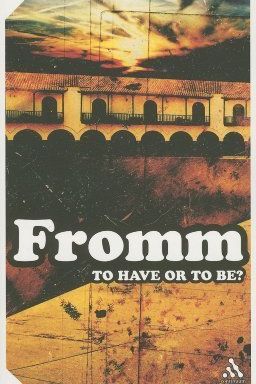
Have you ever felt that no matter how much you own—money, achievements, even knowledge—something essential still feels missing? In To Have or To Be?, Erich Fromm argues that this feeling of emptiness stems from the dominant mode of existence in modern society: having. Our culture, he says, defines success by acquisition—of possessions, power, and even relationships—while our deeper human fulfillment depends on a very different orientation: being.
Fromm, a humanistic psychoanalyst and social philosopher, insists that humanity now faces a choice between these two fundamentally different ways of living. The “having” mode means defining ourselves by what we possess—objects, opinions, even love—while the “being” mode means expressing who we truly are through genuine activity, love, and awareness. If humanity continues to prioritize having, he warns, we risk psychological alienation, social collapse, and even environmental catastrophe. But shifting toward being could renew individuality, meaning, and collective sanity.
The Great Promise and Its Failure
Fromm begins by diagnosing what he calls the failure of the “Great Promise” of the industrial age. Enlightenment and capitalist ideologies promised that reason and technology, joined with economic growth, would lead to unlimited freedom, happiness, and wealth. Yet these ideals produced unintended consequences: ecological destruction, widespread alienation, nuclear peril, and chronic anxiety. Instead of individuals becoming “free,” most became cogs in bureaucratic systems, manipulated by mass media and corporations. As Fromm writes, we have learned to ‘kill time’—because we no longer know how to live it.
In this regard, Fromm’s critique anticipates thinkers like E. F. Schumacher and the Club of Rome’s Limits to Growth report, who warned that endless consumption cannot coexist with finite human and natural resources. Fromm moves beyond environmental or economic concerns, though, to a psychological dimension: the sickness of the soul created by a culture that tells us to define our worth by ownership and control rather than by vitality and awareness.
Having vs. Being as Modes of Existence
The book’s main thesis emerges from Fromm’s distinction between two basic modes of existence. The having mode is grounded in possession—of material objects, of knowledge, even of emotions. It says, “I am what I own.” It values stability, control, and permanence. Yet this mode breeds anxiety because anything you have can be lost. The being mode, by contrast, rests on aliveness, authentic relatedness, and creativity. It means fully experiencing life without trying to dominate it—“I am what I am.” Being cannot be owned or accumulated; it is a continual process of renewal and awareness.
To illustrate the contrast, Fromm famously compares two poets—Tennyson and Bashō—each observing a flower. Tennyson plucks the flower to study it, thus destroying it in an attempt to “know.” Bashō simply observes the flower blooming by the hedge, letting it live. For Fromm, Bashō represents the being mode—attention without possession—whereas Tennyson embodies the Western obsession with mastery through ownership. This poetic difference, he argues, mirrors the division between entire civilizations centered on material control and those that cultivate presence and reverence for life.
Why the Shift Matters Now
Fromm situates this conflict in the late industrial world of the 20th century but writes with startling relevance today. He argues that our economic and psychological structures depend on greed, competition, and consumption. Capitalism requires us to crave endlessly, ensuring that we keep buying, achieving, and upgrading. Even supposedly socialist states, he observes, turned the same dynamic into collective possessiveness—promising a “bourgeois life for all.” If the having mindset remains dominant, humanity will rush toward ecological exhaustion and atomic self-destruction. In contrast, a being-centered society would orient production toward human need instead of profit, elevate cooperative relationships over competition, and treat nature not as an enemy to conquer but as a living partner.
The Road Toward the New Man
Having diagnosed our social malaise, Fromm envisions the emergence of what he calls the New Man—an individual who has liberated himself from the compulsion to possess and instead acts from inner abundance. This transformation, he says, begins not in governments but in human hearts and consciousness. Like the Buddha’s Four Noble Truths, it requires recognizing our suffering (alienation), identifying its cause (the craving to have), discovering that liberation is possible, and committing to a practice of non-attachment and creative living.
Fromm’s synthesis fuses insights from Buddhism, the Hebrew prophets, Jesus, and Marx. Each, he argues, sought human freedom through overcoming egocentric isolation and rediscovering unity with life. Whether you call it enlightenment, salvation, or revolution, the aim is the same: awakening from the illusion that your worth depends on what you possess.
In later chapters, Fromm expands this teaching into concrete domains—how we learn, love, think, remember, organize work, and design economies. He shows how “having” infects even our spiritual life when faith becomes a doctrine or God a possession, explaining that “faith in the having mode is like owning the right answers.” In contrast, faith in the being mode is an active confidence in life, not an adherence to dogma.
Ultimately, To Have or To Be? is both a psychological exploration and a call for social transformation. Fromm insists that the survival of our species depends on replacing the having-oriented “marketing character”—people who sell themselves as commodities—with a new culture founded on love, creativity, and reason. The cure for a sick society, he concludes, is not more accumulation but more aliveness. The path to saving the world begins in learning, not to have, but to be.