
Idea 1
The Hidden Chemistry of Fashion
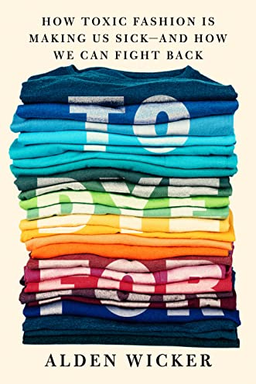
You probably think of clothing as fabric, pattern, and fit—but every garment carries an invisible chemical biography. Modern fashion turns fibers into functional products through intensive chemistry: dyes, finishes, flame retardants, stainproof coatings, biocides, plasticizers, and solvents. In Toxic Threads (the book synthesized here), the author argues that this invisible chemistry isn’t just an environmental problem—it’s an unregulated health experiment that touches your skin, bloodstream, and home. The book asks you to see fashion not as fabric but as a form of daily exposure.
Fashion’s toxic legacy
Chemical harm in clothing is not new. In the 19th century, arsenic greens poisoned dyers and wearers, and mercury felts made hatters tremble and hallucinate. Those stories mirror today’s PFAS coatings and disperse dyes: color, convenience, and performance sold first—safety studied later. Perkin’s discovery of coal-tar dyes birthed synthetic color, but also worker cancers. Modern chemistry inherited the same logic: innovation prioritized profit, hidden toxicity, and regulatory delay. (Note: the author explicitly traces today’s finishes to that historical lineage.)
Invisible chemistry and global spread
From fiber creation to finishing, clothes acquire hundreds of additives: formaldehyde resins for wrinkle resistance (developed by Ruth Benerito), PFAS for stainproofing, and disperse dyes to color synthetics. Many are petrochemical derivatives that bond poorly and migrate to your skin and indoor dust. Most dyeing now occurs in low-regulation regions such as Tirupur, India, where untreated effluent once turned rivers black and forced court-mandated cleanups. The globalized system hides this chemistry from consumers—even as it pollutes water, harms workers, and leaves residues you later wear.
Because garments have no ingredient labels and testing is voluntary, the book calls fashion a blind-spot industry. Greenpeace campaigns found NPEs, phthalates, and restricted azo dyes across major brands, confirming that your closet connects directly to distant dyehouses’ pollution. This systemic opacity underpins every example in the book—from runway apparel to school uniforms.
Uniforms as a human experiment
The most vivid case study centers on airline uniforms. When thousands of flight attendants donned identical garments daily in sealed aircraft cabins, their collective suffering revealed fashion’s hidden toxicity. Alaska Airlines, Delta, and American saw clusters of rashes, fatigue, thyroid dysfunction, and respiratory failure after new uniforms were introduced. Judith Anderson of the flight attendants’ union collected reports and commissioned tests: chromates, disperse dyes, tributyl phosphate, and dozens more chemicals emerged. NIOSH couldn’t isolate a single culprit, illustrating how additive and synergistic effects escape standard testing. These attendants became living data points showing that clothing chemistry can harm when exposure is intense and uniform.
Detection and scientific limits
Researchers like Heather Stapleton and Graham Peaslee developed new tools—nontargeted mass spectrometry and PIGE spectroscopy—to uncover unknowns. Stapleton’s lab traced halogenated disperse dyes to a child’s T-shirt rash pattern; Peaslee revealed PFAS on firefighter gear and fast-food packaging. These methods prove that garments hold complex, unlisted chemistries far beyond regulators’ screens. Yet secrecy still shields manufacturers: analytical standards cover only handfuls of dyes out of thousands. Testing remains expensive, partial, and proprietary, leaving most consumer goods chemically opaque.
Health consequences and biological plausibility
Beyond acute rashes, the book connects clothing chemicals to deeper biological responses: endocrine disruption (shifting fertility and sperm counts, as shown by Shanna Swan’s work), mast-cell sensitization (Claudia Miller’s Toxicant-Induced Loss of Tolerance model), and autoimmune onset. Flight attendants who developed psoriatic arthritis appear within this frame. The idea is not that every garment sickens you, but that chronic micro-exposure can tip sensitive systems—especially skin, lungs, and endocrine pathways—into lasting dysregulation.
Testing, litigation, and systemic failure
Despite hundreds of sick workers, courts dismissed most airline uniform suits. Legal standards require pinpoint causation, but no single molecule explains clustered illness. Regulators likewise act piecemeal: OSHA, FAA, and CPSC shuffled responsibility. At ports, CBP inspects less than a fraction of shipments; de minimis imports under $800 bypass testing altogether, feeding an e-commerce flood of unmonitored, chemically tainted garments. Voluntary certifications like Oeko-Tex or bluesign help, but proprietary secrecy and cost (testing quoted up to $17,000) mean most clothes go unexamined. The system fails not because chemicals are unknowable, but because governance remains fragmented.
Your choices and systemic demand
The author closes with action: buy from audited brands, favor natural fibers, wash new clothes, skip dry-cleaning, and avoid 'performance' coatings. But personal steps only go so far. She urges reforms—class-wide bans on PFAS, mandatory ingredient disclosure via QR code labels, REACH-style chemical registration, expanded CPSC funding, and tariffs on toxic imports. These connect consumer care to collective advocacy. The book’s core argument is clear: fashion’s toxic chemistry is global, persistent, and deeply underregulated. Recognizing that connection lets you protect yourself while pushing for a system that stops poisoning people at both ends of the supply chain.
Core insight
Clothing is not inert décor—it is a chemical interface between body and industry. Once you see it that way, what hangs in your closet becomes a map of global pollution and policy neglect.