
Idea 1
Wrestling Jews: God, Law, People, and Power
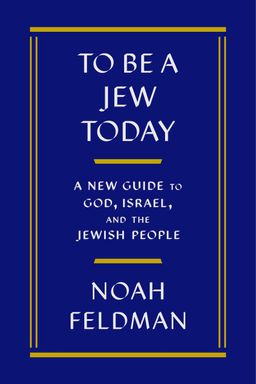
How can you make sense of the dizzying range of Jewish beliefs, practices, and politics today? In this book, Noah Feldman argues that the most illuminating lens is not denominational labels but the way you encounter God—and how that encounter shapes law, ethics, and peoplehood under modern power. Feldman contends that contemporary Jewish life coheres around four cross-cutting God-views—Traditional, Progressive, Evolutionist, and Godless—and that a shared theology of struggle holds them together. To grasp why communities clash (and still belong to one family), you must see how authority works, how moral claims collide with law, and how the State of Israel has become a narrative generator redefining Jewish commitments worldwide.
In this guide, you’ll discover a map of belief patterns that travel across denominations and geographies. You’ll then learn how each pattern makes sense of halakhah (Jewish law), prophecy, and modern conscience—and how they respond differently to Israel’s triumphs and tragedies. Finally, you’ll learn why messianic ideas matter for politics, how extremism can hijack theology, and how reimagining peoplehood as family helps you navigate contested boundaries with compassion.
A Map Before Institutions
Feldman begins by giving you a compass rather than a label. The Traditionalist hears God as commanding law and delegated rabbinic authority (think Haredi daas Torah). The Progressive encounters God as moral force, with Isaiah’s call to justice trumping ritual when they conflict (picture Heschel marching with King). The Evolutionist treats law as binding yet ever-interpreted by humans after revelation (“It is not in heaven”). The Godless Jew wrestles without a deity, building Jewish life through culture, politics, or science (Kaplan’s “civilization,” secular Zionism, Marxism, Freud). Each type exists across Orthodox, Conservative, Reform, and Reconstructionist spaces; your interior theology, not your shul sign, often predicts how you’ll argue and belong.
Authority, Debate, and the Risks of Power
Jewish tradition prizes debate as devotion. The Talmud’s oven-of-akhnai declares that legal authority rests with human interpreters, not heavenly miracles. Yet the same tradition warns against humiliation in the name of order (Rabban Gamliel’s deposition after he publicly shames Rabbi Joshua). Feldman uses these stories to show you a paradox: authority is necessary for cohesion but fragile when overreached. Traditionalists excel at belonging and halakhic totality; Progressives excel at moral activism and inclusion; Evolutionists manage continuity and change; Godless Jews translate struggle into modern projects. Each approach generates goods—and predictable blind spots.
Israel as Theological Earthquake
Zionism did more than found a state; it rewired Jewish theology and identity. American Progressives moved from skepticism to embrace (after the Holocaust, 1967, and 1973), often pairing Holocaust memory with Israel as moral imperative (Fackenheim’s “614th commandment”). Today that synthesis strains: younger Progressives on campus judge Israeli policy through universalist ethics and side with Palestinian rights in ways their elders find painful. Meanwhile, Religious Zionism (Rav Kook and Gush Emunim) reframes state-building as messianic process, making Israel the spiritual center for many Evolutionists and Modern Orthodox. Even Haredi Traditionalists, once anti-Zionist, increasingly identify with the state’s institutions and the IDF through pragmatic politics and cultural ties—without adopting classic Religious Zionist metaphysics.
Messianism, Extremes, and Self‑Critique
Messianic ideas shape politics. Chabad’s Rebbe, Menachem Mendel Schneerson, built a global outreach network and praised the IDF, treating the state as potential substrate for redemption while rejecting concessions. In a disturbing fusion, Rabbi Yitzchak Ginsburgh blends neo‑Hasidic mysticism with militant settlement ideology, proposing a halakhic monarchy and providing, in works like Torat ha‑Melekh, rationales later echoed by extremists (e.g., the Duma arson milieu). Feldman urges a return to Deuteronomy’s ethic of humility: prosperity in the land tempts pride; pride invites sin; sin invites catastrophe. A Jewish politics worthy of its texts practices collective self‑critique rather than innocence.
Peoplehood as Family
To hold pluralism together, Feldman reimagines peoplehood as family: you join by birth, choice, or adoption (conversion), and you argue as kin. Cases like Brother Daniel (a Catholic monk denied Law of Return status) and the recognition of Beta Israel, plus proposals like zera’yisra’el for those of Jewish descent without halakhic matrilineality, show how law, memory, and emotion collide. The family model rejects racial purity and invites compassionate boundary work—especially vital when Israel’s state institutions (Chief Rabbinate, Law of Return) now arbitrate belonging for the global family.
The book’s throughline lands here: to be Jewish is to wrestle—with God, with law, with moral claims, with state power, and with one another. If you learn to locate yourself on the map, honor debate as worship, and practice family‑style accountability, you can navigate disagreement without excommunication. That is Feldman’s hopeful wager: argument, rightly held, is a form of love.