
Idea 1
Contradiction, Faith, and the Making of a Capitalist Saint
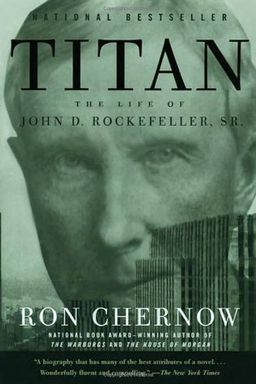
How do you reconcile ruthless commercial conquest with devout piety? The life of John D. Rockefeller answers that question by fusing moral conviction, Baptist discipline, and corporate control into an American archetype—the capitalist saint. The book traces a life of contradiction: a con man for a father, a moral disciplinarian for a mother, and a world that demanded both fraud and faith to prosper.
The formative contradiction
You begin with the household that shaped him: William “Devil Bill” Rockefeller, a trickster who performed deafness to sell fake cures, and Eliza Davison Rockefeller, a thrifty, pious matriarch. Bill taught guile, theatricality, and indifference to moral constraint; Eliza taught thrift, piety, and relentless work. Rockefeller absorbed both. He would hide behind silence when necessary, use public showmanship to mask private control, and sanctify every dollar through religious accounting.
Those opposites made secrecy and discipline natural. A child who learned that money and morality were tools of survival grew into a man who kept ledgers not only for business but also for his own soul—recording gifts and tithes beside freight bills. (Note: This mixture echoes Max Weber’s thesis about the Protestant ethic, where faith becomes an engine of capitalism.)
Faith as system and method
The book ties Rockefeller’s religion to his managerial style. Baptist culture in the burned-over district taught that salvation required rules and order; he transformed those virtues into accounting precision and corporate hierarchy. His stewardship belief—that wealth is entrusted by God for wise use—justified accumulation. He could earn aggressively so long as he gave generously. This moral structure allowed him to cloak enterprise in sanctity and philanthropy in strategy.
Faith rituals merged with daily business habits: tithing became structured philanthropy, prayer became methodical meetings, and bookkeeping mirrored moral accounting. You watch how the ledger morphs from a spiritual device into an organizational instrument. Thus religion is not merely a private comfort; it supplies the grammar for his capitalism.
From clerkship to empire
Rockefeller’s rise through Hewitt and Tuttle and then Clark & Rockefeller teaches you the anatomy of empire-building. He masters details—weight discrepancies, freight charges, bill errors—and learns credit as leverage. By 1863, his pivot to refining with Sam Andrews turns bookkeeping prowess into industrial advantage. He builds partnerships, exercises silence, and transforms minor operational edges into monopolistic structure. Those habits define Standard Oil’s later supremacy.
Secrecy and the paradox of moral power
Secrecy, rooted in family shame and religious reticence, becomes both shield and sword. Rockefeller hides his father’s disgrace and his corporate schemes with equal determination; secrecy makes control possible but also breeds suspicion. He is philanthropic yet hidden, devout yet manipulative. That tension drives every chapter—from the South Improvement plot to the Cleveland purchases—and explains both his success and his vilification.
Industrial morality and national myth
Placed within the Gilded Age, his life reads as moral allegory: the age celebrated thrift and industriousness while tolerating monopoly as discipline against chaos. The book shows that Rockefeller synthesized the entire era’s contradictions: evangelical ethics and corporate ruthlessness, charity and conquest. His later philanthropy—the University of Chicago, the Rockefeller Institute, the General Education Board—extends this synthesis globally: institutions as embodiments of faith through efficiency.
Core insight
Rockefeller’s story teaches you that moral discipline and economic strategy can intertwine so tightly that their boundaries blur. His rise is a theological project disguised as a business, and his philanthropy is a business disguised as a moral crusade. In understanding him, you understand how faith, secrecy, and measurement built America’s first modern corporation.