
Idea 1
Turning Pain into Purpose for Dogs
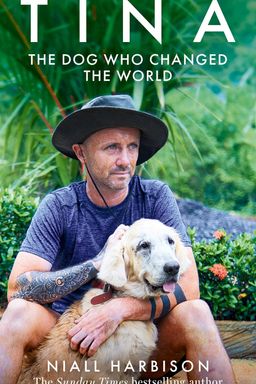
When life breaks you open, where do you put the pieces? In Tina, Niall Harbison argues that you can transform private pain into public good—if you choose purpose, build systems, and let animals teach you how to love again. He contends that one dog’s story—Tina, an emaciated golden retriever found chained under a mountain shack in Koh Samui—can become a blueprint for reshaping an entire island’s street-dog crisis and, more quietly, a shattered human life. But to do so, you must understand the paradox at the heart of this book: saving individual animals is life-changing, yet only systemic work truly changes the future.
This is part memoir, part field-manual, part love letter. It follows Harbison’s recovery from alcoholism and anxiety as he rescues dogs on a Thai island, builds Happy Doggo (a global sterilisation charity), and vows to construct Tina’s Hospital for Dogs Who Aren’t Doing So Good—an on-site, round-the-clock clinic inspired by the dog who turned him into the person he needed to become. It’s also a story-suite of unforgettable canine lives: Tina, Jumbo, Snoop, Buttons (adopted by Liam Gallagher), Shaq with a basketball-sized neck mass, Buster the misunderstood pit bull, Cindy Crawford the obese sweetheart, Billy the slashed and blind elder, Eve the burn victim on Christmas Eve, and Alba, the feather-light miracle who lived for fourteen radiant sunrises.
What the book argues
Harbison’s core claim is threefold. First, dignity and joy are not luxuries in rescue—they are medicine. Tina doesn’t just need antibiotics; she needs bandanas, beach swims, and a hundred tennis balls raining from a tree. Second, systems beat heroics. Sterilisation (spay/neuter), vaccination, and field medicine prevent suffering at scale, while adoptions are crafted intentionally, not sentimentally. Third, vulnerability builds movements. By telling unvarnished stories online about the wins and the grief, Harbison mobilises a global community—raising funds, volunteers, and pressure to do better (compare to the narrative-driven change in Matthew Syed’s Rebel Ideas and the sticky storytelling principles in Chip and Dan Heath’s Made to Stick).
How the story unfolds
You’ll meet Tina first: skeletal, chained, used as a breeding machine, and barely walking. You’ll sit with the panic when a well-meant first meal nearly kills her via refeeding syndrome (bloat), and feel the fragile, ferocious bond that grows on a hammock under tropical skies. As Tina stabilises, the book widens to the work behind the scenes: negotiating respectfully in a culture where locals avoid losing face; triaging emergencies; learning to feed 1,000 dogs a day; and, crucially, scaling sterilisation from one dog (Mr Fox) to more than 70,000 across Thailand, Sri Lanka, and Indonesia.
Then comes loss. Tina’s kidney failure. Snoop’s final days. The question becomes: what do you do with grief? Harbison chooses action: #DoingItForTina walks in London, Manchester, Dublin, and across the US; a media tour that reconnects him with Hope on live TV; and an audacious hospital plan designed pro bono by Danny Forster & Architecture in New York, with a sunlit walkway wrapped around Tina’s grave. Between these arcs, you’ll encounter case studies that read like parables: Shaq’s impossible surgery; Cindy’s 17-kg weight loss; Buster’s escape from a brutal chain to tennis-court bliss; Billy’s PTSD and cataract miracle; Eve’s survival through burns; and Alba’s fourteen luminous sunsets.
Why it matters to you
If you care about animals, this book offers hard-won, humane tactics you can copy tomorrow: slow refeeding, field stabilisation, triage thinking, and a five-step adoption process. If you care about impact, it shows why you must pair compassion with operational discipline (think Atul Gawande’s The Checklist Manifesto): routes, rosters, refrigerators for vaccines, and a ruthless focus on the question, “Will this help more dogs?” If you’re wrestling with purpose, Tina demonstrates the alchemy Viktor Frankl described—finding meaning in service to something beyond the self (Man’s Search for Meaning). And if you’re recovering from anything, you’ll recognise yourself in Harbison’s rituals: replacing pub nights with sunrise runs, swapping performative busyness for consistent routines, and choosing smaller circles, stronger boundaries, and deeper work.
What this summary covers
We’ll begin with Tina’s rescue and the medical/do-no-harm lessons it taught. We’ll connect Harbison’s personal sobriety journey to how he cares for animals under stress. We’ll unpack the pivot from rescues to systems—sterilisation, feeding infrastructure, and the social-media engine that funds it. We’ll explore how joy is operationalised (bandanas are strategy, not swag), and how grief turns into blueprints. Then we’ll study case stories (Buster, Cindy, Shaq, Buttons, Brad Pitt, Billy, Eve, Alba) that ground the ethics of adoption, the limits of sanctuary life, and the art of making hard calls. Finally, we’ll end with the hospital build, the charity mechanics, and the inner practices that keep the work—and the worker—alive.
Key Idea
Tina isn’t just a dog; she’s a method: see clearly, act gently, scale wisely, grieve openly, and never stop asking whether this choice—right now—helps more beings live with dignity.