
Idea 1
The Elastic Nature of Time
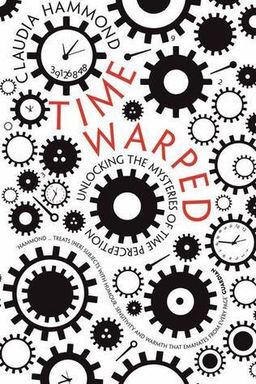
Have you ever felt that time speeds up as you get older, or slows down when you're afraid? Claudia Hammond’s Time Warped invites you to question this everyday experience. She argues that time isn’t a fixed external force ticking away on a clock—it’s something your mind actively constructs, stretches, and compresses depending on emotion, memory, attention, and circumstance.
Through captivating stories—from BBC reporter Alan Johnston’s four-month captivity in Gaza, where hours felt like years, to skydiver Chuck Berry’s near-death freefall that unfolded in seconds yet seemed eternal—Hammond explores time as a psychological reality rather than a mechanical one. We don’t perceive time linearly; our minds bend it according to how we feel, what we remember, and whether we’re focused or bored. The book reveals the mind’s remarkable ability to warp time, helping us understand why an hour can feel eternal or vanish in an instant.
How Minds Manufacture Time
Hammond shows that our brains don’t possess a single organ devoted to time perception. There is no internal clock like a heart or a liver. Instead, time arises from the interplay between neural networks, memory consolidation, and attention. The cerebellum, basal ganglia, frontal lobe, and insular cortex each contribute, working together to measure different scales—from milliseconds to years. When fear floods the brain with adrenaline, we create a higher density of memories per second, making moments feel elongated. When we’re absorbed in flow—reading, painting, playing music—time flies because we’re not conscious of it passing.
Emotion, Memory, and Attention
Three forces—emotion, memory, and attention—shape subjective time. Emotional intensity can stretch or shrink perception. Alan Johnston’s terror in captivity made nights endless; Chuck Berry’s adrenaline-soaked freefall expanded seconds; depression and boredom both decelerate time drastically. Memory also distorts time retroactively. We judge how long something lasted based on how many distinct memories it left behind. Busy, novel experiences (like holidays) produce rich memory traces that seem long in retrospect, even though they felt fleeting in the moment—a phenomenon Hammond calls the Holiday Paradox. Attention acts like a gatekeeper: when focused internally (as in anxiety or mindfulness), time slows; when engaged externally in flow, time accelerates.
The Architecture of Time Illusions
Our minds are full of time illusions. The experience of “chronostasis”—when the ticking second hand of a clock appears frozen for a moment—is one example. We also misjudge durations under stress or rejection: rejected participants in laboratory experiments estimated a 40-second wait as lasting 64 seconds. Even body temperature, medication, or social conditions can warp duration. Fever makes time crawl; Ritalin can alter temporal sensitivity in ADHD patients; cultures with fast economic tempos—like the USA or northern Europe—literally “move” quicker when walking, perceiving time as more precious.
From Space to Society
Time perception is also social and spatial. Hammond draws on research showing how individuals and cultures map time differently. Some visualize the future on the right and the past on the left, influenced by reading direction. Others see time vertically—Mandarin speakers often imagine earlier events above and later ones below. People even lean physically forward when thinking of the future and back when recalling the past, suggesting that time is embodied. Social norms further shape how we use time: Benedictine monks regimented their days with bells, while modern cultures equate speed with productivity. Yet paradoxically, technology designed to save time—cars, emails, computers—often amplifies our time poverty.
Harnessing the Psychology of Time
In its culmination, Time Warped becomes a practical exploration of how to reshape your relationship with time. Hammond distinguishes between times that race (busy, fulfilling lives) and times that drag (fear, boredom, illness). She offers evidence-based techniques to slow down time’s passage or accelerate it: create novelty, vary routines, engage attention, and savor present-moment immersion. From mindfulness training to memory exercises, she demonstrates that time can bend to the mind’s will. The book closes by affirming our unique capacity for mental time-travel: we can revisit the past, imagine the future, and, in doing so, enlarge the experience of life itself.
Time, Hammond reminds us, is not an indifferent cosmic flow—it’s a human construction. Understanding how our minds perceive it can help us live longer—not biologically, but psychologically, by enriching the texture of experience and turning fleeting hours into memorable years.