
Idea 1
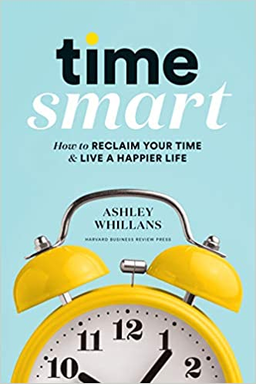
Time Smart: Reclaiming Time for a Happier Life
How often do you catch yourself thinking, “I have too much to do and not enough time to do it”? In Time Smart: How to Reclaim Your Time and Live a Happier Life, Harvard professor Ashley Whillans challenges this modern paradox that defines nearly all of us: we want more money because we believe it will buy us more time, yet the chase for financial success leaves us feeling chronically rushed, stressed, and disconnected. Whillans argues that real happiness and well-being come not from accumulating wealth, but from cultivating time affluence — the feeling of having enough time to do the things that matter most.
Drawing from her global research on time-money trade-offs, Whillans exposes a stunning truth: many of our daily decisions about time and money are trivial in appearance but monumental in consequence. Every choice — whether to work late, check an email at dinner, or hire someone to clean — affects not only how we spend our days but also the quality of our relationships, health, and purpose. The book is a call to rethink the cultural obsession with productivity and financial achievement so that we can live more deliberately, gratefully, and joyfully.
The Core Argument: Time Is Our Most Finite Resource
Whillans declares time the ultimate currency of life. Unlike money, which can be earned indefinitely, time is finite. “You can always make more money,” she notes, “but you can’t make more time.” This insight sounds obvious but rarely guides the choices we make. Most people, she finds, continue to prioritize money over time — even when they already earn enough — under the illusion that “more money will buy happiness later.” But tomorrow often never comes. Through stories of executives skipping vacations for optional meetings and young professionals exchanging meaningful time for prestigious roles, Whillans illustrates how these misplaced priorities accumulate into lifelong time poverty.
Across cultures and income levels, Whillans finds that those who consciously choose time over money — she calls them Taylors — are happier, more socially connected, and less stressed than those who habitually choose money — Morgans. A “Taylor” opts to work fewer hours and make less money to have time for relationships, rest, or hobbies. A “Morgan,” in contrast, works longer hours or takes on extra projects for financial gain. This simple mindset difference powerfully predicts not only people’s satisfaction but also their creativity, health, and generosity. In her words, “Prioritizing time isn’t selfish; it’s prosocial.” When you have more time, you can give more of yourself — to others, to your community, and to what you value most.
Why This Matters: The Epidemic of Time Poverty
Whillans describes time poverty as a global epidemic: feeling that you have too many things to do and not enough time to do them. It’s a condition that afflicts about 80% of working adults worldwide, regardless of wealth. Surprisingly, she shows that people aren’t objectively more time-constrained than in the past — we actually enjoy more leisure hours than in the 1950s. The crisis isn’t about lack of time but about how we think about time. Technology, cultural workism, and social norms trick us into feeling perpetually busy and guilty for resting. Smartphones splinter our leisure into “time confetti,” tiny fragments destroyed by constant interruptions. We glorify busyness as a badge of success and assume that idleness is laziness. The result: societies rich in money but impoverished in time, health, and happiness.
This distortion costs us dearly. Time-poor individuals suffer higher stress levels, worse diets, more cardiovascular disease, and less joy. Businesses lose hundreds of billions annually in lost productivity, burnout, and absenteeism. The tragedy, as Whillans shows through vivid anecdotes — from a student missing her cousin’s funeral for work to a couple postponing their dream trip until it’s too late — is that time poverty isn’t only personal; it’s existential. Our most meaningful moments are sacrificed to a false sense of urgency and obligation.
Becoming Time Smart
Whillans structures her book as both a diagnosis and a prescription. The first sections identify six time traps — recurring patterns that make us time poor: technology addiction, wealth chasing, undervaluing time, busyness as a status symbol, aversion to idleness, and overcommitting to future tasks (“the Yes… damn!” effect). Later chapters provide a toolkit for escaping these traps through three strategies: finding time (reclaiming wasted or stressful moments), funding time (trading money for time-saving services), and reframing time (changing how you perceive unavoidable tasks). She introduces the concept of happiness dollars — a numerical way to compare the emotional value of time-related choices to their financial equivalents, making time investments feel real and concrete.
You also learn to build a time-affluence habit — a disciplined mindset akin to fitness training. Through reflective exercises, intention setting, and behavioral nudges like defaulting phones to silence or scheduling “slack time,” Whillans guides you toward daily awareness and action. Later chapters expand the lens to systemic change, showing how workplaces and governments can alleviate time poverty by redesigning policies — such as mandatory vacations, remote work options, and reduced administrative burdens — for a more humane future.
Why You Should Care
At its heart, Time Smart isn’t just a self-help manual; it’s a manifesto against the myth of perpetual busyness. Whillans challenges you to reevaluate what “success” truly means. Do you want more money, or do you want more meaningful experiences? As she reminds us, happiness isn’t the subject of this book — it’s the product. By making small changes in how you value and spend time, you can reshape your daily life and contribute to a world that’s less stressed, more present, and ultimately more human.