
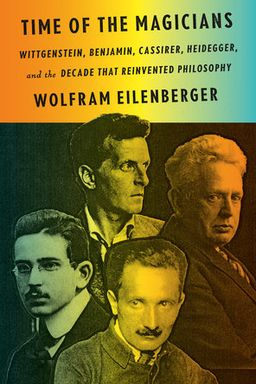
Idea 1
Rebuilding Humanity After Collapse
The thinkers of the 1920s—Wittgenstein, Cassirer, Heidegger, and Benjamin—confront a world shattered by war, technological upheaval, and cultural fragmentation. Each attempts to answer Kant’s enduring question: What is a human being? But none can rely on the Enlightenment’s old foundations. The First World War exposed the fragility of rational progress; Einstein, Darwin, and Freud dissolved traditional conceptions of space, nature, and consciousness. Philosophy became less a system of truth than a therapy for survival.
You step into the book as witness to this intellectual crossroads. At Davos in 1929, Ernst Cassirer and Martin Heidegger face off in a symbolic duel over human meaning. Cassirer defends symbolic pluralism—humans as makers of meaning through culture, language, and art. Heidegger rejects abstraction and begins from the raw question of Dasein: existence as anxiety, finitude, and authenticity. Between them lies a rift that defines modern thought—whether we find truth through shared symbols or through solitary confrontation with Being.
Philosophy as Reconstruction
After the war, philosophers were forced to rebuild. Wittgenstein, writing the Tractatus while serving as a soldier, concluded that the limits of language were the limits of the world. Meaning arose from what can be said clearly; all else must remain silent. Instead of exploiting this insight for fame, he enacted it—renouncing his fortune, teaching village children, building with monastic care, and later developing a pragmatic vision of language as living practice. His transformation from logical purity to ordinary-language pedagogy mirrored Europe’s turn from abstraction to experience.
Culture and the Plural Self
Cassirer, the gentle scholar of Hamburg, counters the crisis with humanism. To him, you are an animal symbolicum: a being constituted by symbolic forms—myth, art, science, and language. His Philosophy of Symbolic Forms traces how different cultural grammars shape experience. At the Warburg Library, where images and texts sit in “good neighborly” relations, Cassirer’s vision of interdisciplinary dialogue finds its concrete model. He extends this method to politics: defending the Weimar Constitution as an outgrowth of rational freedom, not foreign import. Cassirer’s faith in symbolic plurality stands against Heidegger’s solitary leap into being.
Existence, Anxiety, and the Demand for Authenticity
Heidegger’s philosophy exposes the fragility behind Cassirer’s optimism. In Being and Time he begins not from culture but from lived existence. You encounter yourself as Dasein—a being already thrown into the world with no fixed foundation. Meaning emerges through everyday engagement with “equipment”—door handles, hammers, words—whose readiness-to-hand reveals your place in a shared but unstable world. Anxiety strips away this background, confronting you with groundlessness. In that moment, death becomes the horizon of authenticity: your “ownmost possibility.” To live authentically is to act resolutely within finitude, not behind symbolic mediation.
Fragments, Translation, and Recovery
Walter Benjamin offers a third path—a poetics of fragments rather than systems. He sees modernity as an age of grief: language has become “overnamed,” meaning muted. His practice of allegory and montage seeks revelation through loss. In essays like “The Task of the Translator,” Benjamin treats translation not as replication but as co-creation that moves languages toward a “pure” ideal communication. His Arcades Project turns the Paris shopping arcades into metaphors of commodified perception: gaslight, glass, and iron as the architecture of modern enchantment. For Benjamin, fragments, ruins, and everyday objects become sites of redemption.
Common Threads and Diverging Paths
What ties these figures together is not doctrine but attitude—a commitment to make meaning after collapse. Wittgenstein’s therapy purifies language from illusion; Cassirer’s symbolic reconstruction restores culture’s plural coherence; Heidegger’s analytic of Dasein demands existential honesty; Benjamin’s allegory recovers memory from ruins. Together they form a quartet of responses to the same wound: the loss of certainty in what it means to be human. Each creates a different path to redemption—logical clarity, cultural dialogue, authentic existence, or messianic remembrance.
Philosophy as Life Practice
The book reminds you that philosophy in the 1920s was not an armchair exercise but a mode of living. Wittgenstein gives away his inheritance; Cassirer becomes a civic defender; Heidegger retreats to a hut; Benjamin wanders between cities and revolutions. Their lives mirror their theories. To follow their paths is to test ideas by existence itself—where meaning, ethics, and culture must be remade in the ruins of modernity.