
Idea 1
Language as Mirror and Maker of Mind
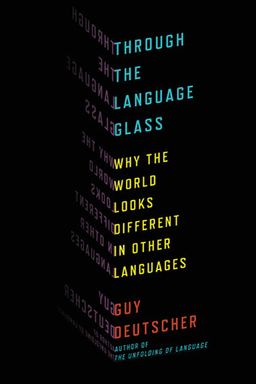
What does language reveal about human nature—biological universality or cultural invention? Guy Deutscher begins by asking you to reexamine an intuitively simple idea: language as a mirror of thought. If words merely label preexisting concepts, culture has little cognitive power. But if language can reshape the very categories you think in, then words and grammar are not passive mirrors—they are tools that chisel the mind itself.
Deutscher walks you from Aristotle through Locke to modern linguistics, showing that the traditional distinction between arbitrary labels and natural concepts crumbles on inspection. Some categories, like 'cat' or 'dog', reflect robust perceptual anchors built into your biology; others, like 'mind', 'esprit', or the English pronoun 'we', vary radically across cultures. This porous boundary between nature and nurture becomes his guiding theme.
When Labels Reconfigure Concepts
You learn that language can subtly reorganize experience. Tagalog distinguishes three kinds of 'we' to signal inclusion and exclusion; Hebrew and Hawaiian partition the body differently; French esprit blends wit, mood, and spirit in ways English separates. These examples expose how even seemingly universal notions can be sliced differently depending on linguistic convention. The fact that cultures carve up the human body or social pronouns in divergent ways proves that perception and reality alone do not dictate your cognitive categories.
Color as the Testing Ground
Deutscher sets the stage for the great color debate—a perfect battlefield between nature and culture. Color is rooted in biology, yet languages vary widely in how many colors they recognize. Investigating why some tongues collapse blue and green into one term while others distinguish eleven hues becomes a way to trace where perception ends and linguistic choice begins.
Constraints and Freedom
The book proposes a balanced lens: culture enjoys freedom within constraints. Biology sets the limits—your eyes detect certain wavelengths, and your mind notices certain patterns—but within those limits culture chooses what distinctions matter. Languages can vary almost infinitely, yet some patterns recur universally. The real mystery lies not in whether language controls thought, but how much freedom cultural variation enjoys before hitting perceptual boundaries.
From Gladstone to Whorf and Beyond
Across the book, Deutscher moves from nineteenth-century philology to modern cognitive science. You will follow William Gladstone’s observations on Homer’s odd color terms, Lazarus Geiger’s universal sequences, and Brent Berlin and Paul Kay’s data-driven color studies. Later, he revisits Edward Sapir and Benjamin Lee Whorf’s daring but flawed claim that language shapes worldview. Throughout, Deutscher asks for empiricism: replace philosophical speculation with cross-linguistic data, fieldwork, and neuroscience.
(Note: Where Whorf imagined each language locked its speakers in a cognitive cage, Deutscher offers a gentler model. Language nudges you—by making certain distinctions compulsory, it cultivates habits of attention.)
What You Should Expect
By the end, you will see how language and perception weave together in specific domains—color, space, time, evidentiality, and gender. You will understand that linguistic habits can sharpen some neural pathways and dull others, shaping what you notice without imprisoning what you can conceive. And you will grasp why documenting endangered languages is as vital as preserving biological species: each tongue captures a different experiment in how humans partition reality.
Core insight
Language is both mirror and maker: it reflects biological universals but also reconfigures perception through cultural invention. The most powerful effects arise not from what words allow you to say, but from what grammar obliges you to notice each time you speak.