
Idea 1
Becoming and Belonging as a Black Woman
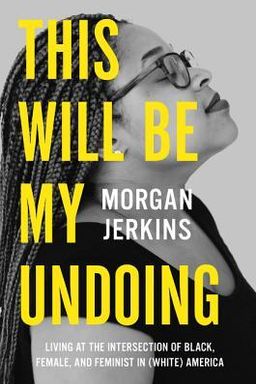
What does it truly mean to live in a body that others have already written into history, often before you can speak for yourself? In This Will Be My Undoing, Morgan Jerkins invites you to journey through her deeply personal and cultural exploration of what it means to be a black woman in America — not simply to exist, but to constantly negotiate between pride, vulnerability, and survival. She poses a piercing question: How can you belong to yourself when every system — cultural, educational, sexual, and political — teaches you to belong to others first?
Jerkins argues that black womanhood is defined by this tension between being hypervisible and invisible. Black women are watched, desired, feared, and yet rarely heard. Drawing from memoir, cultural criticism, and history, she intertwines lived experiences with an unflinching intellectual gaze. Her essential claim is that there is a psychic cost to growing up within a society steeped in misogynoir — the specific intersection of racism and sexism aimed at black women — and yet within that wound lies the power of restoration and creation.
Growing Up Under the White Gaze
Jerkins recounts how, as a young girl in New Jersey, she wanted to be a white cheerleader. This dream was not innocent—it mirrored her absorption of the cultural narrative that beauty, desirability, and femininity were synonymous with whiteness. Her rejection from the squad wasn’t just a personal disappointment; it symbolized the early awareness of racial exclusion. The comment from a friend calling her a “monkey” cemented the realization that she was seen not as human, but as other. Across schools, universities, and professions, she explores the constant labor of black girls trying to earn humanity in spaces structured to deny it.
History, Body, and Inheritance
Throughout the book, Jerkins weaves historical insights into personal revelation. From the myth of the “fast-tailed girl” — a cultural term warning black girls against sexual agency — to the legacy of labels that control women’s dress, speech, and morality, she dissects how black womanhood has been shaped by generational fear. These patterns echo wider cultural scripts like the Jezebel stereotype, in which black women’s bodies are portrayed as inherently sexual, dangerous, or untamed. Her essays show that these inherited expectations create psychic splits: black women must repress desire, police their voices, and perform docility to survive.
Searching for Intellectual and Emotional Freedom
Through attending Princeton and later writing professionally, Jerkins reflects on how intellectual spaces reproduce racial hierarchies. She becomes painfully aware of how “free speech” and reason are often coded as white. Her encounters with professors, peers, and white mentors reveal how enlightenment can coexist with exclusion. Yet she insists that black women have always made knowledge — from the enslaved conjure women to modern writers who translate trauma into wisdom. Her essays on Japan and Harlem contrast how black identity shifts across global contexts: in Japan, she feels liberated from American racial codes but haunted by the memory of violence at home. In Harlem, she learns to reenter communal blackness and discover freedom through belonging.
Narratives of Sex, Love, and the Gaze
No exploration of race and gender can ignore sexuality. Jerkins writes candidly about her first encounters with desire, religious guilt, and body shame. Through heartbreak, porn, and self-pleasure, she interprets intimacy as a site of both oppression and resistance. Sex is not simply physical but historical: “Every part of our body is a sex organ,” she writes, echoing the legacy of slavery’s objectification. Yet her eventual reclamation of her body through therapy, masturbation, and surgery also becomes spiritual—a path to reclaiming womanhood as sacred, not sinful.
Writing as Healing
Through writing, Jerkins transforms trauma into artistry. She learns from Zora Neale Hurston, bell hooks, Audre Lorde, and Michelle Obama that self-expression is not self-indulgence — it is survival. Her prose moves from confession to manifesto, culminating in essays that blend politics with prayer. In Harlem, she tells herself and all black women to breathe, live, and dance with resilience: “When you wake up, you survive.” This existential refrain becomes both a warning and a blessing.
In essence, This Will Be My Undoing contends that healing for black women starts with truth-telling—naming the histories that silenced them. Across essays on race, feminism, faith, and creativity, Jerkins proves that undoing is also becoming. She shows that to dismantle stereotypes, you must tell your story again and again until it becomes your own. Her book reminds every woman that liberation is not a single event but a daily conversation between wounds and wonder.