
Idea 1
How Sports Reveal Human Nature
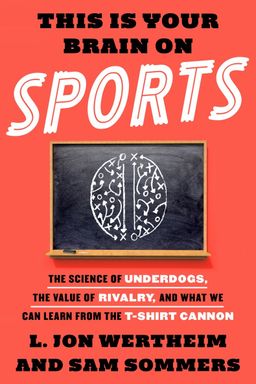
Why do you lunge for a free T-shirt, idolize quarterbacks, or insist that your team was disrespected? In their exploration of the psychology of sports, Jon Wertheim and Sam Sommers argue that athletics form a living laboratory for understanding what drives all human behavior—bias, motivation, fairness, resilience, and our need for meaning. Sports magnify in ninety minutes what unfolds over years in life: judgment under pressure, devotion to groups, and the battle between rationality and emotion.
Across their studies and stories, the authors reveal one central truth: the brain evolved for belonging and survival, not statistical accuracy. Whether you’re choosing a car because it offers free oil changes or misjudging a leader because of facial cues, your decisions reflect ancient heuristics shaped for social cohesion and reward sensitivity. Sports offer visible, high-stakes examples of these mechanisms—and by studying them, you can learn how to think and act more clearly in your everyday life.
The Arena as Laboratory
A stadium or field amplifies the universal. The energy of crowds illustrates how environment alters physiology (as seen in home-field advantages), while locker room rituals show effort justification and social bonding. The underdog effect, rivalry, and tribal loyalty each reveal how emotion, not logic, steers perception. You think you’re just watching a game, but you’re really seeing the brain’s biases in action—magnified by scoreboards, uniforms, and social pressure.
Emotion Over Reason
From Ariely’s experiments on the power of “free” to the neuroscience of hot states (when arousal short-circuits rational choice), the book shows how emotion dominates reasoning. The zero-price effect, loss aversion, and action bias explain why fans, owners, and even coaches act against their best interests. These biases are predictable and, crucially, manageable once you learn to recognize them.
(Note: Behavioral economists like Daniel Kahneman and Richard Thaler echo this idea—humans are “predictably irrational.” Sports just provide a more entertaining dataset.)
Identity, Status, and Storytelling
You root for your team, project onto your heroes, and see yourself in the underdog because identity drives narrative. The “disrespect” script, underdog sympathy, and moral flexibility toward in-groups reveal how storytelling makes effort meaningful. These stories aren’t fabrications—they’re adaptive motivators that preserve self-esteem and push you toward achievement, even when slightly detached from fact.
Athletes and fans both rewrite experience to fit a story of growth or vindication. That same tendency surfaces in work and politics every day: you justify effort, reframe losses, and privilege your group’s moral standing. Sports simply condense those instincts into a digestible form.
Performance, Praise, and Effort
From Notre Dame’s effort-based praise experiment to Aronson’s and Norton’s research on effort justification, the book shows how hard work enhances meaning. You value what you build (the IKEA effect), bond through shared suffering (hazing, tough coaching), and respond better to targeted, effort-tied feedback than to praise for innate talent. The key for leaders is specificity: reward actions, not identities.
This insight scales beyond sports. In classrooms and workplaces, focusing praise on strategy and persistence yields growth, while generic flattery breeds fragility. It’s not “You’re a star,” but “You fought for every rebound.”
Tribalism, Rivalry, and Moral Bias
The emotional highs of rivalry and schadenfreude reveal how strongly group identity shapes moral reasoning. Studies by Mina Cikara and Henri Tajfel show that fan brains light up when rivals fail, and that even arbitrary group assignment is enough to trigger favoritism. This bias explains both fandom’s joy and its violence. Moral flexibility—excusing your own side’s foul while condemning others’—is the cognitive cost of belonging.
You can’t extinguish tribalism, but awareness helps moderate it. Recognizing bias lets you celebrate without cruelty, compete without aggression, and evaluate fairly even when loyalties run deep.
Resilience and the Meaning of Limits
Sport also reveals how you cope with adversity. Whether it’s athletes performing during grief or recovering addicts finding order in ultrarunning, the lessons of endurance showcase humanity’s resilience. George Bonanno’s research shows that fast functional recovery after loss is common, not exceptional. Similarly, ultrarunners channel the same risk-seeking impulses that fuel addiction into healthy, structured repetition.
The Edge of Consciousness
In its most surprising turn, the book closes with science that uses sports imagery to test consciousness in brain-injured patients. Imagining tennis activates motor planning regions like the supplementary motor area, proving intentional thought. The “tennis test” symbolizes what the entire book implies: athletics are not trivial distraction, but a window into what makes us human—our physical embodiment of choice, effort, and imagination.
Taken together, these stories show why understanding sports is really about understanding yourself: your instincts, your biases, your drive for belonging, and the stories you invent to make life feel coherent. The arena, after all, just magnifies the field of human nature.