
Idea 1
Facing the Fire: America’s Reckoning with Racism and Renewal
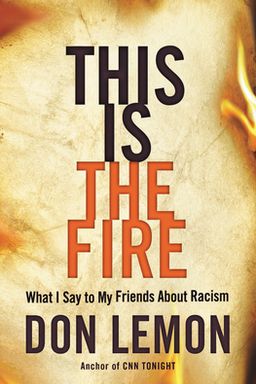
What do you do when the house is on fire—do you look away or join the effort to put it out? That’s the question that ignites Don Lemon’s This Is the Fire, his impassioned call to face America’s raging racial crisis and rebuild the moral foundation of the nation. Lemon argues that racism isn’t a peripheral issue—it’s the molten core of American identity. The book opens on the night George Floyd was murdered, but it stretches back centuries, excavating the roots of systemic racism and asking readers, Black and White alike, to look unflinchingly at how we arrived here and what will come next. He blends memoir, history, journalism, and cultural critique to illuminate the personal and collective work ahead.
The Fire We’re In
Lemon frames his book as a mirror to James Baldwin’s The Fire Next Time, which warned that God promised “no more water, the fire next time.” Now, says Lemon, that prophecy is fulfilled—the fire is here. The pandemic, political hate, and the murders of George Floyd and Breonna Taylor became a crucible for America’s racial reckoning. Whereas Baldwin called for courage in the 1960s, Lemon calls for accountability now. The “fire” burns not just as anger in the streets but as moral heat demanding transformation—of individuals, systems, and the American soul. Baldwin urged White and Black Americans to see themselves honestly and rebuild with love; Lemon modernizes that challenge, reminding us that hashtags, guilt, or performative allyship won’t extinguish the flames. Meaningful change requires sustained work that goes beyond episodes of outrage.
Why History Still Burns
Throughout the book, Lemon returns to history’s flashpoints to show how past fires continue to smolder beneath modern life. He recounts the German Coast Uprising in Louisiana (1811), when enslaved people demanded freedom only to be slaughtered and publicly displayed—a horror echoing in modern viral videos of Black deaths. He exposes how slavery’s legacy mutated into Jim Crow laws, redlining, mass incarceration, and an enduring social caste system. “We didn’t get here by accident,” Lemon writes; every inequity was engineered—for profit, power, and White comfort. Recognizing this design allows readers to approach America’s race problem not as a moral curiosity but as an economic and political choice that can, and must, be undone. (In contrast, Isabel Wilkerson’s Caste similarly reframes racism as structural hierarchy rather than personal bias.)
Personal Flame, Public Purpose
Lemon intertwines the national story with his own. He recalls his Louisiana childhood, discovering that his ancestor was enslaved near the site of violent uprisings and plantation cruelty. He shares grief over the drowning death of his sister Leisa, linking the private pain of loss to the public, cyclical mourning of Black Americans—how each tragedy, from Stephon Clark to George Floyd, feels like losing a sibling. His narrative makes the macro heartbreak personal: racism ripples through families, generations, and individual identity. Lemon’s journey through pain, ancestry, and love mirrors Baldwin’s conversation with his nephew—both men writing open letters to younger relatives, hoping they inherit courage and critical consciousness instead of apathy.
Light in the Fire: Hope and Action
Despite the heat of his critique, Lemon doesn’t despair. He proposes tangible ways forward: reimagining policing beyond domination; challenging myths in film and pop culture; confronting economic inequities; and practicing intimate, interpersonal justice. He insists progress depends on honesty—White Americans acknowledging privilege, Black Americans processing pain without yielding to cynicism. “Silence is no longer an option,” he declares, urging readers to act—vote, march, speak, and most of all, love radically across divides. Love, Baldwin insisted, was revolutionary; Lemon revisits that theology and grounds it in everyday courage.
A Fire That Purifies
Ultimately, Lemon contends that this inferno can purify us. Like Baldwin’s “refining fire,” it can melt prejudice and forge empathy. America’s so-called perfect union, Lemon reminds us, was always defined as “more perfect”—unfinished, demanding constant work. The book’s final insight is prophetic: this fire doesn’t destroy; it reveals. It burns away the illusions of equality we’ve tolerated and confronting it is the only path to renewal. Reading This Is the Fire invites you to see yourself not as a bystander to history but as one of the firefighters—the “ones” who insist that progress, compassion, and truth will survive the flames.