
Idea 1
Changing Everything: Climate, Capitalism, and Power
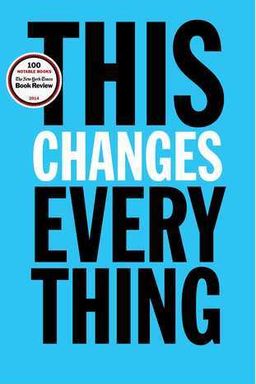
What if the climate crisis isn’t just an environmental problem—but a civilizational test? In This Changes Everything, Naomi Klein argues that climate disruption is the inevitable collision between the physical limits of Earth and the extractive logic of capitalism. When you understand this conflict, you see that incremental fixes, market tweaks, and techno-faith will not suffice. Real climate action demands changing the economic story itself—replacing growth-at-any-cost with stewardship, reciprocity, and democratic control.
Two incompatible systems
Klein begins with two systems locked in confrontation. The planet operates within tight physical boundaries: finite carbon budgets, limited absorption capacity, and ecological feedbacks. Capitalism, as structured since the late 20th century, requires perpetual growth and free-flowing global trade. When emissions must fall by roughly 8–10% per year to stay within safe temperature limits, this growth logic becomes toxic. Neoliberal globalization—cemented in the 1980s through deregulation, privatization, and trade deals like NAFTA and the WTO—made rapid decarbonization almost impossible without altering core economic rules.
The timing tragedy
Scientific consensus matured just as neoliberalism triumphed. The same decades that saw clear warnings from scientists also entrenched policies that outsource emissions, dismantle regulation, and protect multinational capital from democratic intervention. Klein illustrates this with the Ontario feed-in tariff episode: when a provincial effort to create local green jobs through renewable content rules was struck down by the WTO, it revealed how trade law can dismantle climate policy. You begin to see globalization not as neutral but as a climate accelerant—outsourcing pollution while handcuffing local solutions.
Power and denial
The book’s middle sections detail how concentrated economic power protects itself. Fossil interests fund denial networks—the Heartland Institute, think tanks, and media ecosystems—that turn scientific fact into partisan identity. This isn’t ignorance; it’s strategy. Studies by Robert Brulle show hundreds of millions annually flow into maintaining climate confusion. Psychologically, denial is most entrenched among those with privilege tied to fossil capitalism—conservative white men, business elites, and regions economically tied to extraction. Behind the denial industry lies an organized defence of profit and ideology.
The deeper cultural diagnosis
Beyond economics, Klein describes a mental model she calls extractivism: viewing land, labour, and people as disposable inputs. From Bacon’s vision of mastering nature to modern tar sands, extractivism justifies exploitation. The tragedy of Nauru—a mined‑away island hollowed by phosphate extraction—is the parable. It mirrors humanity’s planetary extraction. To heal the climate, you must heal this relationship, transitioning from domination to regeneration and reciprocity.
A crossroads of crises
Klein recognizes that crises—from hurricanes to financial meltdowns—can serve two masters: elites exploiting chaos to privatize public goods (her earlier “Shock Doctrine”), or movements using crisis to rebuild the commons. Climate change makes this contest permanent. Whether you get a corporate “climate economy” profiting from catastrophe or a “People’s Shock” that rebuilds solidarity depends on organized resistance and imagination.
What you are invited to do
Klein’s thesis ultimately moves from diagnosis to prescription: democratize energy, reclaim public infrastructure, elevate Indigenous rights, and treat regeneration as obligation. From Hamburg’s remunicipalization to the Northern Cheyenne’s solar training program, the book maps practical acts of hope—the rebirth of local power and the commons. Climate change, Klein insists, changes everything not because of its physics but because of what it demands politically: a new economy driven by care and community rather than extraction and profit.
Core message
You cannot have infinite growth on a finite planet. Either economies evolve toward cooperation, justice, and regeneration—or Earth’s systems will evolve for us, through breakdown and upheaval. The task of our generation is to choose which force changes everything first.