
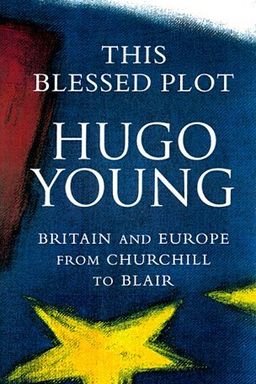
This Blessed Plot cover

This Blessed Plot

by Hugo Young

Hugo Young''s ''This Blessed Plot'' explores Britain''s intricate post-WWII relationship with Europe. From Churchill''s dreams of unity to Brexit''s reality, discover the historical twists and turns that have shaped Britain''s European journey and its future implications.

A Playful Invitation to Be the Author

Have you ever wished you could step into your favorite story and write what happens next? In Write This Book: A Do-It-Yourself Mystery, Pseudonymous Bosch mischievously grants that very wish. He doesn’t just tell a story—he hands you the pen (literally and figuratively) and dares you to finish the mystery yourself. This isn’t your ordinary novel; it’s a delightfully meta experiment that’s equal parts creative writing course, interactive detective adventure, and tongue-in-cheek exploration of storytelling itself.

Bosch begins by announcing that he cannot—and will not—complete his own book. The premise: a missing author named I.B. Anonymous, famed for his mystery series, has vanished while writing his latest novel. The twist? You, dear reader, must finish that story. The book’s central argument is that writing isn’t a magical gift reserved for professionals—it’s an act of curiosity, play, and problem-solving. Bosch’s core claim is that anyone can write an engaging story if they approach it like a mystery: full of clues, red herrings, villains, suspense, and surprise endings.

Storytelling as Mystery and Game

Through witty footnotes, pseudo-assignments, and mock writing exercises, Bosch builds a book-within-a-book called The Case of the Missing Author. As you progress, you co-create its plot: discovering clues (letters, chocolate wrappers, a golden tooth), navigating fantastical “Other Sides,” and meeting odd characters like sibling detectives A____ and Z____ and the evasive teen magician Rufus. The novel’s humor—and genius—lies in how it blurs the lines between reader, writer, and character. Each writing prompt becomes both a plot device and a craft lesson: you learn pacing through a chase scene, character development through dialogue, worldbuilding by describing I.B.’s odd house.

The Meaning Behind the Meta

Behind Bosch’s comic persona and chocolate obsession lies a serious idea: storytelling is the ultimate act of participation. Writing isn’t about perfection—it’s about daring to create even when you don’t know what happens next. When Bosch jokes about procrastination or offers absurd footnotes on grammar, he’s teasing the reader into seeing creativity as messy, human, and fun. (Think of how Lemony Snicket used self-aware narration to draw readers into his absurd universe; Bosch does the same but turns his audience into co-authors.)

A Toolkit for Imagination

Across its chapters, Write This Book functions as a complete, if unorthodox, writing guide. Bosch covers the essentials—plot, worldbuilding, character design, tone, naming, dialogue, genre conventions, and villain creation—while constantly inviting the reader to experiment. He mocks literary clichés (“It was a dark and stormy night!”) and genre stereotypes (“Not another sparkly vampire!”), urging writers to twist expectations instead of copying them. “Lie, Cheat, and Steal,” he advises early on—meaning invent wildly, borrow creatively, and transform inspiration into something new. By turning writing advice into interactive play, Bosch makes storytelling accessible to any young reader or aspiring writer.

Why It Matters

In a world where students often see writing as intimidating homework, Write This Book flips the script. Bosch argues that stories are best understood when you write them yourself. His approach democratizes imagination: rather than revering the author as genius, it treats story creation as a shared adventure. You realize that all narratives—whether about missing authors or magical rabbits—start with curiosity and play. The book’s humor and structure make creativity contagious, reminding readers that storytelling doesn’t require permission or perfection. It’s an invitation to invent worlds, solve mysteries, and chase down chocolate-scented clues of your own.

By the end, you emerge not only having traced the fate of I.B. Anonymous but also having discovered your own authorial voice. Bosch’s argument is clear: to find the missing author, you must become one. And in this joyful, conspiratorial experiment, the reader realizes that storytelling is the most thrilling mystery of all.


Turning Readers into Writers

Bosch’s most radical idea is that you shouldn’t just consume stories—you should make them. Every page of Write This Book nudges you out of the passive role of reader and into the active role of creator. The book literally interrupts itself, demanding that you fill in blanks, draw scenes, name characters, or invent worlds. In this way, Bosch transforms the writing process into a detective mission: you’re not waiting for clues, you’re manufacturing them.

Breaking the Fourth Wall (and the Blank Page)

Bosch’s metafictional style constantly breaks the “fourth wall.” He talks directly to you, jokes about your procrastination, and reassures you that “pages don’t stare at you—you stare at them.” His humor builds confidence, turning the terrifying blank page into a playground. By incorporating silly exercises (“Scratch your back. Go crazy. That’s writing!”), he makes creativity feel like exploration rather than evaluation.

Participation as Empowerment

The structure of Write This Book mirrors the reader’s growth. Early chapters act like a teacher guiding you through basics—character, world, dialogue. Later chapters gradually hand the reins over, encouraging you to storm castles, rescue authors, and rewrite endings. Bosch proves that writing advice sticks best when you’re applying it immediately; by the time you reach “The End,” you’ve written half the book yourself. This participatory design echoes creative pedagogies found in books like Austin Kleon’s Steal Like an Artist: instead of waiting for genius, you learn through playful making.

Ultimately, Bosch’s approach restores wonder to writing. You don’t finish Write This Book thinking about grammar rules—you finish believing you can shape stories. That transformation—from reader to writer—is the book’s true ending and its most empowering mystery solved.


The Craft of Plotting Mysteries

Bosch treats plotting like solving a case. The disappearance of I.B. Anonymous becomes both story and metaphor for the writer’s eternal question: what happens next? Every “chapter assignment” mirrors a stage in a classic mystery’s arc—the discovery, the clue hunt, the twist, the storming of the castle, and the final revelation.

Plot as a Map, Not a Prison

Bosch famously despises outlines. He calls them “totally disheartening” and compares his alternative—a mise en plot—to a cook’s preparation table. You gather narrative ingredients (characters, settings, clues) without locking yourself into a recipe. This flexible approach gives writers freedom to improvise while still keeping their eyes on the road. His analogy of story as a family vacation—full of flat tires and unexpected detours—encourages you to enjoy the messy journey rather than fear it.

Mystery Mechanics

Each writing prompt inside the story illuminates an element of suspense. Red herrings mislead readers, ticking clocks heighten urgency, and cliffhangers keep tension alive. By explicitly labeling these devices, Bosch teaches writers to manipulate pacing and reader curiosity. When A____ and Z____ uncover clues like a ransom note spelled in magazine cutouts, you learn about visual storytelling and atmosphere. When Rufus reveals a glove, Bosch demonstrates how symbolic objects can connect threads across genres—fantasy, noir, and gothic.

(For comparison: John Truby’s Anatomy of Story also treats plot as discovery rather than formula, insisting that character decisions drive mystery forward—an idea Bosch cheekily translates into chocolate-fueled adventure.)


Character Creation and Comic Identity

Bosch’s humor-infused approach to character development makes invention deeply personal and entertaining. His pseudo-assignments invite you to fill out absurdly detailed character forms—underwear color included—because heroes and villains are shaped not just by traits but by quirks. This democratizes creativity: anyone can design a protagonist by starting with imperfection.

Naming and Personality

Bosch reveals his method with “Max-Ernest,” a name combining humor and seriousness. Good names subtly express character essence while dodging clichés. If you’re stuck, he jokes, open a dictionary and pick the first word. The point isn’t perfection—it’s experimentation. Characters are reflections of you or people you know, but “change enough details to allow for plausible deniability,” he warns, parodying the autobiographical impulse behind much fiction.

Flaws as Fuel

Bosch emphasizes fatal flaws, those weaknesses that trigger story crises. A____ and Z____’s curiosity gets them into trouble, yet also carries the narrative forward. By confronting their fears—claustrophobia, pride, sibling rivalry—they evolve, proving that backstory isn’t biography but emotion. Bosch mocks dull backstories (“write it like your front story!”), reminding you that revelation should feel alive.

From names to habits, Bosch treats character-building as the heartbeat of plot. As you outline A____ and Z____ or your own creations, his voice insists: characters should surprise you as much as they surprise each other.


Worldbuilding and Genre Play

When Bosch explores the “Other Side,” he turns setting into storytelling. The book offers three genre paths—fantasy, noir, and gothic—each reshaping the same scene differently. Writers learn how atmosphere defines narrative tone: a castle moaned by wolves evokes dread, while a neon-lit alley hums with crime intrigue.

Consistency and Collision

Bosch’s pseudo-intelligence essays teach that worlds must be internally consistent—Middle-earth cannot meet middle school. Yet he encourages mixing worlds through imagination exercises like “When Worlds Collide.” This playfulness invites you to craft hybrid realities, where magicians conspire in noir theaters or were-hare villains haunt detective plots. (Neil Gaiman similarly merges myth and modernity in Neverwhere.)

Setting as Tone Generator

By alternating genre versions of the same chapters, Bosch shows how sensory detail and vocabulary transform mood. A fantasy “underland” gleams gold; a gothic forest drips gloom; a noir theater reeks of popcorn and betrayal. Through these contrasts, you learn how setting can become a character itself—a body expressing emotion, mystery, and theme.

Bosch’s advice is simple yet profound: choose your world carefully, then let its rules shape everything else. Worlds aren’t mere backgrounds; they’re engines of plot and imagination.


Inventing Villains and Building Conflict

Bosch claims the villain is the writer’s best friend—because without conflict, there’s no story. His humor disguises fundamental narrative logic: opposition defines purpose. Every hero needs a good bad guy to push them toward self-discovery.

Making a Good Bad Guy

Bosch’s “MWAHAHA worksheet” spoofs evil archetypes but secretly teaches psychology. Villains aren’t just evil; they reflect heroes’ fears. The Were-Hare represents madness and transformation; the dragon stands for pride; the magician for deception. Bosch suggests giving villains attractive traits—charisma, intelligence, ambition—because that’s what makes them dangerous and believable. (As Blake Snyder notes in Save the Cat!, good villains think they’re heroes.)

The Twist and Redemption

Bosch’s own twist in The Case of the Missing Author reveals that Rufus, the suspicious side character, was seeking I.B. all along. His apparent betrayal becomes emotional nuance: villains are rarely what they seem. Writers learn that plot twists deepen character while reconfiguring reader trust—the ultimate narrative red herring.

By the story’s end, Bosch proves that every antagonist is an opportunity. “A hero is only as strong as the villain she fights.” For writers, that means design conflict that mirrors inner struggle—whether through evil organizations, were-creatures, or the author’s own procrastination.


Humor, Tone, and the Writer’s Voice

Throughout Write This Book, Bosch’s tone is part classroom clown, part secret mentor. His effortless comedic voice disguises serious craft lessons. When he riffs on adverbs—“I exult in using adverbs excessively!”—he’s illustrating how tone arises from rhythm and attitude. His playfulness teaches students to embrace imperfection and personality in their prose.

Tone as Character

Bosch equates tone with music: just as a melody can be light or tragic, writing’s tone depends on diction and pace. His sarcasm becomes an example of how a narrator can act as a character with opinions and quirks. This technique demystifies style: you don’t need to sound “serious” to sound real—you just need to sound like yourself.

Comic Instruction as Serious Art

By exaggerating footnotes and tangents (“Offal tastes awful!”), Bosch turns meta-humor into memory hooks. Readers learn craft terms—tone, perspective, red herrings—without textbook stiffness. The laughter becomes learning. His joyful irreverence mirrors the approach of Douglas Adams (The Hitchhiker’s Guide to the Galaxy), who likewise proved that wisdom lands best when told with wit.

Bosch’s ultimate tonal lesson: never fear nonsense. Sometimes the most creative ideas emerge, as he writes, “by turning off your critical faculties and going off course.” Humor isn’t distraction—it’s liberation.


The Endless Ending: Writing as Discovery

Bosch ends his book with deliberately unfinished pages—literally blank spaces inviting you to “write your own ending.” This non-ending encapsulates his philosophy: writing isn’t completion, it’s exploration. The mystery of I.B. Anonymous resolves only when the reader realizes that the author was never missing. He was hiding in the reader’s imagination all along.

The Meta-Resolution

In the final twist, A____ and Z____ discover that I.B.’s plea for help was actually a request for collaboration. Their journey into the Other Side was creative apprenticeship, not rescue. Bosch uses this revelation to parody author-reader dependence: the writer cannot finish without the reader’s imagination, the reader cannot solve without writing.

Writing Forever

Bosch closes with an invitation—“Rewrite everything. Because rewriting is everything.” He redefines “The End” as the beginning of your next draft. Creativity, by his logic, is infinite recursion: every solution births new mysteries, every finished paragraph opens another page. Like the rabbit that leaps through its hat, writing leads endlessly deeper.

This final lesson, framed comically, delivers profound wisdom: the secret to writing is perpetual curiosity. When you stop wondering, the story ends. When you keep writing, mystery—and imagination—live on.

Dig Deeper

Get personalized prompts to apply these lessons to your life and deepen your understanding.

Go Deeper

Get the Full Experience

Download Insight Books for AI-powered reflections, quizzes, and more.