
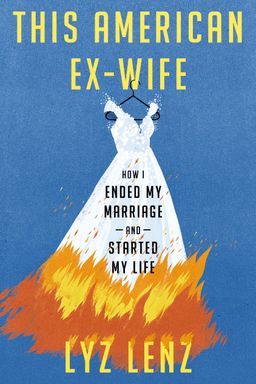
This American Ex-wife cover

This American Ex-wife

by Lyz Lenz

A look at marriage today and an argument for how divorce can be empowering for women.

Choosing Freedom Over the Fairytale

Have you ever stared at a small, ordinary mess and suddenly seen your entire future in it? In This American Ex-Wife, Lyz Lenz argues that what we dismiss as "personal problems" inside heterosexual marriage—trash bags abandoned on benches, name changes that seem like love, jokes about husbands who can’t find the ketchup—are in fact structural features of a system that consumes women’s labor and identity. Lenz contends that divorce, far from being a personal failure, can be a conscious act of liberation that exposes how patriarchy hides inside cultural scripts, legal traditions, and our daily chores—and that breaking free can be the beginning of a truer life.

Her case is bracingly simple: the institution is working as designed. You can master marriage’s self-help quizzes, bring the therapist’s puzzle to the living room floor, or pray your way through "family life" weekends—and still find your sense of self boxed up in a crawlspace by a husband who “doesn’t like” your mugs, your shirts, your politics, your voice. That hidden basement box (she finds her “Write Like a Motherfucker” mug, her chambray shirts, Madame Bovary, even a cheeky "Drink Up, Witches!" sign) becomes Lenz’s Bluebeard chamber: incontrovertible proof that what she keeps losing isn’t absent-mindedness; it’s her autonomy. When she finally says "I quit," she is refusing a structure that runs on women’s unpaid labor, invisibilized time, and cheerful self-erasure.

What This Book Will Help You See

You’ll see how the mental load and domestic labor keep wives at the sink of history, no matter their degrees. Lenz’s trash-bag Monday is not a one-off; it’s Nietzsche’s eternal return in yoga pants. You’ll follow the policy scaffolding behind those sinkfuls—tax incentives for marriage, letters to SNAP recipients extolling “healthy marriage,” and political budgets (see the Republican Study Committee’s "Blueprint to Save America") that swap universal childcare for moralizing about wedlock. You’ll watch how “choice” does heavy ideological lifting: choice to change your name, choice to accommodate his dream job, choice to "ask for help"—and how these personal choices slot neatly into centuries of coverture that transformed wives into legal shadows of husbands (William Blackstone’s famous gloss: husband and wife are one person in law, and “the one is the husband”).

Why It Matters Right Now

The stakes aren’t just your kitchen floor; they’re your career, wallet, body, and story. Lenz juxtaposes her first major book deal with the crescendo of marital resentment: as her professional life ascends, she’s told to write a "nice little novel" at night, consider a third baby, and puzzle instead of Florida. Research backs her lived experience: when women get promoted, divorce risk rises (Johanna Rickne), not because women fail but because most men weren’t taught to be a main supportive spouse. And if you’ve ever been told to stay “for the kids,” Lenz shows how the science has been massaged to fit an agenda—children fare better with money and good parenting, not necessarily with parents who stay married in misery (Slate’s Gail Cornwall and Scott Coltrane separate myth from evidence). Even the pandemic underscored the point (as sociologist Jessica Calarco put it: “Other countries have social safety nets. The U.S. has women”).

The Culture We Swim In

Lenz narrates with the soundtrack of ‘90s country—Deana Carter asking “Did I shave my legs for this?” and the Chicks’ “Goodbye Earl” teaching every girl a minor-key in defiance. But as the Chicks learned when they spoke against a president, women are tolerated within patriarchy until they aren’t. The book toggles deftly between her living room and the culture writ large—Kitty Wells’s “It Wasn’t God Who Made Honky-Tonk Angels” calling out male hypocrisy in 1952; sitcoms where marriage is a war of attrition; bachelorette parades that sell the myth with sashes and plastic tiaras; and the “revenge dress” aesthetics of Princess Diana reclaiming narrative with black velvet and a slit. It’s a chorus of women insisting the problem isn’t a few bad husbands; it’s a rigged game.

What You’ll Learn Next

We’ll unpack the invisible labor economy that keeps wives managing, monitoring, and mopping (Allison Daminger’s “anticipating and monitoring” load); why identity theft-by-marriage starts with a last name and ends with your work email (Lucy Stone to Aubrey Hirsch, and the lingering power of coverture); how “good men” can still benefit from a bad system (bell hooks: love cannot thrive in domination); why repair metaphors (home makeovers, couples’ puzzles) keep us caulking over mold; how pleasure and agency return when you sever sex from duty (“Sex After Jesus,” vibrators, and the orgasm gap); and how life after divorce can look like a clean, bright rental, a 50/50 custody order that finally evens the chores, a stand-up set where you own the mic, a road trip to the dark sky with your kids, or a chiminea where your cheap polyester wedding dress melts into air.

Core Promise

Divorce is not the easy way out; it’s the honest way through. Lenz shows you how to read the “small” moments as structural signals, spot the walls you’ve been spackling for years, and choose a life where your name, time, body, and joy are not collateral for someone else’s comfort.


The Housework Trap and Mental Load

Lenz opens with a scene that will feel painfully familiar: it’s 1:00 a.m., she’s just back from a 16-hour research trip, and a full trash bag has toppled onto the kitchen floor, bleeding Go-GURT wrappers, Goldfish, orange peels, and wet napkins. Her husband had “set the full bag on the bench,” planning to take it out tomorrow—the domestic equivalent of “I’ll let the dishes soak.” The bag fell, he didn’t notice, and she’s the one doing the calculus: wipe or wage war? This isn’t about trash; it’s about what philosopher Friedrich Nietzsche called the eternal return. In marriage, she writes, the same fight recurs—over counters, socks, mental load—until it defines your life.

From A Chore to A System

A husband can dismiss a spill as “just trash.” It’s easy to see an isolated chore when your work and leisure aren’t braided through constant vigilance: knowing if you have dish soap, keeping potatoes on hand, tracking the dishwasher filter, remembering the birthday party gift, the appointment time, the handout on the fridge. Lenz names the thing many wives feel but rarely articulate: the work is noticing. Sociologist Allison Daminger calls it the cognitive dimension of household labor—anticipating and monitoring. Women overwhelmingly do this invisible pre-work: scanning the home for entropy, project-managing the family calendar, and then following up to make sure “help” actually happened.

Lenz doesn’t want help. She wants a partner. Her husband’s stance—“If you want help, just ask”—frames housework as her default job with optional male cameos. If she accepts a cleaner, she must fund it with extra freelance work and placate his icy silence. When she requests a vacation to reset the marriage (Hawaii, or at least Florida), she gets…a 5,000-piece puzzle of the ocean suggested by their therapist. The metaphor, she notes, is insultingly on the nose.

Why Straight Marriages Skew 51–49 (And Break)

As Lenz’s career gains traction (a book deal off a viral religion-and-politics essay), the home front deteriorates. The data match her reality: when women get promoted, divorce risk rises—not because ambition ruins families, but because most men were never socialized to be the primary support spouse (Johanna Rickne’s EU study; Michelle Obama’s “abacus” metaphor for dynamic balance). Asking for 50–50 is barely tolerable; asking for 51–49 in the woman’s favor often tips the marriage. In Lenz’s home, the ask is modest: bring takeout once a week, vacuum sometimes, do the grocery run with kids. Each time, the task happens once, then dies of “too hard.”

The emotional weather sours further: he “suggests” a third child right as her book ramps up—a reset to the default where her time flexes and his does not (Eve Rodsky calls this the flexibility myth: in straight couples, her job is always the “more flexible” one). He wants a smaller, tidier dream for her—a mystery novel written after bedtime—and quieter floors. The trash bag becomes prophecy: she sees a hundred past bags and a lifetime of future ones. That’s when she chooses to be the one who blinks last—by leaving.

Help vs. Partnership (And Why the Words Matter)

When your partner says, “Just tell me what to do,” they reveal the core problem: you’re still the foreman. You’re still the one reading the plans, setting the schedule, and quality-controlling the work. “Help” is intermittent; partnership is default. Lenz learns this the hard way during a health crisis: a kidney infection and uterine cysts knock her out, neighbors scoop the kids, and four hours pass before her husband returns a call. The next day, he takes a half day and asks at noon if she’s okay. Then he leaves.

A Small Test You Can Try

Stop asking for help. Ask for ownership. If he “owns” lunches, he plans the menu, checks the mustard, learns which Dr Pepper to pack, and notices when you’re writing heartfelt notes at 6:00 a.m. alone. If he “owns” floors, he notices the mold creeping back behind the patched drywall. If he can’t or won’t, that’s data—not about love, but about partnership.

(Context: Arlie Hochschild’s The Second Shift mapped these inequities decades ago; the pandemic made them glaring again. A NYT survey found nearly half of men believed they were doing most homeschool during lockdown; only 3% of women agreed.)

The Quiet Math of Freedom

Ironically, divorce gives Lenz what no amount of cajoling could: court-ordered 50–50 custody. She writes fewer notes and does fewer dishes—and the counters stay clean because there isn't another adult un-learning basic maintenance on principle. When you stop being the default, entire evenings reappear. That’s not luck; it’s what happens when the system that relied on your invisible labor is replaced with an enforceable schedule and an emptying sink.


Bluebeard’s Closet: Erasure of Self

Lenz finds a box in the basement crawlspace—behind wedding decorations and unwanted china from a mean grandmother—packed with everything she’d "lost" across eleven years. Her husband had secretly removed items he disliked and stored them there: mugs with feminist sayings, chambray nursing shirts, a copy of Madame Bovary, a conversation-starter booklet from their dating days. It’s a visceral, domestic Bluebeard moment—opening the forbidden room to discover the dead bodies aren’t wives but versions of yourself.

How Identity Gets Chip-Chipped Away

What does it mean when your partner hides your mug that says “Write Like a Motherfucker?” Beyond the petty control lies the meta-message: your voice in public (and at the table) is embarrassing to him. Then there’s the name. Lenz, once Elizabeth Claire Baranowski—who chose to become “Lyz” as a teen to claim some specialness in a swarm of Elizabeths—reluctantly takes her husband’s last name to be a "family unit". It’s pitched as practical. After all, families should share a name. But the “practicality” rests on centuries of coverture that reduced a wife to a legal shadow (William Blackstone’s dictum: husband and wife are one person—him). Even in the 1970s, a Wisconsin teacher had to sue to keep her birth name on her insurance; the judge intoned that “family unity” required the husband’s name, until Ruth Bader Ginsburg’s amicus brief helped reverse the ruling.

Like Lenz, you may rationalize: it’s just a name. But names move money, credit lines, payroll, passports, and search results. Changing yours changes the bureaucratic world’s response to you; keeping yours invites paperwork hassles, social suspicion, and the occasional denial of spousal benefits. As writer Aubrey Hirsch found when she gave her children her last name, backlash can be immediate and ferocious—because names are about lineage and power, not mere preference.

The Myth of Choice (And Why It Bites Back)

When Lenz asks women why they changed their names, many point to love, logistics, or troubled family histories they wanted to shed. In a gender-equal utopia, those would be valid reasons. But as critic Moira Donegan argues, “choice” often launders coercion—shielding structural power with personal narratives. In survey after survey, 80% of straight women still take their husband’s surname, often framing it as “want to,” not “have to.” Meanwhile, very few husbands consider taking their wife’s name; even fewer give children the mother’s surname (and when they do, they can expect a storm of derision).

Lenz isn’t out to purity-police anyone’s decisions. She’s mapping the terrain: each "small" concession—the name, the move to his career town, the family plan built around his timeline—builds a scaffold that later makes it feel “natural” for him to veto your mug, your writing, your Florida trip. By the time you’re told to write your "nice little novel" at night, the pattern is already set: you flex; he doesn’t. You apologize for the cleaner; he sulks because your freelancing bought it. The box has been filling for years.

How Culture Helps Hide the Box

From Disney to rom-coms to bachelorette merch, hetero romance scripts center sacrifice as proof of love. ‘90s country music gave Lenz and her sister a vocabulary of female frustration—Deana Carter, Jo Dee Messina, the Chicks—but even these anthems often stop shy of burning the whole thing down. You’re allowed to poison an Earl in a song; you’re punished for criticizing a president in real life. Unsurprisingly, the backlash teaches girls early: be charmingly subversive but not dangerous; succeed, but not at the price of male comfort.

A Counter-Practice

Inventory your “basement box.” What have you quietly retired because it upset the peace? A political poster? A weekly writing night? The idea of keeping your name? Bring one item back into the living room. If the room can’t hold it, that’s the point—not that you chose wrong, but that the structure requires your disappearance to function.

(Related reading: Simone de Beauvoir warned in The Second Sex that marriage flatters women as queens while treating them as servants; bell hooks argued in All About Love that love cannot coexist with domination. Lenz’s basement box is those theories with yogurt-lid specificity.)


Success, Resentment, and the 51–49 Problem

What happens when your dream finally says yes—and your marriage starts saying no? Lenz lands the offer she’s been working toward: turn that widely read essay into a book. At the same time, the house begins to crack: more sulks over childcare, more one-and-done chore attempts, more hostility toward her public-facing work. Then the kicker: mid-draft, her husband floats a third baby and suggests she shelve the book for “a while,” or channel her writing into a “nice little” mystery after bedtime. It’s not subtle. She’s approaching a professional horizon; he’s angling to move the finish line.

When Ambition Breaks the Spell

Sociologist Johanna Rickne’s work shows a repeatable pattern: women’s promotions increase divorce risk, particularly when they disrupt traditional expectations that he leads and she flexes. Lenz experiences the interpersonal version. Her requests aren’t radical—takeout once a week, the vacuum occasionally—but asking for even 51–49 in her favor unbalances a marriage calibrated to 60–40 (or 80–20) in his. Michelle Obama calls marriage an abacus, not a scale; the beads should slide. Lenz’s beads calcified.

Couples therapy, which might have been triage, becomes set dressing. She asks for a trip to reconnect; she gets a puzzle to assemble on the floor, Star Trek droning in the background. They never finish it. The point is not stubbornness; it’s how the institution routes friction back to women: plan it, pack it, make it pretty, make it cheaper, make it smaller. Even “vacation” becomes a feminine craft project—if it happens at all.

Policy, Not Personality

It’s tempting to frame all this as private immaturity. Lenz refuses the easy diagnosis. She connects her kitchen to the capitol: federal and state policies reward marriage and cheapen childcare; SNAP letters moralize about “healthy marriage” instead of raising benefits; budget blueprints invoke marriage 26 times while “single father” gets zero mentions. In 2020, corporate America got bailouts; families got a fleeting tax credit that cut child poverty and was then allowed to lapse. You weren’t just “bad at balance.” You were subsidizing a social experiment where women are the safety net.

The Breaking Point Isn’t Dramatic—It’s Specific

People love a smoking gun: an affair, a gambling addiction, a spectacular betrayal. Lenz’s end arrives via a $3 Target sign: "Drink Up, Witches!" It vanishes from the dining hutch. After promising in therapy not to hide her things, he took it anyway—because he didn’t like it and didn’t like what it signaled about her. She reads the sign’s absence as a ledger: all the small takings behind and ahead. She’s done waiting for the “acceptable” reason to leave. As her friend Matthew says when she asks if being happy is a good enough reason to break a life: “Yes.”

A Script Flip You Can Use

Instead of asking, “Is my reason good enough?” ask, “Is my life livable like this?” If your answer depends on your partner becoming a different person, you have your answer. You can spend a decade training a grown man like a horse—or you can spend that decade writing your book.

(Compare: Susan Faludi’s Backlash documents how gains for women are consistently met with cultural counterattacks; Lenz’s living room is one such counterattack—small, plausible, deadly.)


The Heterosexual Repair Project

Lenz buys an old Iowa house with “good bones,” must in the basement, and a 1954 bathroom begging for a vent. What follows is a masterclass in metaphor. Demolition is intoxicating—ripping down tile, exposing studs, tossing moldy plaster. Repair is harder: measured, iterative, and honest about structure. In their home, she and her engineer husband choose repair by YouTube. He replasters the dining room without taping off doorways, and white dust coats the house like ash. He refuses to clean mid-project (“There will just be more dust.”). She turns on the shop vac—only to discover he has reversed the hose, blasting a white cloud over her. They both laugh. Later, she will realize this is the marriage in miniature.

When “Do-It-Yourself” Means “Do-It-Herself”

They strip the upstairs bathroom to the studs and discover invasive mold from years of showers without a vent. He insists on doing drywall; the studs are warped. He blames her “imprecision,” mocks her for not taking advanced calculus, and declares he doesn’t want her help. She drives to Barnes & Noble, crying in the parking lot—then comes home and paints faux stucco over lumpy walls because it’s the only way to hide the seams. Water stains bloom anyway, despite layers of paint. You can cover rot; you can’t stop its return if you refuse structural truth.

HGTV’s Fixer Upper becomes their couple’s liturgy—Chip’s goofy masculinity, Joanna’s polished feminine competence, shiplap to sanctify the past. Lenz calls the aesthetic “Hobby Lobby chic”: manufactured authenticity; old made new with a bow. The Gaines marriage model matches the design: he builds, she beautifies. In their home, Lenz scrubs grout every Saturday; mold returns. She tries not to notice the must that greets them after weekends away; he accuses her of “smelling fictional smells.” The effort to keep it cute is itself the problem.

Repair Requires Looking Back (Not Just Forward)

Friends and neighbors urge post-divorce women to "keep it positive," never speak of the ex, don’t look in the rearview. Lenz rejects the hit-and-run metaphor: if you clip something, you do pull over and look. She revisits the moments she tiled over: a fundraiser for LGBTQ families he refused to attend because he opposed same-sex marriage; a dryer-sheet joke about “crushing” her spirit that wasn’t a joke; a silent home where therapy was the only place serious conversations occurred. Honesty, she argues, is demolition. You can’t repair what you refuse to see.

Two Questions for Any “Fixer Upper”

1) Is this a paint problem or a beam problem? If water stains keep bleeding through, it’s not paint. 2) Who is the site manager? If you’re the one sourcing tile, booking sitters, and holding the flashlight while he lectures—congrats, you’re the contractor and the cleanup crew.

(Elizabeth Spelman’s Repair argues the home is both a literal and emotional workshop; Lenz’s story shows what happens when one person is nominated as the universal fixer. The result isn’t restored; it’s exhausted.)


Good Men, Bad System

After Lenz publishes “I’m a Great Cook. Now That I’m Divorced, I’m Never Making Dinner for a Man Again” in Glamour, the internet splits. Women DM to say, “I sent this to my husband; he wrote back, ‘Is this how you feel?’ and apologized.” Others scold: “Not all men!” Men crowd her inbox to self-certify as “good.” The point of the essay—how love offerings get institutionalized into unpaid labor—gets swallowed by a trial about male virtue. Lenz refuses the bait. She doesn’t want to be anyone’s priest or parole board. She wants to be fully human—and to talk about systems.

Why “Good” Isn’t the Question

Define “good man.” Doesn’t hit? Helps sometimes? Supports her career (as long as it doesn’t cost him)? Brings flowers? Lenz keeps meeting “good men” who behave badly when the script centers someone else. There’s the civic hero who invites her over to cook as a performative clapback to her essay—then scolds her for having already eaten a burger. There’s the progressive writer who won’t wear a condom, corrects her “aioli” as “rémoulade,” and later dumps her on a Brooklyn sidewalk when she asks for space. There’s the feminist man who assaults her in his home, and the art-world “ally” who pushes her against a wall and rants about her pay while calling late to talk about his cock.

None of this proves all men are terrible. It proves that a bad structure allows many men to be “good” without being good to women—because their comfort remains centered. bell hooks writes that love is the practice of freedom; if his freedom rests on your unfreedom—if his excellence requires your silence—you’re not in love; you’re in a contract.

Comedy as a Case Study

On open-mic nights at Penguin’s Comedy Club, Lenz hones stand-up about boobs, marriages, and Midwestern moms. The room is mostly men. One night, a cluster of comics invites her out, then stages a “laughter intervention”: they tell her she needs to laugh more at their jokes if she wants to belong. She names the asymmetry: “I work to earn the laughter; you feel owed it.” She stays for her karaoke slot, sings “Goodbye Earl,” and leaves. You can’t be part of a club whose entry fee is your subservience.

Reframe for Sanity

Stop grading men on a curve. Start grading environments. If a setting repeatedly asks you to explain your humanity or barter it for access, that’s the data. Change the room—or leave it.

(Studies echo her experience: women want partners who make them laugh; men often want someone who laughs at them. Naomi Weisstein urged women in the ‘70s to build humor “that throws off the shackles of self-ridicule.” Lenz does exactly that, one tight five at a time.)


Reclaiming Body and Desire

One month after she leaves, Lenz buys a $40 vibrator from a dusty Iowa sex shop around the corner from her old church. She’s 35, newly divorced, and intentionally breaking a life-long truce with Evangelical scripts that equated female pleasure with peril. She names the core jailbreak: during marriage, sex was often sublimation—eyes closed, duty done, bathroom hideaways after. Now, she sleeps with a man in a hotel because she wants to break the seal and never look back. It’s cliché on purpose—and it’s the first time sex feels chosen.

Closing the Orgasm Gap (And Why It’s Political)

Lenz cites the research you probably know but haven’t fully let reform you: in straight encounters, around 95% of men climax; roughly 65% of women do. Over half of women need oral sex to climax; most aren’t receiving it. Women give oral twice as often as men. Among older couples, men scale back giving oral sex when the relationship is strained; women keep giving (the study authors bluntly suggest men may assume women don’t need it). This isn’t “just sex.” It’s a mirror of domestic life: her labor is default, his pleasure assumed.

So Lenz experiments. She dates widely: a polyamorous poet, a nice lawyer, a former white nationalist turned librarian (she ghosts him), an ultramarathoner who declares “your pleasure is your problem,” a sports editor who reads Seinfeld plot summaries on a date, a politician obsessed with being known as a man with a big dick. If a man refuses condoms, corrects her palate to feel superior, or gets angry when she declines morning sex before coffee? She leaves. If he’s kind, present, and curious? She stays—until she doesn’t. The point isn’t volume; it’s agency.

Radicalizing the Vagina (And the Day-to-Day Body)

She also changes her relationship to exertion. At a boutique gym, she trains to drop her 5K pace under 7 minutes. “Because I could,” she writes. No one else “owns” her arms’ muscle definition or the orgasm she gives herself with a vibrator and porn her friends recommend. Pleasure becomes not a ration she must earn with excellence or thinness—but a practice that reveals what she will no longer subsidize.

Even the “revenge body/dress” trope gets complicated. At her brother’s wedding—days after asking for divorce—she wears a purple cutout dress and watches a Holiday Inn TV loop Princess Diana’s famous black-velvet “revenge dress,” worn the night Charles confessed infidelity on national TV. The dress is double-edged: liberation language wrapped around a body shaped by pain. She eats cookies in the lobby and cries. That, too, is reclamation: refusing to make your appetite the currency for anyone’s narrative. Later, she burns her cheap polyester wedding dress in a chiminea, toasting her friends, kids, house, dogs, and the ambition she will never again lay on an altar.

Two Practices to Try

1) Pleasure audit: list what turns you on, sexually and otherwise. Notice which items were outsourced to “duty.” 2) Boundary mantra: “I can leave.” Say it before sex, dinner, a date, a conversation. Your body will believe you sooner than your brain.

(See also: Mariarosa Dalla Costa & Selma James’s The Power of Women and the Subversion of the Community, which frames women’s bodies as sites of both capitalist extraction and revolutionary refusal. Lenz’s “sex after Jesus” chapter is that theory with receipts.)


Aftermath: Building New Kinds of Home

Here is the part many fear: the lonely, broke aftermath. Lenz doesn’t sugarcoat it—she cries on basement floors learning to fix her washing machine, gets so poor her teeth suffer, and works odd gigs while homeschooling kids in a pandemic. But the dominant note is relief and expansion. With 50–50 custody, she discovers an unexpected math: the house is cleaner with fewer people—and crucially, without another adult reproducing messes she was expected to rectify. A national study backs her up: single mothers sleep more and do less housework than married mothers. The difference isn’t that single motherhood is a spa; it’s that default expectations shift when a man isn’t in the room.

Community > The Nuclear Ideal

The American nuclear family is marketed as complete. It’s not. Lenz leans on neighbors, asks friends for help, and rebuilds a social web: dinners, stand-up nights, a “crowded table” party where she pours spiked cider into the very mugs her ex once hid. She buys a small witchy house with pointed eaves and fills the basement with “Box Fort City,” letting the kids paint chairs and walls because “this is our house.” On move-in day, the movers joke: the last owners had a lot of guns; you have a lot of books. The house’s story changes with the cargo.

She learns to ritualize endings, too. Divorce ceremonies in Japan smash rings; Beidane communities celebrate women’s returns to family; Chippendales markets divorce parties with a wink. Lenz throws her own—cupcakes and a gold jumpsuit the day after signing. Later, in a backyard with friends Serena and Adam, she burns her dress and states intentions: not “find a man,” but build love like a porch light for friends and kids.

Finding the Night Sky

To teach her children how to navigate darkness, she road-trips 1,148 miles to a Utah yurt at Dead Horse Point State Park so they can see a true dark sky. They name the constellations, invent their own myths, and fall asleep while she lies under a spray of stars that read like time itself—some close, some ancient. She tells a creation story: Light and Dark had children (Sun and Moon), then separated; their tears made the stars. On the drive home from another trip, she shits her pants on I-80, pulls off at a 7-Eleven, cleans up with two unfazed kids, and laughs. This, too, is the point: life doesn’t stop being messy; it stops requiring you to pretend it’s not.

A New Measure of “Happily Ever After”

Happiness is not a man at the end of a church aisle. It’s the porch where your friends bring wine and stack dirty plates without being asked; it’s kids who repaint population counts on Box Fort City when pets die and arrive; it’s a stand-up mic where you own the punch line; it’s the courage to call your life “better” without waiting for permission.

(Anne Helen Petersen writes that community requires vulnerability and practice; Lenz shows you the reps. The book’s last image—dress-ash drifting from a chiminea as intentions fill the air—is less a period than a sparkler. You don’t fix the old house; you build a home.)

Dig Deeper

Get personalized prompts to apply these lessons to your life and deepen your understanding.

Go Deeper

Get the Full Experience

Download Insight Books for AI-powered reflections, quizzes, and more.