
Idea 1
Science as a Way to Think and Decide
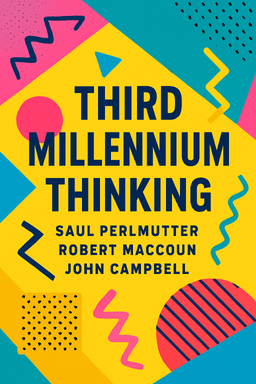
How can you make better decisions in a world saturated with conflicting facts, expert claims, and shifting uncertainties? In Third Millennium Thinking (by Saul Perlmutter, John Campbell, and Robert MacCoun), the authors argue that the scientific mindset is less a body of knowledge than a toolkit for reasoning, cooperation, and judgment. They trace how science’s deepest practices—probabilistic thinking, causal inference, transparency about uncertainty, and communal verification—can improve decisions far beyond the laboratory.
They begin with an urgent insight: modern challenges (from pandemics to climate change) are not just technical—they fuse facts, values, and authority. You cannot outsource decisions entirely to scientists, nor dismiss them as mere opinions. The only sustainable way forward is to make both science and citizenship better at reasoning together.
The Triad of Facts, Values, and Authority
A hallmark of the book is its insistence on balancing three ingredients in every decision: facts (empirical evidence and causal understanding), values (ethical and political priorities), and authority (the structures that legitimize action). In a hospital vignette that opens the book, interns must decide whether to operate immediately or wait for tests. Science can help estimate probabilities—likelihood of success, risk of infection—but only the patient’s values can weigh survival odds versus autonomy or quality of life. The reasoning systems that blend these inputs fairly are what science, democracy, and ethics all strive to build.
The authors introduce three failure modes of this triangle: technocracy (letting experts decide everything), populist anarchism (ignoring expertise completely), and moral compartmentalization (treating scientists as value-neutral technicians). Sound decision design, they argue, must integrate the three transparently so that expertise informs choices without replacing democratic consent.
Science as a Culture of Tools
The book redefines science as a cultural toolkit, not a privileged guild. Its tools include ways of extending perception (instruments), distinguishing patterns from noise (statistics), testing causes rather than correlations (experiments), and checking whether claims hold across independent observers (replication). When you use a phone spectrograph to see harmonic patterns of a note you whistle, you inherit the same pattern-seeking impulse that made Galileo trust telescopes and John Snow map cholera deaths around the Broad Street pump. Such methods anchor shared reality precisely because anyone, properly equipped, can reproduce them.
That replication-based shared reality is the core of trust in science. Every technology you use—from a CO₂ meter in a classroom to satellite weather forecasts—depends on interlocking checks that build instrumental credibility. The authors encourage you to ask: does a tool respond predictably when you intervene, do independent groups get the same results, and can multiple instruments triangulate the same event? If yes, you can act on it confidently.
A Human Mindset, Not Just a Method
Because humans are prone to cognitive bias, honest calibration and “considering the opposite” become central virtues. Much of science exists to counter our misleading intuitions—anchoring, confirmation bias, hindsight distortion, and overconfidence. The authors show how probabilistic language (“I am 70 percent confident…”) can lower ego defenses and make both private and public decisions more resilient. Saying you might be wrong is not weakness; it is the foundation of collective learning.
They illustrate the mindset clash vividly: during the COVID-19 crisis, experts who communicated probabilities and uncertainty earned eventual trust, while those who oversold certainty (and were later wrong) undermined confidence in science itself. Calibrated humility—expressed through ranges, error bars, and explicit conditions—signals expertise far more than rhetorical confidence does.
From Individual to Collective Intelligence
Human rationality is limited, but collective rationality can be engineered. Science achieves reliability not because individual scientists are unbiased, but because the system—peer review, blinding, replication, and competitive scrutiny—creates incentives that penalize bias. The authors extend this lesson to society: you can design decision processes (citizen deliberation, transparent advisory panels, open data) to function like scientific ecosystems. Each corrects individual error through structured cooperation.
Experiments like Deliberative Polling and prediction markets demonstrate this principle at scale. Trained, diverse, and independently reasoning participants consistently outperform homogeneous or ideologically synchronized groups. The authors argue that tools like scenario planning and public deliberation should be as normal in public policy as randomized trials are in medicine. The goal is not unanimity but reproducible reasoning.
Why Trust and Cooperation Matter
In the book’s closing chapters, trust emerges as both the precondition and product of evidence-based reasoning. Using Robert Axelrod’s “Tit for Tat” experiments, they show how cooperation evolves when people reciprocate and forgive occasional errors. Likewise, science flourishes only when honesty and correction are rewarded. A society that prizes transparency, calibration, and good-faith revision can rebuild trust even in contentious domains like media or policy. The authors call this the architecture of “Third Millennium Thinking”: integrating scientific humility, ethical reflection, and social reciprocity into how you and your communities confront reality together.
Central Takeaway
Science is not a distant authority but a disciplined way to manage uncertainty, calibrate trust, and combine facts with values. It works when you make error correction and cooperative reasoning habitual, not heroic.
Across history, from Galileo’s telescope to LIGO’s blind analyses and modern deliberative forums, the same ethos repeats: expose your decisions to test and revision, treat confidence as a variable, and trust processes that favor transparency over pride. That cultural turn—from defending truth claims to designing truth-seeking systems—is the essence of Third Millennium Thinking.