
Idea 1
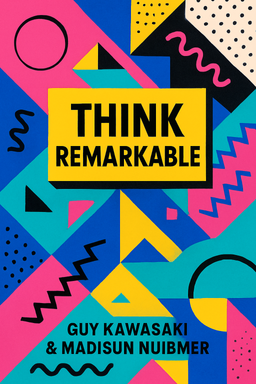
Think Remarkable: How to Transform Your Life and Make a Difference
What does it really mean to live a remarkable life—one that not only fulfills you but also improves the world around you? In Think Remarkable: 9 Paths to Transform Your Life and Make a Difference, Guy Kawasaki and his co-author Madisun Nuismer argue that remarkability isn’t about fame, fortune, or status—it’s about leaving the world a better place because you were here. Drawing lessons from hundreds of interviews with extraordinary thinkers, activists, entrepreneurs, scientists, and creators, Kawasaki distills the essence of what it takes to grow, persevere, and lead with grace in a complex world.
Kawasaki, who helped launch the Apple Macintosh and later became Canva’s chief evangelist, writes as both a veteran innovator and a lifelong learner. He frames personal transformation through three interdependent stages: Growth (the mindset that pushes you to learn and adapt), Grit (the drive to persist and do meaningful work), and Grace (the humility and empathy to lift others as you climb). These three pillars, first highlighted in Jane Goodall’s foreword, provide a moral and practical compass for anyone seeking purpose and impact in chaotic times.
The Power of Growth, Grit, and Grace
The first stage, Growth, begins with adopting what psychologist Carol Dweck famously calls a growth mindset—believing that your abilities aren’t fixed but can expand through effort and feedback. Kawasaki likens this to planting acorns that may someday become mighty oaks: small actions that, nurtured over time, yield lasting change. He shares examples like Jane Goodall, whose lifelong devotion to chimpanzees began as a childhood dream inspired by a book; Julia Child, who reinvented herself from wartime spy to world-renowned chef in her thirties; and NASA scientist Mark Rober, who went from designing Mars rovers to teaching physics through YouTube videos.
The second stage, Grit, is the fuel that helps you endure adversity and keep moving forward. Drawing on psychologist Angela Duckworth’s work, Kawasaki demonstrates grit through stories of innovators like Chris Bertish, who paddled solo across the Atlantic Ocean, and Andrea Lytle Peet, who completed fifty marathons despite an ALS diagnosis. Their tenacity embodies Kawasaki’s definition of doing “good shit”—pursuing projects and missions that solve real problems and spark change. He also stresses the value of transforming pain into purpose, as activists like Nancy Thompson (founder of Mothers Against Greg Abbott) and Olivia Julianna have done to turn outrage into organized movements.
Grace as the Final Frontier
The final stage, Grace, distinguishes remarkable people from merely successful ones. Grace entails empathy, humility, and the ability to serve others without ego. Kawasaki highlights leaders such as Carol Dweck, who modeled grace by attending her late chauffeur’s funeral, and MacKenzie Scott, who quietly donates billions without expecting recognition. Through grace, leadership becomes an act of service. It’s not just about achieving goals but creating environments where others can flourish—what psychologist Geoffrey Cohen calls “crafting good situations.”
In each stage, Kawasaki mixes personal stories—like losing his hearing and continuing to podcast through transcription software—with lessons from his guests on the Remarkable People podcast. He offers bite-sized wisdom rooted in humor and humility: “Make yourself indispensable,” “Savor your shit sandwich,” and “Take the high road—there’s less traffic there.” Every chapter provides tactical takeaways alongside inspiration: how to find mentors, how to deal with rejection, and even how to apologize sincerely.
Ultimately, Think Remarkable challenges you to see remarkableness not as a label but as a practice—a way of moving through the world with curiosity, courage, and compassion. You don’t need to be Steve Jobs or Jane Goodall; you only need to be willing to grow, persist, and give back. As Kawasaki writes, “If you do remarkable things and make a difference, people will call you remarkable—you couldn’t stop them if you tried.”