
Idea 1
How to Retrain Your Brain and Think Like a Freak
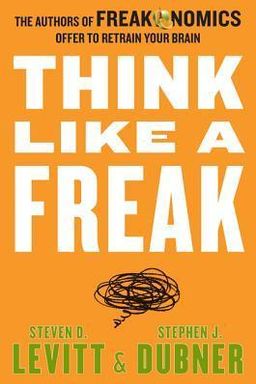
Why do most people struggle to solve hard problems while a rare few seem to find surprisingly effective solutions? In Think Like a Freak, Steven D. Levitt and Stephen J. Dubner—authors of the groundbreaking Freakonomics—argue that the difference lies not in intelligence but in how we think. They contend that the world’s stickiest problems—from global poverty to personal decision-making—persist because people rely on common sense, moral certitude, or herd thinking rather than curiosity, data, and the willingness to admit ignorance. To make better decisions, you have to retrain your brain to ‘think like a freak.’
The authors invite you into a playful yet rigorous way of seeing the world. Thinking like a Freak means examining problems without fear or ideology, asking unconventional questions, testing assumptions through experimentation, and freeing yourself from the pressure to appear right. The core of their argument is simple but radical: most of what we call common sense is wrong, most people’s moral stubbornness clouds judgment, and saying 'I don’t know' is often the smartest first step toward truth.
A Fresh Way to See the World
Levitt and Dubner open with a vivid story: a soccer player taking a World Cup penalty kick faces a crowd of expectations and his own fear of shame. Statistically, kicking straight down the middle has the highest chance of success—but only 17% of players do it because missing in the middle looks foolish. This small case reveals a big truth: even when data show a better path, people’s fear of embarrassment and desire to protect reputation often override rational decision-making. To think like a Freak, you must detach from appearances and incentives that cloud your real goal.
That penalty kick—simple as it is—becomes a metaphor for nearly every decision we make in work, politics, and life. Thinking differently demands courage to defy convention, humility to question what we know, and comfort with the possibility of being ridiculed for seeing the world in a new way. When you train yourself to think like a Freak, you act like a scientist: you form hypotheses, test ideas, and treat failure as feedback rather than defeat.
An Economic Approach to Everyday Thinking
Levitt and Dubner’s method, which they call the economic approach, relies on incentives, data, and objective analysis rather than ideology. Economics here doesn’t mean studying money but understanding human behavior—why people respond to incentives, why they resist change, and why moral or emotional thinking distorts their choices. They show that a Freak doesn’t rely on intuition but uses curiosity and numbers to cut through confusion. Facts, even unpopular ones, are the tools that reveal how the world truly works.
This approach touches everything from personal motivation to global policy. Whether you’re a teacher trying to change student behavior, an executive trying to improve performance, or a citizen wondering why government programs often fail, the same logic applies: you must start by understanding incentives, define the problem correctly, experiment creatively, and never assume that conventional wisdom is right.
The Human Obstacles to Thinking Differently
Levitt and Dubner are candid about why thinking like a Freak is so rare. It takes time, curiosity, and, most of all, humility. People are social creatures who prefer belonging over thinking, and even experts fall prey to dogmatism and confirmation bias. We seek information that confirms what we already believe, run with the herd, and confuse opinions for facts. Worse, we lack the time—or the habit—to sit and think deeply about difficult questions. As George Bernard Shaw quipped (whom the authors quote), “Few people think more than two or three times a year.”
Moreover, the authors emphasize that thinking like a Freak may make you unpopular. You might challenge sacred cows, question your boss’s assumptions, or find data that contradict moral certainties. When they themselves suggested in SuperFreakonomics that common strategies to mitigate global warming might not work, even the UK’s future prime minister David Cameron bristled at their economic reasoning. Still, the authors argue, discomfort and dissent are small prices to pay for better outcomes.
Why These Ideas Matter
In the book’s closing promise of the first chapter, Levitt and Dubner write that if you learn to think like a Freak, you’ll not only solve problems more effectively but enjoy the process. By viewing the world as a series of manageable puzzles rather than insurmountable crises, you free yourself to experiment, fail, learn, and try again. Thinking differently isn’t just a mindset for economists—it’s a lifeline for anyone trying to navigate complexity and uncertainty.
Throughout the book, you’ll explore nine chapters that teach distinct aspects of Freakish thinking: how to admit ignorance, how to define the right problem, how to identify root causes rather than symptoms, how to reclaim curiosity by thinking like a child, how to design incentives that actually work, how to persuade skeptics, and even how and when to quit. Each chapter blends behavioral economics with storytelling—from hot-dog-eating champions and Nigerian scammers to bullet factories and biblical kings—showing that unconventional insight often hides in unlikely places.
Ultimately, Levitt and Dubner argue that “thinking like a Freak” isn’t about being quirky—it’s about being honest with reality. It means saying “I don’t know” when you don’t, asking odd questions, and daring to look foolish until you find what works. This mental retraining may not win you popularity, but it will make you a better decision-maker and problem-solver in a world drowning in noise and false confidence.