
Idea 1
The Search for Voice and Freedom in Janie’s Journey
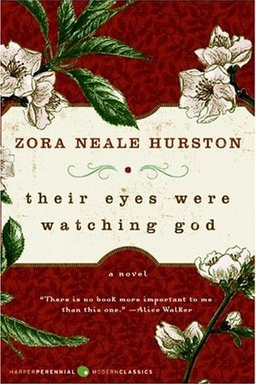
What does it mean to truly find your voice—to stand up, speak, and live by what you believe rather than what others expect of you? In Their Eyes Were Watching God, Zora Neale Hurston asks that question through the story of Janie Crawford, a woman who journeys through love, loss, self-discovery, and liberation in early twentieth-century Florida. Hurston contends that selfhood for Black women requires confronting the voices of others—be they lovers, communities, or traditions—and learning to claim one’s own voice amid them.
Across its pages, Hurston presents a lyrical, unapologetically Southern world pulsing with language, laughter, and the rhythms of African American life. This is not a novel of overt social protest like the works of Richard Wright or Ralph Ellison. Instead, Hurston makes an audacious argument: that living fully—emotionally and spiritually—can itself be a defiant act of freedom, especially for a Black woman in a time that sought to silence her.
The World Hurston Builds
Hurston’s setting unfolds from Eatonville, Florida—a thriving all-Black town that became the first incorporated Black municipality in the United States. Eatonville represents a world built by Black people, for Black people—a space where identity can exist apart from the white gaze. This backdrop allows Hurston to focus on intracommunity dynamics: how people talk, joke, gossip, and tell stories. Through these oral exchanges, language becomes a house of belonging and a field of tension. For Janie, those porch conversations shape her inner landscape as much as any romantic relationship.
The Three Loves and the Horizon
Janie’s journey arcs across three major relationships that reflect distinct forces shaping her identity. First, Logan Killicks represents security and stability but emotional sterility. Her grandmother Nanny forces her into this marriage to protect her from exploitation—yet in doing so, constrains her ability to love freely. When Janie looks up at the pear tree in bloom early in the book, she imagines marriage as mutual passion and growth. Logan’s utilitarian worldview (“you ain’t got no particular place”) crushes that dream, teaching her that safety without love is imprisonment.
Her marriage to Joe Starks introduces ambition and domination. Jody—charismatic, visionary, and controlling—founds Eatonville as Mayor and soon confines Janie within his respectability politics. He insists she keep her magnificent hair tied up because it attracts other men’s attention. As mayor’s wife she becomes an ornament of authority, silenced beneath the showpiece of a perfect household. When Janie finally speaks back after years of humiliation—telling Jody in public that his manhood has withered—she breaks the silence, claiming language as liberation. Through speech, she begins to shed the imposed image of the docile woman.
Her third love, Tea Cake Woods, gives her joy and equality. He is younger, poor, and playful, and their relationship defies social norms. Together they move to the Everglades, working in the fields and joining in the music of the community. Here, the language of laughter and labor replaces hierarchy with mutual affection. Yet even in this freedom, Hurston reminds us that life resists perfection: jealousy, poverty, and a catastrophic hurricane eventually test their love to its limit. When Janie shoots Tea Cake, driven by self-defense as he succumbs to rabies, Hurston stages the tragic paradox of love and autonomy—Janie must take life to preserve her own.
Voice, Language, and Autonomy
Hurston’s art lies in the vernacular—Black Southern dialect rendered with poetic depth. Dialogue becomes both a mirror of culture and a medium of resistance. While men on the porch boast and frett, Janie listens, absorbs, and eventually speaks her truth in her own rhythm. Her storytelling to her friend Pheoby frames the entire novel: a conversation between women where Janie finally owns her narrative. The closing lines—“Two things everybody’s got tuh do fuh theyselves: They got tuh go tuh God, and they got tuh find out about livin’ fuh theyselves”—become Hurston’s credo for self-revelation.
Why It Still Matters
For readers today, Janie’s journey resonates far beyond its setting. It’s about anyone striving to break free from imposed roles—gender roles, cultural expectations, and voices that drown your own. Hurston reminds you that to live fully, you must travel “to the horizon and back.” That metaphor—found in the novel’s opening chapter and closing—captures the cyclical nature of discovery: we venture outward, suffer, love, lose, and return transformed. Janie begins by watching ships on distant horizons, wishing for a life beyond; she ends having “pulled in her horizon like a great fish-net.” This inward claim of freedom—quiet, strong, and self-defined—is Hurston’s enduring gift to literature.