
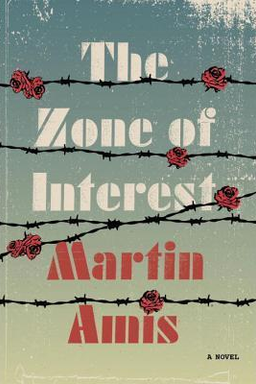
The Zone of Interest cover

The Zone of Interest

by Martin Amis

The Zone of Interest by Martin Amis takes you deep into the lives intertwined within a Nazi concentration camp. Explore love, betrayal, and survival against a backdrop of systemic evil, challenging you to confront the dark facets of human nature and resilience.

The Moral Architecture of the Zone of Interest

How can civilization coexist with barbarity? In The Zone of Interest, Martin Amis uses a polyphonic structure to expose the moral anatomy of atrocity within the ordinary rhythms of life at a concentration camp. He argues that evil rarely looks monstrous; instead, it thrives through bureaucracy, routine, intimacy, and denial. The novel is not merely historical fiction—it is a formal experiment designed to make you confront complicity as a slow, human process rather than an abstract horror.

Polyphony as moral mirror

Amis organizes the story through multiple voices—Angelus (Golo) Thomsen, Paul Doll, Szmul the Sonderkommandofuhrer, and others—each reflecting a different angle of responsibility and evasion. You never receive a unified picture; instead, perspectives overlap and collide. Doll’s managerial memos reveal bureaucratic language emptying morality from death; Thomsen’s notebook transforms voyeuristic desire into quasi-intellectual conscience; Szmul’s testimony restores ethical gravity by chronicling the unbearable truths of the Sonderkommandos. Their contradictions force you to participate in reconstruction—an ethical act of synthesis mirroring the difficulty of historical judgment.

The mirror motif

Szmul’s parable of the magic mirror that reveals the soul becomes the moral key: the camp itself reflects everyone’s true face. You, the reader, cannot look away. Each narrator functions as a fragment of that mirror—Thomsen revealing the seductions of normality, Doll the managerial numbness of power, Szmul the endurance of conscience under coercion. The novel thus refuses comfort; every encounter is a reflection of what happens when institutional systems strip language, empathy, and choice from humans.

Ordinary life beside extraordinary horror

Within the Zone, domestic scenes—gardens, children, brandy, violin music—sit beside crematoria. Hannah Doll tends tulips while her husband organizes transports; Doll listens to orchestras at the ramp. This coexistence creates unbearable tension: Amis insists that genocide is not performed by monsters living in shadow but by individuals pursuing comfort and love amid systemic cruelty. The reader’s discomfort—feeling beauty and atrocity together—is part of the moral education Amis designs.

Language and bureaucratic anesthesia

Words like “evacuee,” “Stucke,” or “selection Left/Right” function as weapons. Administrative vocabulary replaces names with categories, and telegraphic efficiency turns killing into logistics. When Doll writes of “Special Train 105” or Burckl quantifies calorie intake for “workers,” you witness moral anesthesia—language turning flesh into data. (Note: Compare to Hannah Arendt’s analysis of the banality of evil; both authors trace cruelty through bureaucratic tone.)

Witnessing and resistance

Amis assigns Szmul the painful burden of witness. His technical candor—counting femurs, describing pyres—becomes moral resistance. He saves one youth per transport, buries notes in Thermoses, and insists that even contaminated testimony matters. Thomsen’s small sabotage at Buna, Boris Eltz’s bribes, and Humilia’s refusal to sign papers reveal how moral survival persists in fragments. These minor decencies, though powerless to stop atrocity, mark the endurance of meaning.

Ritual, spectacle, and self-deceit

When Doll stages Walpurgisnacht as Szmul’s symbolic killing—fireworks, speeches, and theatrical spectacle—Amis reveals how ritual masks conscience. Violence becomes ceremony; bureaucracy turns into liturgy. This aestheticization of killing reappears in Doll’s obsession with songs and flags, transforming moral failure into national art. Ritual anesthetizes guilt more effectively than ideology.

Aftermath and incompletion

Later chapters trace uneven justice: trials, suicides, forgotten victims, and uncertain survivals. Esther Kubis’s unknown fate stands beside Doll’s eventual execution. Amis shows how history accounts imperfectly; explanation itself can wound memory. He closes by echoing Primo Levi’s warning—there is no “why” inside Auschwitz. The purpose of narrative is not comfort but accountability.

Core idea

The Zone of Interest teaches you that atrocity thrives on ordinary systems—language, domesticity, ritual, and comfort—and that moral clarity begins only when you refuse anesthesia and keep looking into the mirror.


Voices and the Ethics of Multiperspective Truth

Amis builds the narrative from overlapping consciences—each unreliable yet essential. Thomsen’s urbane tone masks guilt through curiosity; Doll’s managerial precision converts murder into career management; Szmul’s fragmented witness restores dignity through horror. You learn that understanding the Zone requires polyphony: each voice contradicts another, forcing you to perform ethical judgment actively.

The carousel of perspective

Like a carousel, the novel rotates perspectives. When Doll grumbles over telegrams, Thomsen flirts with Hannah in the greenhouse, and Szmul recounts bodies burning—these simultaneous scenes reveal the impossibility of a single moral frame. Interpretation becomes participation; you reconstruct truth from moral fragments. (Note: This polyphonic design echoes Dostoevsky and Faulkner, but Amis uses it to expose bureaucratic multiplicity rather than emotional psychology.)

Reading as ethical labor

You must connect notebook entries, memos, and testimonies to perceive the moral texture. The act of reading becomes moral work—piecing evidence together mirrors the historian’s struggle to interpret atrocity. You uncover bias, denial, and self-fashioning, seeing how conscience fractures under institutional pressure.

Composite morality

No voice offers redemption. Thomsen’s charm serves self-interest; Doll’s domesticity hides sadism; Szmul’s endurance costs his soul. Yet combined, they reveal nuanced ethics—denial, horror, weakness, and witness interwoven into one distorted moral ecosystem. The Zone’s polyphony is its ethics: fractured yet demanding sustained attention.


Language and Bureaucratic Violence

Amis’s most chilling technique is his linguistic realism. Bureaucratic jargon becomes both shield and instrument of murder. Administrative phrases—‘evacuee,’ ‘settler,’ ‘protective custody’—erase humanity, transforming the act of killing into paperwork. You learn that ideology does not need passion; it only needs procedure.

Vocabulary of annihilation

Characters like Doll, Blobel, and Burckl speak fluently in euphemism. Doll sends telegraphs about “Special Train 105,” managing arrivals and cargo as if dealing with freight, not people. Burckl calculates rations and profit margins; Blobel audits efficiency. Their speech converts tragedy into managerial performance. By reproducing this tone, Amis shows how systems depersonalize emotion and drain conscience.

Procedure as moral camouflage

The machinery—cremas, schedules, carbides—operates through language that sanitizes horror. A memo about “burnt-out firebricks” conceals charred flesh. Bureaucracy becomes a moral technology: it disperses intention across rules. You see how the clarity of procedure makes horror invisible. (Compare to Arendt’s depiction of Eichmann’s banal rationality.)

How to read against euphemism

Amis teaches you close reading as resistance. Translate every code—“Stucke” means bodies; “efficiency” means death. Recognizing hidden meaning restores agency to victims. Reading actively, you defeat linguistic erasure and refuse the semantic anesthesia that institutions depend upon.


Domesticity, Desire, and Moral Blindness

Inside the Zone, private life continues—meals, gardens, quarrels, flirtations. Amis juxtaposes love and logistics to show how intimacy mirrors cruelty. Domestic detail acts as camouflage for systemic violence. You watch Hannah Doll’s marriage to Paul, Thomsen’s lust for her, and the servants’ gossip—all unfolding against the crematorium’s smoke.

Home as theater of ideology

Family becomes propaganda. Gerda Bormann’s motherhood medals, Hannah’s defiance, and Uncle Martin’s domestic ambitions turn private virtue into political currency. In the villa, Doll disciplines his wife as he disciplines prisoners; authority merges with affection. The domestic microcosm reproduces the macrocosm of power.

Desire and denial

Thomsen’s pursuit of Hannah captures how attraction and moral blindness intertwine. His interest is aesthetic and predatory, a metaphor for the intellectual’s temptation to observe rather than intervene. Hannah’s silences become the moral void every reader must face—the difficulty of naming horror while living beside it.

Domestic rhythms as moral test

Amis uses scenes of breakfast and baths to challenge you: can comfort coexist with conscience? The answer is always corrosive—normality enables horror by refusing its view. Private pleasure becomes public complicity.


Witnesses, Victims, and the Cost of Memory

Among all voices, Szmul’s and Esther’s testimonies connect the reader directly to human pain. Through their stories, Amis reinstates individuality erased by policy. The book’s witness sections stand as inner counter-narratives—ethical centers resisting oblivion.

Szmul’s burden

Szmul calls himself “the saddest man.” He performs abject labors—extracting hair and gold—but secretly writes and saves fragments. His buried Thermos of papers and his refusal of numbness show moral endurance. He embodies impossible witness: survival as testimony against death’s bureaucracy.

Esther and cultural inversion

The dancer Esther Kubis performs before Ilse Grese, her art turned humiliation. Her deliberate failure and final leap transform spectacle into silent protest. Art becomes defiance in degradation. That Amis leaves her fate unrecorded emphasizes the thousands of erased stories that resist completion.

Memory and anonymity

Witold, Chaim, and Humilia illuminate mercy amid terror—acts like offering a cheese sandwich or refusing to sign a form. These micro-histories restore scale and humanity. Amis demonstrates that remembrance begins with naming, that every anonymous line deserves recovery. Bearing witness becomes ethical obligation.


Systems, Rituals, and Aftermath

The camp operates as a system—a moral machine blending bureaucracy, ritual, and spectacle. You see how routines of murder persist through technical detail and ceremonial detachment. Later, Amis navigates the uneven terrain of justice, from trials to vanished lives, exposing how accountability is both necessary and incomplete.

The bureaucratic anatomy of killing

On the ramp, everything looks orderly—timed transports, megaphones, doctors calling reassurances. The “barrel” ritual encourages victims to deposit valuables before selection. Each procedure hides intent behind civility. You realize atrocity functions as efficiency. The infrastructure—cremas, ovens, Buna-Werke—converts ethics into problem-solving.

Ritual and anesthetic aesthetics

Walpurgisnacht epitomizes ritualized violence. Doll’s killing of Szmul is staged as pageantry—fireworks and song transforming execution into art. This fusion of culture and cruelty exposes how institutions aestheticize death to numb participants. Ritual becomes denial’s most seductive form.

Aftermath and partial justice

Postwar trials and scattered fates underline historical incompletion. Doll’s hanging, Grese’s execution, and IG Farben’s sentences offer procedural justice but not moral restoration. Survivors like Alisz and the unrecorded Esther signify memory’s persistence amid erasure. Amis ends by asking whether explanation ever clarifies evil, echoing Primo Levi’s warning that to ‘understand’ may itself excuse. The broken archive becomes both warning and testament.

Dig Deeper

Get personalized prompts to apply these lessons to your life and deepen your understanding.

Go Deeper

Get the Full Experience

Download Insight Books for AI-powered reflections, quizzes, and more.