
Idea 1
The Science of Yoga: Mastering the Mind to Attain Freedom
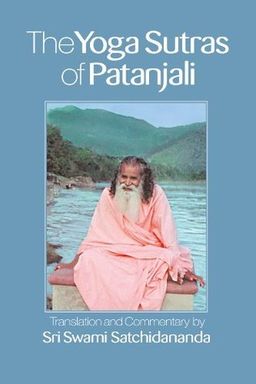
What if your mind—the very thing that makes you uniquely human—is also the source of all your suffering? In The Yoga Sūtras of Patañjali, Sri Swami Satchidananda presents an ancient yet strikingly modern answer: the mind is both the problem and the solution. True liberation, he explains, doesn’t come from escaping the world, but from mastering the mind within it. Compiled over two millennia ago by the sage Patañjali, the Yoga Sūtras outlines the complete spiritual science of Rāja Yoga—or the yoga of meditation and self-mastery. Swami Satchidananda’s commentary brings this terse Sanskrit text to life, weaving together practical psychology, timeless philosophy, and the wisdom of a realized teacher.
Unlike the modern view of yoga as stretching in athletic wear, Patañjali presents it as a rigorous inner science aimed at one goal: “Yogaś citta-vṛtti-nirodhaḥ”—the stilling of the modifications of the mind-stuff. When the waves of thought are calmed, the Seer (the true Self) abides in its own nature. Every chapter of the book circles back to this central idea, offering methods to transform the mind from a restless trickster into a serene servant of the soul.
A Universal Roadmap for Inner Freedom
The ancient text is divided into four Pādas, or sections, each addressing a dimension of the yogic path. Book One, Samādhi Pāda, presents the theory of yoga and the highest stages of contemplation. Satchidananda unpacks how concentration evolves into meditation and finally into samādhi, the experience of complete absorption in the Self. Book Two, Sādhana Pāda, focuses on practice—the ethical disciplines (yamas and niyamas), posture (āsana), breath control (prāṇāyāma), and sense withdrawal (pratyāhāra)—laying the groundwork for deeper meditation. Book Three, Vibhūti Pāda, describes the supernatural powers (siddhis) that arise from deep concentration, while warning against attachment to them. Finally, Book Four, Kaivalya Pāda, reveals the culmination of yoga: kaivalya, or absolute liberation, where pure consciousness rests in its own essential stillness.
Why does this matter to you? Because Patañjali’s insights describe universal human experience. Whether you seek peace under pressure, mastery over distraction, or freedom from fear, this text offers timeless tools to transform your mind and life.
Yoga as the Science of the Mind
Swami Satchidananda reframes yoga as mental science rather than religion. While modern psychology is barely a century old, the yogis of India explored consciousness systematically for thousands of years. Patañjali doesn’t appeal to faith but to personal experiment. His approach anticipates cognitive-behavioral therapy: identify your mental patterns, weaken the harmful ones through practice (abhyāsa) and non-attachment (vairāgya), and cultivate higher tendencies. In today’s overstimulated world, that mental discipline may be more revolutionary than ever.
Beyond Religion: Truth Is One, Paths Are Many
Consistent with Swami Satchidananda’s motto—“Truth is One; Paths are Many”—the commentary highlights Patañjali’s openness. He never limits yoga to one God, creed, or technique. In discussing meditation objects, Patañjali says one may meditate “on anything one chooses which is elevating.” Such radical inclusivity makes the Yoga Sūtras a universal guide to spiritual realization. Whether you call the ultimate reality God, Consciousness, or Self, the transformation process remains the same: quiet the mind, awaken the inner witness, and live in harmony with all beings.
Why the Mind Matters
The commentary repeatedly emphasizes that “bondage or liberation is in your own mind.” The world is not the problem—the restless mind is. Through stories and humor (like the classic prison analogy contrasting inmates and guards who share the same walls but different attitudes), Satchidananda shows how one’s mental attitude determines whether life feels like a prison or a playground. You can’t change every situation, he says, but you can reform your mind’s vision. This practical wisdom echoes Stoic philosophy and modern mindfulness alike.
The Living Goal of Yoga
Ultimately, Patañjali’s yoga is not escapism but engagement from a higher awareness. Kaivalya, the final freedom, doesn’t come after death—it can be “lived in the very midst of the world.” The liberated being (the jīvanmukta) works without ego, enjoys without attachment, and loves without condition. Such mastery is possible for anyone willing to practice sincerely and live the spirit of “be good, do good.” In this way, The Yoga Sūtras becomes both a philosophy of consciousness and a practical handbook for peace—connecting ancient wisdom to your own modern struggles with mind, meaning, and mastery.