
Idea 1
Breath as the Path to Self-Knowledge and Liberation
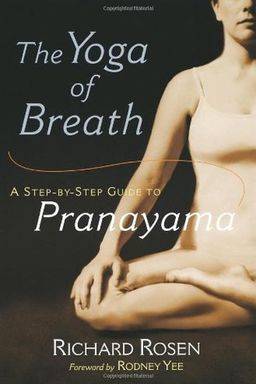
Have you ever noticed how your breath changes with your emotions? A sigh when you are weary, a gasp when frightened, a steady rhythm when calm — these subtle shifts reveal what Richard Rosen calls the “mirror of the self.” In The Yoga of Breath, Rosen invites you to explore this mirror, arguing that the breath is not merely a biological act but a sacred bridge between the body, mind, and spirit. Through the ancient practice of pranayama — the art of extending and refining the breath — we can rediscover our most authentic being and move toward liberation from the restlessness of daily life.
Rosen’s central argument is that pranayama is a disciplined yet playful journey of self-discovery. He draws from classical yoga texts — including the Yoga Sutras of Patanjali and the Hatha Yoga Pradipika — while blending them with contemporary insights and his own decades of teaching experience. The goal is not to manipulate the breath but to uncover and cooperate with what he calls the “authentic breather” — the part of you that breathes naturally, effortlessly, and in harmony with life itself.
A Journey into the Country of the Self
Rosen likens the journey into pranayama to an expedition through the "country of the Self." Like any true traveler, you need a map, a guide, and an openness to the unknown. The breath becomes both the path and the vehicle for this inner voyage. Drawing inspiration from B.K.S. Iyengar — one of the key influences on Rosen’s work — the book takes a methodical, exploratory approach: first clarifying your current state, then learning to cooperate with the natural breath, then comprehending how posture and awareness intertwine, and finally embracing completion through stillness and spontaneous retention.
The Four-Stage Map of Practice
Central to Rosen’s structure is what he calls the “lions, elephants, and tigers” approach — a patient progression inspired by the Hatha Yoga Pradipika. He organizes the practice into four interrelated stages — Clarification, Cooperation, Comprehension, and Completion — each reflecting a stage of spiritual maturity.
- Clarification: You start by shining light on what already is — your habits, tensions, and awareness of breath. This stage builds self-knowledge through attention rather than change.
- Cooperation: You learn to work with the body and breath as they are, noticing the interplay between effort and surrender. The goal here is to witness and allow rather than force results.
- Comprehension: By integrating breath with posture and awareness, you begin to understand what it means to be truly embodied, sensing both the physical and subtle layers of breathing.
- Completion: The breath becomes effortlessly still — the culmination of yoga’s promise where movement and thought subside into pure witnessing.
Philosophy Meets Physiology
Rosen beautifully integrates the mystical and the mechanical. On one hand, pranayama is linked to prana — the universal life force permeating the cosmos (as described in the Upanishads). On the other, it’s a tangible practice involving lungs, diaphragm, and nerves. This balance between science and spirituality echoes pioneers like Georg Feuerstein and Swami Sivananda, who viewed pranayama as a tool for both health and awakening.
Readers are guided through practical lessons: lying in Corpse pose to map the “country of the body,” observing the four qualities of breath (time, texture, space, and rest), and progressing toward gentle control techniques such as Ujjayi (Conqueror’s Breath) or Viloma (Against-the-Grain Breath). Each chapter builds strength in awareness rather than strain in effort, echoing Patanjali’s dictum that every asana and breath should be both steady and comfortable (sthira-sukha).
Why This Matters
In a world defined by speed, Rosen’s message is revolutionary: slowing down the breath slows down the mind. Cultivating awareness of the inhale and exhale loosens ignorance (avidya) — the root cause of suffering described in the Yoga Sutras. When you breathe consciously, you directly perceive how thought, emotion, and body co-create your experience.
“When prana moves, chitta moves. When prana is without movement, chitta is without movement.” — Hatha Yoga Pradipika
The Yoga of Breath is ultimately about reclaiming your innate intelligence. It’s an invitation to rediscover simplicity: lying still, listening, breathing, and allowing life’s currents to flow through you. What begins as physical practice—calming the diaphragm, steadying the spine—unfolds into a meditative awareness where the breath breathes you. As Rosen writes, the secret isn’t in learning how to breathe but in learning how to stop not breathing.