
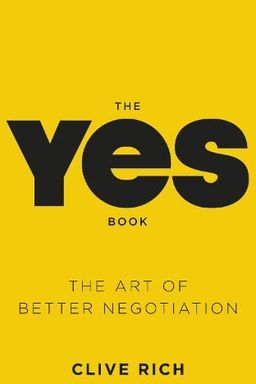
The Yes Book cover

The Yes Book

by Clive Rich

The Yes Book by Clive Rich transforms negotiation into an art of cooperation, providing actionable insights for achieving mutual success. Learn to navigate the bargaining process with empathy and strategy, ensuring positive outcomes in any negotiation scenario.

Building a Legally Secure and Investable Business

Every successful business rests on more than ideas or products—it depends on its legal foundations. This book is a comprehensive guide to navigating the laws that shape small and medium-sized enterprises in the UK, teaching you how to choose the right business structure, secure funding, manage employees, protect intellectual property, and eventually sell or expand internationally. The author's central argument is straightforward: solid legal design early on prevents costly errors later, turning compliance into a strategic advantage instead of a burden.

Understanding your legal identity

Your business structure defines everything—from tax responsibilities to liability exposure. Starting as a sole trader offers simplicity but personal risk; partnerships share both profits and liabilities; limited companies add the veil of incorporation, which protects personal assets but brings administrative burdens. These choices aren’t just technical—they express how you balance speed and protection. Choosing wrongly can mean losing your house to business debts; choosing wisely allows you to raise investment safely under the Companies Act 2006.

(Note: this mirrors the pragmatic tone found in legal handbooks like “Business Law Made Simple,” highlighting the trade-off between simplicity and security.)

Setting up strong formalities

After choosing a structure, your next challenge is formal compliance—registration, partnership agreements, shareholder deeds, and statutory filings. These documents may sound bureaucratic, but they’re the armor investors, banks, and acquirers inspect before engaging. Missing filings can trigger penalties, director disqualifications, or reduce valuation at exit. The author insists on keeping director registers, PSC records, and private Shareholder Agreements that spell out decision-making, dividends, and dispute resolution—essentials for credibility and control.

Funding and financial readiness

Capital determines growth, yet each funding route changes your ownership and obligations. Friends and family often come first, followed by angels using SEIS or EIS tax reliefs (30–50% income tax savings). Crowdfunding brings visibility but requires FCA-regulated preparation. Bank loans and pension-led funding add debt risks and recording requirements. The book teaches you how to craft projections, obtain HMRC advance assurance, and match funding choices to your stage of development. Raising capital legally isn’t just paperwork—it’s reputation management.

People, property, and protection

Legal readiness extends to hiring, IP protection, and online operations. Employment law hinges on distinguishing contractors from employees (mutuality of obligation, degree of control—core IR35 tests). Misclassification triggers retroactive PAYE and tribunal risk. Intellectual property rights (copyright, trademarks, patents, design rights) transform intangible creativity into sellable assets. Meanwhile, online trading demands compliant pages—Terms & Conditions, Privacy Policy, Cookie banners—that signal trust and meet consumer regulations under the 2015 Acts.

Commerce, contracts, and consumer rights

No business survives without durable contracts. Supplier, SaaS, affiliate, and introducer agreements all require clarity on rights, pricing, and risk allocation. Product contracts follow the 4Rs—Rights, Responsibilities, Rewards, Risks. Consumer laws further shape fairness—Price Marking, Cooling-Off periods, and refunds under the Consumer Rights Act. These combine to form the everyday legal hygiene for trading ethically and efficiently. Small business owners often underestimate how contract precision boosts profitability and prevents disputes later.

Scaling, exporting, and exiting

Beyond operations come strategic horizons. International trade introduces Incoterms like EXW or DDP, customs paperwork (SAD, EORI), and local certification laws from China to Brazil. Eventually, selling your business demands preparation: clean filings, centralised data rooms, realistic valuation (DCF, multiples, NAV), and disclosure letters to cap liability. Buyers value transparency; each missing contract or unclear IP registration directly reduces your price. An orderly exit becomes possible only when earlier chapters—structure, compliance, contracts—have been handled attentively.

Core message

Building a legally secure business isn’t about paperwork—it’s about power. Each structural choice, funding deal, employee agreement, or IP filing builds credibility and protection. The book’s enduring insight: legal literacy is commercial strategy. Understand these foundations, and your ideas can scale sustainably and attract partners, investors, and buyers with confidence.


Choosing and Registering Your Business Structure

You start by defining what your business legally is. This section compares the practical consequences of being a sole trader, partnership, LLP, or limited company. Each choice dictates how you pay tax, raise money, and shield assets. A sole trader controls everything but bears full personal liability. Partnerships create shared exposure under the Partnership Act 1890. LLPs blend partnership flexibility with corporate protection but require registration and accounts. Limited companies offer limited liability—hence most growth-oriented SMEs adopt them.

Liability and control trade-offs

If your priority is simplicity, a sole trader route may suffice briefly. But as soon as outside investment appears, shifting to a limited company gives credibility and protection. The Companies Act’s seven statutory director duties—acting within powers, avoiding conflicts, promoting success—define modern governance. Courts can still “lift the veil” for fraud or director misconduct, so personal diligence remains essential.

Names, brands, and registration

Registering a name at Companies House doesn’t guarantee brand ownership. You must check the IPO Trademark Register and EU CTM (now OHIM) databases, along with domain registries like GoDaddy. Your legal name, trademark, and domain should align to prevent infringement risk. The text’s practical reminder: possession of a domain isn’t legal protection—only registered trademarks and clear IP usage rights provide that security.

Decision guidance

For early testing, act as a sole trader. For professional collaboration, use an LLP. For capital and investor readiness, register as a limited company. Always seek legal and accountancy input—the first and cheapest insurance you’ll ever buy.


Managing Formalities and Directorship Duties

Once formed, your structure must comply with formal obligations. Registration, records, filings, and agreements act as proof that you handle money and power responsibly. For sole traders, this means registering with HMRC, maintaining VAT compliance, and issuing proper invoices. Partnerships require clear written agreements detailing capital, profit splits, and exit terms; failing that, default rules under the 1890 Act can punish you unexpectedly.

Company paperwork

Limited companies file IN01, keep statutory registers, and maintain confirmation statements. Articles of Association define governance but are public—so private Shareholder Agreements fill the flexibility gap. These govern dividend rights, director appointments, and share transfers. Every serious investor expects to see one before funding. Missing registers or incorrect PSC filings now trigger fines and can jeopardize exits, since buyers scrutinize compliance records line by line.

Directors’ obligations

Directors under the Companies Act 2006 must act within powers, show care and skill, avoid conflicts, and declare interests. Breaches can create personal liability despite limited company protections. The guide emphasizes directors’ accountability not as red tape but as stewardship—good records and transparent decision-making attract trust and prevent personal exposure later.

Practical outcome

Handle filings and internal governance as if auditors or buyers could appear tomorrow—because someday they will. Compliance is the foundation of valuation.


Funding and Closing Investment Deals

Capital fuels your growth but each funding method reshapes control. This section guides you through requesting investment, qualifying for tax-relieved schemes, and closing deals safely under UK financial law. You learn how investors think—asking for realistic projections, professional term-sheets, and equitable risk sharing. The author repeatedly warns: raising funds is a marathon, not a sprint.

Stages and sources

Friends, family, grants (Innovate UK, Prince’s Trust), and angels form the typical early mix. Angels often use SEIS/EIS reliefs—up to 50% income tax reduction. Crowdfunding expands reach but requires FCA compliance and disclosure. Bank loans and pension-led financing add obligations like personal guarantees—dangerous because they pierce the veil of incorporation. You must decide your appetite for dilution and risk before choosing instruments.

Legal closing steps

Closing involves NDAs, financial-promotion restrictions (FSMA), investor certifications, and execution of Share Subscription Agreements or Loan Agreements. These define warranties, pre-emption rights, director seats, and caps on liability. Investors expect thorough documentation, and any gap invites disputes or regulator penalties. Filing SH01, paying stamp duty, and registering charges seal the transaction legally.

Key insight

Funding readiness isn’t about raising the fastest—it’s about raising the safest. Professional paperwork transforms investor confidence and protects founder ownership.


People, Contracts, and Incentives

Hiring smart—and legally—is essential for durable growth. The book distinguishes real employees from contractors according to control and obligation (the IR35 tests). Misclassified workers can generate tax arrears, tribunal claims, and reputational damage. Protect yourself with clear Service Agreements, Employment Contracts, and Staff Handbooks updated to current ACAS procedures.

Employment rules

Proper termination follows fair process: investigate, warn, offer improvement chances, and allow appeal. Wrongful dismissal breaches contract; unfair dismissal breaches statute. Following the ACAS Code limits compensation exposure. The section also covers auto-enrolment—minimum 3% employer pension contribution and mandatory assessment under The Pensions Regulator.

Motivating talent legally

Enterprise Management Incentive (EMI) options let founders reward staff tax-efficiently. HMRC defines limits (£250,000 per employee, £3m overall). Designed carefully, EMI builds loyalty without expensive cash bonuses. Unapproved schemes give flexibility to contractors but lack tax advantages.

Practical takeaway

Accurate status, clear contracts, and compliant incentives build trust and prevent costly disputes. The goal: protect yourself while making employees feel secure and valued.


Securing Intellectual Property and Digital Compliance

Your ideas are assets—and the law can make or break their value. Copyrights protect code and content; trademarks secure branding; patents and design rights preserve innovation. Registering and assigning these rights correctly converts creativity into collateral that attracts funding and buyers. Commissioned software must explicitly assign copyright to you, not the developer, and all third-party modules need confirmed licenses to avoid infringement risk.

Software and escrow

Deposit source code with escrow agents like NCC Group to safeguard against developer insolvency. Verify deposits include build tools and notes—without them, releases may be useless. These technical steps underpin long-term continuity and enhance saleability of technology assets.

E‑commerce and privacy

Online legality intertwines data protection, cookies, and consumer fairness. Under Data Protection and PECR regulations, you must disclose what data you collect, for what purpose, and secure consent for non-essential cookies. Consumer content must comply with the Consumer Rights Act and advertising with the CAP Code. Transparency—that visible Privacy Policy and Cookie banner—is both legal and reputational insurance.

Commercial truth

IP and online compliance transform perception: investors and buyers equate clear ownership and data respect with professionalism. Legal clarity is brand clarity.


Contracts, Trading, and Consumer Reliability

Contracts define business reality more than promises do. This section brings all trading relationships under one idea: never trade without clear written agreements. Product and supplier contracts follow the 4Rs—Rights, Responsibilities, Rewards, Risks—to enforce expectations. Service-based deals (SaaS, affiliate, introducer) demand tailored clauses for data, tracking, and anti-bribery compliance.

Consumer fairness

When selling to individuals, the Consumer Protection regulations apply automatically. Price Marking must show VAT-inclusive clarity; Consumer Contracts Regulations guarantee a 14-day cooling-off period and forbid hidden charges or pre-ticked boxes. Always obtain active acceptance of T&Cs via checkbox or button—browse-wrap links rarely stand up in court. Good complaints procedures and ADR notices uphold credibility when dissatisfaction appears.

Practical compliance

Align your business practices—pricing, returns, and dispute handling—with statutory obligations. Doing so not only avoids fines but enhances reputation for honesty and transparency. The author insists that these standards become your competitive advantage in customer trust.


Risk Management, Insurance, and Resilience

Cash flow and protection form the backbone of survival. This part teaches proactive credit control, debt recovery, and insurance planning. Use credit checks before trade, insert retention of title clauses, and exercise lawful rights to claim interest under the Late Payment of Commercial Debts Regulations. Recover debts swiftly—letters, agencies, or statutory demands within days of default. Invoice discounting or factoring protect liquidity when waiting for payments.

Insurance strategy

Mandatory cover: Employers’ Liability (£5m minimum). Strongly advised: Public Liability, Product Liability, Professional Indemnity, Directors & Officers insurance, and Business Interruption. Each shields different layers—individuals from personal claims, customers from harm, and operations from disruption. D&O particularly reassures investors that governance risk is managed properly.

Essential reminder

Prevention beats recovery. Legal retention clauses and adequate insurance preserve continuity far better than chasing unpaid debts later.


Exporting, Disputes, and Strategic Exit

Growth eventually means international trade and a clear exit path. The export process introduces customs paperwork (EORI, SAD), tariffs, Incoterms, and country-specific compliance (China’s CCC, India’s IEC, Brazil’s RADAR). Choose models wisely—distributor for reach, subsidiary for control, franchise for brand consistency. Each requires balancing legal compliance in both origin and destination countries.

Handling disputes and crises

When problems erupt, follow Civil Procedure pre-action rules: letters before claim, evidence records, mediation preference clauses. Mediation under CEDR or Arbitration (LCIA/ICC) settles most conflicts faster and privately. Insolvency tools—administration, CVA, liquidation—ensure survival or orderly closure. Understand creditor hierarchies to negotiate intelligently in distress.

Planning your exit

Selling requires readiness: accurate data room, audit trails, confirmed IP rights, and transparent employment records. Valuation blends DCF, multiples, and NAV. Earn-outs keep you tied post-sale but should be capped. Use Disclosure Letters to reveal issues and limit warranty claims. Preparation ensures you exit rewarded, not regretful.

Final reflection

Your business journey—from registration to export and sale—is one continuum of legal maturity. The ultimate lesson: build with compliance so you can leave with dignity and maximum value.

Dig Deeper

Get personalized prompts to apply these lessons to your life and deepen your understanding.

Go Deeper

Get the Full Experience

Download Insight Books for AI-powered reflections, quizzes, and more.