
Idea 1
Language, Power, and the Modern Presidency
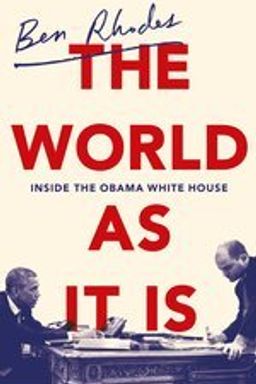
How does language become power? In The World as It Is, Ben Rhodes—Obama’s longtime speechwriter and deputy national security adviser—argues that words are not accessories to power; they are its living tools. The book is part political memoir, part inside chronicle of the Obama presidency. It shows you how sentences and speeches, wars and compromises, institutions and ideals all weave together in a system where language governs perception, sets limits, and creates openings.
Rhodes frames the Obama years as a struggle to match moral vision to practical constraint. Campaign euphoria collides with the gravity of governing; diplomacy competes with military necessity; communication becomes survival amid a 24‑hour media war. Through scenes from Cairo to Havana, Abbottabad to Oslo, he asks a recurring question: can political language still align aspiration and reality in an age of cynicism and speed?
From campaign storytelling to global messaging
You begin in the improvisational world of the 2008 campaign, where a handful of young aides—Axelrod, Favreau, McDonough, and Rhodes—create spontaneous, fast-moving prose to propel an insurgent candidate. Their startup rhythm thrives on conviction and speed: writing late-night terrorism speeches in Chicago, crafting slogans that promise a new dawn. That kinetic culture later meets the slow mechanics of government, where each word needs interagency clearance, legal vetting, and diplomatic foresight. The transformation from campaign to presidency becomes the first of many collisions between ideas and institutions.
The presidency as a language machine
Once inside the White House, Rhodes reveals how words anchor global order. Obama’s speeches in Berlin, Cairo, and Prague carry real foreign-policy effects: they signal strategy, shape agency priorities, and redefine moral boundaries. A single phrase—like “world without nuclear weapons” or “orderly transition must begin now”—reshapes relationships across continents. You discover that a presidential address is a policy instrument as tangible as a treaty or budget line. (Note: Rhodes repeatedly echoes George Kennan’s belief that rhetoric can shift the “psychological environment” in which policy is made.)
Behind every sentence lies institutional negotiation. Intelligence agencies sanitize terms like “torture,” Pentagon lawyers edit references to Guantánamo, and State diplomats tweak lines that might offend allies. The editing table becomes a mirror of bureaucratic politics, each strike of the pen revealing competing sovereignties within one government. Through this process, Rhodes shows how the presidency transforms personal language into collective national voice.
Moral calculus and the burden of decision
The book’s middle acts—Afghanistan, bin Laden, Syria, and Iran—reveal a philosophy of cautious realism. The president avoids “stupid shit,” as the now-famous doctrine goes, not out of cowardice but from awareness of cascading unintended consequences. Rhodes catalogs the human cost of both restraint and action: the drone wars’ moral toll, intelligence debates before the bin Laden raid, the paralysis around Syria’s red line, and the painstaking patience behind the Iran nuclear deal. In all cases, words signal values before action defines them.
When Obama chooses not to bomb Syria or Iran, his speeches still act—they shift global norms around multilateral diplomacy, inspections, and war powers. Rhodes describes how legal justifications and public explanations are as critical as operational plans. Modern leadership is as much about narrative engineering as about troop deployment. Credibility thus depends not only on force but on coherence: the capacity to align what you say with what you do.
Diplomacy, secrecy, and symbolic acts
Rhodes extends this logic into the quieter chapters on Cuba, Asia, and the Middle East. Secret meetings in Canadian guesthouses lead to Cuba’s diplomatic opening, sealed by Pope Francis’s letters and a handshake at Mandela’s funeral that itself becomes international choreography. The same dynamic governs the Asia “pivot” and ongoing tension with Israel—language built around balance: engagement without illusion, reassurance without imperialism. (Parenthetical note: these sequences recall the realism of George H. W. Bush, but with Obama’s storytelling gifts infusing moral purpose.)
Through each negotiation, Rhodes shows that symbolism is not superficial—it is strategy. Gestures like visits to Hiroshima or Laos, or an emotional song at Charleston, become extensions of policy because they shape how nations remember, mourn, and reconcile. Every story told from the podium alters the moral coordinates by which the next policy is judged.
Personal cost and the reshaping of truth
Ultimately, The World as It Is doubles as a meditation on selfhood in statecraft. Rhodes documents the exhaustion, the perpetual flights, the small graces—a joke from the president, a quiet museum moment—that punctuate years of tension. Yet he also reveals the darker evolution of political discourse: information warfare, manufactured outrage over Benghazi, and the distortion of narratives through social media. Serving power in the digital age means fighting for truth itself. Rhodes ends haunted but wiser: even good words can be weaponized.
Core argument
Language is the connective tissue between morality and policy. A president’s sentence can trigger reform, war, alliance, or backlash—but it always reveals what kind of world he believes can exist. For Rhodes, to craft those sentences responsibly is the noblest form of public service.
By merging memoir, strategy, and moral inquiry, Rhodes gives you an intimate education in how power speaks—and how, in the noise of modern politics, integrity depends on listening as much as leading.