
Idea 1
Star Wars as Our Modern Myth: Freedom, Choice, and Connection
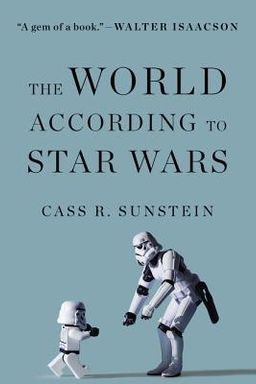
What if the most powerful story of our time isn’t found in ancient temples, but in movie theaters? In The World According to Star Wars, Cass R. Sunstein—Harvard scholar and leading thinker in law and behavioral science—argues that George Lucas’s saga has become humanity’s modern myth. It’s a global phenomenon that transcends generations, cultures, and politics, offering timeless lessons about freedom, destiny, creativity, and redemption. Star Wars, he suggests, is more than a set of films—it’s a mirror of who we are and who we aspire to be.
Through Sunstein’s lens, Star Wars is not just entertainment but a philosophical guide. It speaks to our deepest psychological conflicts—the tension between light and dark inside us—and our perennial struggle to reconcile fate with free will. It shows how ordinary people can resist oppressive systems, whether political or personal, and how forgiveness can redeem even the fallen. The series’ enduring charm, Sunstein insists, comes from its ability to blend myth and modernity, freedom and attachment, personal choices and cosmic consequences.
Why Star Wars Matters
When George Lucas released A New Hope in 1977, few believed in it. Executives saw it as folly; even actors thought it was absurd. Yet it became a cultural earthquake. Sunstein uncovers how this unlikely success emerged from not destiny but choice and contingency. It wasn’t inevitable—it was an act of imagination built on luck, timing, and social dynamics. That same unpredictability mirrors the film’s central theme: no future is predetermined. “Impossible to see, the future is,” Yoda reminds us. The capacity to choose defines what it means to be human—and why Star Wars endures.
Sunstein extends that insight to real life: we live amid randomness and opportunities. Just as Luke decides to leave his farm and Han chooses to return for the fight, our lives hinge on small acts of courage and connection. Through those choices, we change history. Lucas himself never planned a ten-film saga—it evolved through improvisation, collaboration, and shivers of inspiration. Creativity, like life, thrives in freedom’s uncertainty.
A Story of Freedom and Redemption
Star Wars tells us that freedom—both personal and political—is sacred. Sunstein traces Lucas’s political anxieties to the post-Watergate era, when America questioned its own ideals. The Empire mirrored dictatorial power—Nixon’s abuse of authority, the Cold War’s fear of control. Against that backdrop, the Rebellion becomes a metaphor for democracy itself. “I wanted to make a film about how a democracy turns into a dictatorship,” Lucas once said. Sunstein uses that insight to show how empires rise when citizens trade liberty for order, and how the choice to resist remains the saga’s beating heart.
Freedom in Star Wars is not only political—it’s deeply personal. Anakin succumbs to the Dark Side precisely because he fears losing those he loves; Luke overcomes that same fear through forgiveness. For Sunstein, this duality—attachment and detachment, rebellion and compassion—reveals Lucas’s moral genius. Redemption is always possible. Even the darkest soul can return to light if it chooses love over power.
Why We All Feel the Force
Across nations and generations, Star Wars connects people through what Sunstein calls “common knowledge and common experience.” In a fragmented world, movies like these act as civic rituals—national events that unify strangers. He recounts how presidents and children alike quote “May the Force be with you,” from Obama to a three-year-old wielding a toy lightsaber. Parents relive their youth as they share the saga with their kids, creating “connective tissue” in an age of division. This intergenerational resonance turns the films into living myths of belonging and wonder.
Sunstein argues that the experience of Star Wars—the music, the stories, the shared awe—revives our capacity for joy and moral reflection. Borrowing from Joseph Campbell’s The Hero with a Thousand Faces, he calls Lucas’s work the latest iteration of the Hero’s Journey—an archetypal path of transformation found in every civilization. Yet Lucas gave it an all-American twist: freedom of choice over destiny, personal agency over prophecy. The Force is not just “out there,” Sunstein writes—it’s something within us all, a metaphor for human potential.
What the Book Offers
Throughout ten chapters, Sunstein blends storytelling, psychology, and political theory to uncover why the saga feels both epic and intimate. He explains Lucas’s creative journey and lucky breaks, analyzes mythic themes like fatherhood and forgiveness, explores rebellion and constitutional freedom, and even draws lessons for behavioral science—how cognitive biases shape choices just as temptation shapes Anakin’s fall. Sunstein’s tone is conversational yet profound, turning pop culture into philosophy without losing its spark of fun.
“Star Wars might be a fairy tale,” Sunstein concludes, “but it’s also a guide for real life. At the decisive moment, the hero chooses—not because destiny demands it, but because freedom allows it.”
Ultimately, Sunstein’s main argument is that Star Wars resonates because it reminds us who we are: free, flawed, capable of redemption, and bound together by stories. Whether you’re a scholar, a parent, or just a dreamer watching the golden letters crawl across a screen, the saga whispers the same truth—you can always choose the Light.