
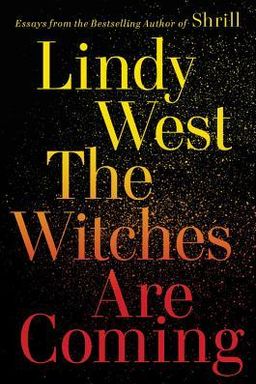
The Witches Are Coming cover

The Witches Are Coming

by Lindy West

In ''The Witches Are Coming,'' Lindy West dissects modern gender politics with her signature wit and intellect. She explores the misuse of ''witch hunt,'' gender biases in media, and the complexities of feminism in a post-#metoo world, offering a powerful call to action for true equality.

Speaking Truth as Witchcraft in Modern America

What happens when telling the truth becomes a threat to those in power? In The Witches Are Coming, Lindy West argues that modern society’s backlash against feminist, anti-racist, and progressive movements is nothing short of a witch hunt—an attempt to silence truth-tellers by labeling them dangerous. But West flips the idea: if this is a witch hunt, then she and her allies will embrace the title of witches—armed with truth, humor, and rage—to confront misogyny, racism, denial, and political decay.

West’s central claim is as clear as it is provocative: the greatest danger to our culture today is not outrage or political correctness, but apathy, complacency, and the refusal to distinguish between truth and lies. From Donald Trump’s presidency to the cultural responses to #MeToo, from rape culture to fat shaming, she examines how denialist politics and cowardly neutrality enable cruelty to thrive. Being a witch, in her telling, means choosing to live in truth even when it’s uncomfortable.

The Witch Hunt Metaphor

The book begins with the story of West’s husband meeting a man in a bar who claims he’s “not allowed to dance anymore” because women are “so sensitive these days.” West reframes this as emblematic of male grievance culture—the idea that being asked to respect boundaries equals oppression. That modern “witch hunts”—like #MeToo or racial justice movements—are not unjust persecutions, but long-overdue reckonings. When men like Trump, Harvey Weinstein, or their apologists cry “witch hunt,” they attempt to paint power as victimhood.

For West, reclaiming the identity of the witch is a radical act. The witch represents women who tell the truth about systems of power, even when those truths make others uncomfortable. In the seventeenth century, accusing women of witchcraft was a method of control; in the twenty-first, calling feminists “angry,” “shrill,” or “politically correct” serves the same purpose. West refuses to quiet down.

From Cultural Confusion to Moral Clarity

West traces how social media, journalism, and politics have confused moral debates by presenting every issue as a matter of “hearing both sides”—even questions that have no ethical gray area, like “Are Nazis bad?” or “Should women have equal rights?” She draws a direct line from this false equivalence to Trump-era corruption, noting that platforms like Twitter or Facebook refuse to take moral responsibility because moderation would cost money and engagement.

Throughout the book, West returns to one consistent demand: believe what you see in front of you. If white families hold ten times the wealth of Black families, systemic racism exists. If women make up 2 percent of Billboard Top 100 producers, sexism exists. Moral clarity, she argues, is not extremism; it’s sanity. She yearns for a culture that rewards conviction rather than cool detachment—where caring deeply is no longer uncool.

Why Witches, Why Now

West situates her argument in the moment following Trump’s election and #MeToo’s rise: a world where progress feels both unstoppable and perpetually under assault. Her tone alternates between furious satire and heartfelt sincerity. Witches, she writes, are those who speak forbidden truths—that sexism is a system designed by men for their own benefit, that racism remains structurally embedded, that apathy is complicity. Her essays show how dismissing these movements as “hysteria” is just a modern form of burning women alive.

The role of the witch, then, is universal. Anyone who demands empathy, accountability, and moral consistency in a culture addicted to denial participates in witchcraft. West is not asking you to be perfect—she’s asking you to be awake. To stop accepting “both sides” when one side is oppression. To stop clinging to neutrality when there is suffering in plain sight.

The Stakes of Truth

For West, truth-telling is an existential act. Each essay shows how denial—whether in politics, media, or art—erodes empathy and democracy itself. From the alt-right’s use of “plausible deniability” to the commercialization of feminism in Hollywood, she exposes how our hunger for comfort allows lies to harden into policy. The witches’ antidote is outrage in service of compassion. “We have to be the witches they say we are,” she insists, “and counter their magic with our own.”

By the end of the book, she offers both warning and hope. The world, she argues, is still worth saving. But that future depends on truth-tellers refusing silence, on readers like you and me refusing to go numb. Being a witch is not about destruction—it’s about transformation. You tell the truth, you take the heat, and maybe, just maybe, you build a better fire.


The Machinery of Denial

West argues that America’s defining feature is its addiction to denial. From racism to climate change, she shows how we’d rather choose comforting lies than painful truths. One striking example is her essay “Choosing the Lie,” where she examines how the internet—and our collective complicity—pushes us to believe whatever makes us feel safest. The story of Grumpy Cat, whose supposed name was a cover-up for an ableist slur, becomes emblematic of how easily we rewrite history to avoid discomfort.

Denial as Cultural Reflex

We see denial everywhere: in how white Americans downplay their privilege, how men treat misogyny as a “women’s issue,” and how social media platforms refuse to act against Nazis or trolls. West cites BuzzFeed’s exposé of Milo Yiannopoulos’s emails that linked Breitbart directly to white supremacist networks—evidence of coordination long dismissed as paranoia. We don’t lack information, she argues; we lack courage to confront it.

The Comfort of the Lie

West explains that plausible deniability—the ability to say “I didn’t know”—has become our most prized psychological commodity. Americans prefer to believe that they personally earned everything, that racism is over, that sexism was a misunderstanding. But the cost of comfort is complicity. For example, she connects the avoidance around a cat’s name to the cultural refusal to face the legacy of slavery or police brutality. Avoiding truth is addictive because it preserves the illusion of innocence.

Truth as Moral Labor

Being honest, West warns, requires discomfort and work. When trolls attacked her online, or when the media treated neo-Nazis as “another perspective,” she insisted that truth-telling is labor—unpaid, unglamorous, but necessary. Similar to Hannah Arendt’s argument about the banality of evil, West shows how moral decay hides in bureaucracy and convenience. The only cure for denial is vigilance: constantly asking, “Why do I believe this? Who benefits if I stay ignorant?”

In the end, “Choosing the Lie” is not just about one culture-war episode or viral scandal. It’s a mirror held to readers. West demands that you ask yourself: when faced with an uncomfortable truth—about privilege, injustice, or your own complicity—will you choose the lie that comforts you, or the truth that hurts but might save someone else?


When Comedy Becomes Complicity

West turns her sharpest critique toward comedy—the art form she loves most. In chapters like “Is Adam Sandler Funny?” and “Obsolescence Is a Preventable Disease,” she argues that humor, once a tool for truth-telling, has too often been used to excuse cruelty. The question isn’t whether Sandler or South Park are funny—it’s what happens when humor normalizes injustice and rewards mediocrity.

Punching Down vs. Punching Up

West strips comedy down to its moral geometry: are you punching up at the powerful, or punching down at the vulnerable? When Adam Sandler’s films pair incompetence with male entitlement—where the loser hero still “wins” a beautiful woman—they teach audiences that men deserve rewards regardless of merit. Similarly, when comedians like Ricky Gervais mock trans people or feminists under the guise of “free speech,” they use humor to reassert dominance, not challenge it. (This echoes Hannah Gadsby’s NANETTE, which reframes comedy as self-respect instead of self-deprecation.)

The Illusion of Edginess

West points out the irony: the same comedians who rail against “PC culture” are rarely silenced—they’re Netflix millionaires. Outrage sells. In dissecting South Park’s “both-sides-are-stupid” philosophy, she calls it moral cowardice disguised as rebellion. If everything is equally mockable, nothing is truly evil. The result is a generation that mistakes cynicism for intelligence and apathy for wit.

Evolving or Dying

True comedy, West insists, must evolve or die. Artists like Joan Rivers, whom she both critiques and mourns, reveal this struggle—women who broke doors open but accepted misogyny as the price of admission. “Falling behind is preventable,” West writes. Listening, empathy, and self-reflection are the new forms of subversion. Comedy that dares to care isn’t weakness—it’s power. If laughter once burned witches, maybe now it can build them instead.


The Culture of Apathy and Cruelty

In essays like “A Giant Douche Is a Good Thing If You’re a Giant” and “Do, Make, Be, Barf,” West scrutinizes the two poles of modern American absurdity: gleeful cruelty on one side, weaponized self-care on the other. Whether examining libertarian detachment in South Park or the elitist delusion of Gwyneth Paltrow’s Goop empire, she shows how cynicism and luxury both function as denial mechanisms that insulate the privileged from moral accountability.

Irony as Moral Escape Hatch

Mocking “caring too much,” as South Park does, isn’t neutrality—it’s complicity. West connects this to Trumpism’s rise, where detachment became valorized as authenticity. When everything is “a joke,” empathy itself becomes a weakness. She warns that nihilism isn’t edgy; it’s how societies rationalize harm. “Not believing in anything is believing in something,” she says. “It’s just that what you believe in is apathy.”

Capitalism’s Wellness Mirage

In contrast, the Goop industrial complex represents a different denial—turning fear and guilt into profit. At Paltrow’s In Goop Health conference, West watches wealthy women chase spiritual enlightenment through crystals, leeches, and $1,500 oxygen bars. It’s wellness without accountability: self-care as consumption. West reminds us that real wellness—like truth, justice, or empathy—cannot be bought. It’s collective, not individual.

Between the Goopers’ entitlement and the cynics’ smirks lies the same moral void: a refusal to care. Whether you burn sage or mock those who do, West argues, the problem is the same—you mistake comfort for virtue. The witch’s job, once again, is to care anyway.


The Weapon of Anger

In “Anger Is a Weapon,” West reclaims female rage as a sacred and necessary force. For centuries, women’s anger has been pathologized as hysteria. West flips that logic: silence serves oppression, and rage fuels survival. She draws from #MeToo, the Brett Kavanaugh hearings, and her own experiences with online abuse to show how suppression of women’s fury protects male power.

The Cost of Niceness

West recalls Uma Thurman’s trembling restraint after her assault revelation: “I’ve learned to wait until I’m less angry.” Society demands women temper their tone, even when they’re describing trauma. Christine Blasey Ford testified with calm dignity; Kavanaugh screamed with rage—and he was rewarded. Niceness, West argues, is a cage built by patriarchy to keep women from burning it down.

Anger as Moral Intelligence

Rage, she says, is often a rational response to injustice. The so-called “angry woman” who demands equal pay, bodily autonomy, or safety is not overreacting—she’s paying attention. By pathologizing that anger, society shields abusers and institutions from scrutiny. West asks readers, especially women, to stop apologizing for feeling furious. Anger clarifies what we care about most.

“Feminism,” she concludes, “is the collective manifestation of female anger.” If men fear women’s rage, that’s proof it’s working. The witch’s cauldron isn’t chaotic—it’s catalytic.


Stories as Spells for Change

West’s essay “What Is an Abortion, Anyway?” epitomizes her argument that storytelling is political magic. She recounts her own abortion—safe, ordinary, and liberating—not as a confession but as an act of reclamation. Through the Shout Your Abortion movement, she and activist Amelia Bonow turned silence into solidarity, replacing shame with truth. Their message: abortion isn’t evil or tragic; it’s a fundamental expression of freedom.

Breaking the Curse of Stigma

West shows how stigma thrives in silence. Pro-choice Americans often yield the conversation to extremists by treating abortion as rare or shameful. But one in three women have abortions—it’s normal. By shouting, not whispering, their stories, women destroy the myth that morality lives only in sacrifice. She insists that autonomy is not negotiable; every person has the right to shape their own life free from state or religious control.

Truth-Telling as Collective Care

For West, sharing personal stories is a form of care work. When one woman speaks, others heal. These narratives, she says, change culture faster than policy. Like witches casting spells, each storyteller rewrites reality to reflect compassion instead of control. “Silence is not an option,” West writes. Against authoritarianism, empathy becomes activism.


The Next Generation of Resistance

Near the book’s end, West turns to hope. In “Long Live the Port Chester Whooping Cranes,” she contrasts her generation’s ironic detachment with her stepdaughters’ fearless activism. Where the 1990s mocked idealism as “PC gone mad,” today’s youth treat protest as normal life. The daughters paint Black Panther murals and recite poetry calling out injustice. They are “native to sincerity,” she writes, unafraid to say what they believe.

Undoing the Coolness Trap

West revisits how media like PCU and South Park trained young Americans to equate activism with humorless hysteria. That conditioning, she argues, birthed today’s “white moderate”—people who agree with justice in theory but flinch at passion. Her daughters’ generation rejects that false neutrality. Their activism, like Greta Thunberg’s climate strikes, is fierce precisely because it doesn’t apologize for caring.

From Hopelessness to Habit

West acknowledges the rising despair in an age of Trumpism, school shootings, and climate collapse. But she counters it with faith in persistence: change is not a single victory but an ongoing practice. “Maybe we will have to fight forever,” she concludes. “So be it.” The witches are coming—and they’re teenagers with microphones and murals, fighting for their right to hope.


Truth, Care, and the Future We Choose

In the final chapter, “The World Is Good and Worth Fighting For,” West strips away satire and speaks plainly. She describes her love for her husband, her city, and the planet itself, grounding her politics in tenderness. Climate change, she warns, is the last test of our ability to care. The same apathy that fuels sexism and racism also drives planetary destruction. The antidote is the same: truth, empathy, and relentless action.

The Politics of Care

“The purpose of a society,” she writes, “is to take care of people.” Yet America is run by those “divested of care.” From Paul Ryan’s callous healthcare cuts to Trump mocking climate activists, West sees moral decay masquerading as realism. She reminds readers that care is not sentimentality—it’s responsibility. To fix politics, media, and culture, we must rebuild our capacity to care for strangers, not just ourselves.

Hope as Discipline

West refuses despair. Drawing from activists like Rebecca Solnit, she reframes hope as a discipline, not a naïveté. “Despair is the death of action,” she writes. The witches’ task is to act anyway—to call leaders, tell stories, and keep believing that truth still matters. The world may burn, but love is our fuel. We fight because it’s still worth it.

Dig Deeper

Get personalized prompts to apply these lessons to your life and deepen your understanding.

Go Deeper

Get the Full Experience

Download Insight Books for AI-powered reflections, quizzes, and more.