
Idea 1
The Power of Personal Accountability
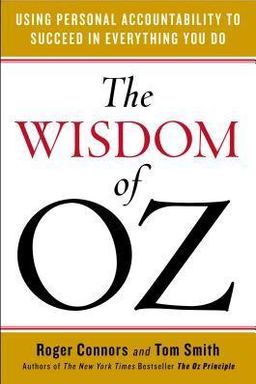
What if you discovered that the ability to change your life—your career, your relationships, your happiness—was already within you? In The Wisdom of Oz, Roger Connors and Tom Smith argue that every step toward success begins with one essential principle: personal accountability. The authors, known for their best-selling book The Oz Principle, translate the timeless lessons from The Wizard of Oz into real-world strategies for living Above The Line—where you stop blaming others and start taking ownership of your results.
Connors and Smith contend that there are no wizards behind the curtain waiting to fix your problems. The power to change doesn’t come from outside—from bosses, fate, governments, or luck—it comes from within. Through stories of everyday people, historical figures, and pop-culture icons, the authors reveal that when we rise Above The Line, exercise accountability, and ask the right questions, we transform confusion into clarity and pain into progress.
Above the Line and Below the Line
At the heart of the book is a simple image: a line separating two worlds. Above The Line thinking represents responsibility, ownership, and problem-solving; Below The Line symbolizes victimhood, blame, and avoidance. When you are Below The Line, you’re stuck in excuses—the escalator’s stopped, and you’re waiting for someone else to fix it. Above The Line, you walk up that escalator yourself.
The authors define accountability as “a personal choice to rise above one’s circumstances and demonstrate the ownership necessary for achieving desired results.” It’s a proactive rather than reactive stance—a mindset shift from “Who’s to blame?” to “What can I do?”
The Journey Through Oz: Four Steps to Accountability
Drawing from the movie’s characters, the authors develop their four-step model of accountability: See It, Own It, Solve It, Do It. Each step represents a new level of ownership and self-awareness:
- See It: the courage to face your reality, remove blind spots, and recognize what’s actually happening (the Cowardly Lion’s step).
- Own It: finding the heart to take responsibility for your situation rather than blaming others (the Tin Man’s step).
- Solve It: the wisdom to create and execute solutions instead of waiting for magic fixes (the Scarecrow’s step).
- Do It: having the persistence and discipline to act on those solutions until results are achieved (Dorothy’s step).
Each chapter uses modern stories—from Mali’s mayor Yeah Samake defying a coup, to a fisherman surviving twelve hours at sea—to show how people practice these steps when confronted with adversity. The message: accountability is not about guilt or punishment but about empowerment.
Why Accountability Matters Today
Connors and Smith argue that a lack of accountability fuels modern dissatisfaction. Despite technological abundance and endless self-help programs, studies show more people feel powerless or unhappy than previous generations. Accountability fills that gap—it transforms frustration into agency. The authors back this with Gallup data revealing that 70% of Americans are disengaged at work, performing only at a fraction of their potential because they see their job as something happening to them rather than something they can shape.
The Real Magic Lies Within
In the final chapter, modeled after Dorothy’s revelation from Glinda the Good Witch, the authors remind readers: “You’ve always had the power.” Just as Dorothy’s ruby slippers were always her way home, you already possess the tools to change your circumstances—it’s a matter of using them. Walt Disney, for example, was fired for having “no imagination,” yet went on to build one of history’s most creative enterprises. His story mirrors the authors’ message: external obstacles cannot define you once you embrace internal ownership.
Ultimately, The Wisdom of Oz is both motivational and practical. It’s a wake-up call to stop waiting for wizards—bosses, governments, even luck—and realize that your choices shape your path. This mindset doesn’t just fix problems; it unleashes joy, confidence, and energy. Life, the authors suggest, is always better Above The Line.