
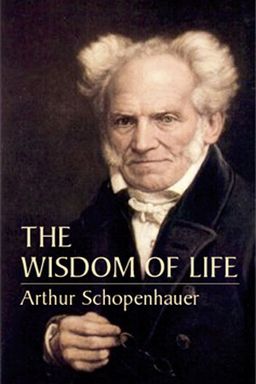
The Wisdom of Life cover

The Wisdom of Life

by Arthur Schopenhauer

In ''The Wisdom of Life'', Arthur Schopenhauer explores the timeless quest for happiness, delving into the importance of personality, intellect, and inner contentment. This philosophical essay challenges societal norms and encourages readers to seek fulfillment beyond material wealth and societal approval.

The Wisdom of Life: What Makes Existence Worthwhile

What truly makes life worth living? Arthur Schopenhauer, in The Essays of Arthur Schopenhauer: The Wisdom of Life, confronts this question with a penetrating look into what he calls eudaemonology—the art of living well. His approach is compellingly paradoxical: Schopenhauer denies that life is fundamentally happy or purposeful in any metaphysical sense, yet he still seeks to teach how we might arrange our lives to be as pleasurable and meaningful as possible within those limits. Beneath this irony runs a deeply practical philosophy—a guide for navigating human existence with clarity, honesty, and dignity.

He writes not as a romantic idealist but as a pragmatic realist of suffering. Life, he insists, is filled with pain, boredom, and disappointment; yet if we learn to understand the sources of happiness and unhappiness, we can cultivate a kind of wisdom—a way of managing expectations, desires, and relationships that helps us live more contentedly. This wisdom is grounded in an understanding of three key dimensions of human existence: what we are (our personality and mental constitution), what we have (our property and independence), and how we are regarded (our social standing and reputation).

The Structure of Happiness

Schopenhauer begins by declaring that the most crucial element of happiness is what a person is. Wealth, fame, and external success are minimal compared to the internal state of one’s being—the mind, character, health, and temperament. He writes: “A good, temperate, gentle character can be happy in needy circumstances, whereas a covetous, envious and malicious man, even if he be the richest in the world, goes miserable.” The idea is revolutionary in its simplicity: true wealth lies in inner contentment and mental richness, not possessions or social validation.

He contrasts this with the illusions of modern society. People chase social recognition, luxury, and ambition—yet these pursuits often enslave rather than liberate. Schopenhauer observes how society applauds fame more than wisdom, wealth more than virtue. By reordering our priorities, he suggests, we might recover a natural balance that the ancients knew well. Like Aristotle and the Stoics, he argues that happiness stems from harmony within oneself, not from constant striving in the outer world.

Pain, Boredom, and the Human Condition

Schopenhauer famously reduces human life to an oscillation between two fundamental evils: pain and boredom. When we suffer deprivation, we fight desperately to fill our needs; when we succeed, we lapse into indifference and ennui. Happiness, therefore, does not consist in escaping pain entirely but in finding intelligent ways to manage it. He calls this the “economy of happiness”—living in awareness of the fact that satisfaction and suffering follow one another inevitably.

To conquer this double bind, Schopenhauer turns to self-sufficiency. A rich inner life, intellectual pursuits, and philosophical reflection serve as antidotes to boredom. “The life of the mind,” he writes, “is not only a protection against boredom—it keeps us from bad company, from dangers, misfortunes, and extravagances.” Strangely, Schopenhauer’s pessimism leads to a practical optimism: if life is fraught with pain, then the wise man should live secluded, temperate, and quietly reflective.

The Three Realities: Being, Having, and Seeming

In dividing human happiness into three parts—personality, property, and position—Schopenhauer gives us an enduring framework for understanding fulfillment. Personality entails our intellect, health, and moral fiber; property refers to our resources and freedom from economic toil; position denotes reputation and social esteem. Yet among these three, only the first is intrinsic and lasting. You carry your personality with you everywhere, and it colors every experience. External fortunes—money or admiration—are fleeting and dependent on circumstance. “Man,” he writes, “is pent up within the limits of his own consciousness, and cannot get beyond his own skin.” To build happiness on reputation or riches is to build on sand.

His description of these factors anticipates modern psychology: resilient happiness comes from internal stability, not external approval. The wise person cultivates mental richness, independence, and spiritual depth—three virtues that withstand life's inevitable shifts. Fame and fortune, on the other hand, rest on the fickleness of others' opinions and on external goods, which time and chance may take away. In this sense, Schopenhauer’s vision reverses the moral hierarchy of his age: instead of striving for public honor or aristocratic prestige, we should aim to be rich in ourselves.

Why Schopenhauer’s Vision Matters Today

In an era obsessed with external success and digital validation, Schopenhauer’s “wisdom of life” reads like a timeless mirror. He reminds you that your sense of self, not your salary, dictates the quality of your days. His philosophy prefigures existential thought and positive psychology alike: happiness depends on managing desire, cultivating insight, and fostering inner freedom. If pain and boredom are inevitable, then the art of life lies not in eliminating them but in transforming them through engagement, moderation, and thought.

Ultimately, Schopenhauer offers a hard but liberating truth—you cannot make the world happier, but you can make your consciousness richer. The wise life, therefore, is not one of conquest but one of comprehension: it is the art of finding value where suffering, fate, and imperfection are inevitable. By learning to shape your inner world, you master the wisdom of life itself.


Personality: The Foundation of Happiness

Schopenhauer’s first great claim is that happiness depends far more on your inner constitution than on your external circumstances. He divides life into three fronts—what you are, what you have, and how you stand in others’ eyes—and insists that your personality overshadows the other two. To live wisely, he says, means strengthening the mind and character instead of chasing reputation or riches.

Health and Temperament

The core of personality rests in your mental and physical health. “Nine-tenths of our happiness depends upon health alone,” he observes. A lively, cheerful spirit outweighs wealth or status, because it colors every experience. Schopenhauer views a tranquil mind and a strong body as the natural preconditions for wisdom and satisfaction. In illness, even the most luxurious life becomes unbearable; but a robust constitution transforms small moments—a morning walk, a conversation—into lasting joy.

He links mental vigor and physical motion, citing Aristotle: “Life is movement.” A sedentary existence cuts us off from vitality and invites depression. Thus, active exercise is not mere recreation but moral training—a way to sustain both strength and cheerfulness.

Intellect and Inner Richness

A superior mind is the greatest source of happiness, because it creates meaning even in solitude. “An intellectual man in complete solitude has excellent entertainment in his own thoughts and fancies,” Schopenhauer writes. In contrast, the dull mind depends helplessly on external stimulation, constantly seeking diversion through gossip, games, or sensual pleasures. The wise person, however, cultivates self-entertainment—reading, study, meditation—which inoculates against boredom and folly.

In this, Schopenhauer aligns with Stoic and Buddhist ideals: inner independence grants peace regardless of circumstance. External pleasures fade; inner pleasures, drawn from understanding and contemplation, deepen with time.

Moral Character and Serenity

Morality, too, has a direct bearing on happiness. A gentle and honest character experiences the world as less hostile. Those consumed by greed or envy create endless suffering for themselves. The good man’s peace of conscience shelters him from internal storms, while the wicked man’s restless will multiplies pain. Thus, Schopenhauer’s moral wisdom is psychological: virtue calms the will, vice inflames it.

He connects serenity with will-control. The more you subdue your desires, the more tranquil you become. Life’s satisfactions depend not only on acquiring pleasures but on reducing demands—a principle echoed centuries later in modern mindfulness philosophy.

Learning to Live from Within

The greatest achievement, Schopenhauer concludes, is independence from the external world. “He who has enough in his own inner wealth, and requires little from outside for his maintenance,” he writes, “is the happiest man.” The less you depend on others for joy, the freer you are from disappointment and coercion. This is not isolation but liberation—a reclamation of your inner kingdom from the material and social noise outside.

Through soul cultivation, intellectual curiosity, and moral simplicity, you become rich in personality—the foundation upon which the wisdom of life is securely built.


Property: Freedom from Necessity

The second pillar of Schopenhauer’s philosophy of happiness concerns property—not as greed or luxury, but as independence from need. Wealth, he argues, is valuable only insofar as it frees you from the constant struggle for survival. “To start life with enough to live upon,” he writes, “is an advantage which cannot be overestimated.”

The True Value of Wealth

Money, for Schopenhauer, is like oxygen: necessary for comfort but irrelevant once obtained. Its proper use is to secure leisure and self-possession, not indulgence. Excessive ambition—“industry as industrious as an ant” he calls it—traps people in endless toil for comforts that quickly lose charm. He contrasts this cycle with the wise man’s moderation: work only until basic stability is achieved, then devote yourself to inward enrichment.

Epicurus and Simple Living

Echoing Epicurus, Schopenhauer divides human needs into natural and necessary (food, shelter), natural but unnecessary (pleasures like fine tastes), and neither natural nor necessary (luxury and extravagance). Only the first category is essential for real happiness. The rest enslave the will to artificial longing. As Epicurus claimed, simplicity yields serenity; Schopenhauer modernizes the idea—moderate your claims rather than endlessly increasing possessions.

Independence as the Highest Wealth

To “own oneself,” he says, is richer than owning property. He praises those whose intellect gives contentment in solitude over those whose wealth demands constant social validation. Having just enough resources to resist servitude—no debts, no dependence on favor—is the truest freedom. Gratitude and frugality thus become moral disciplines: they secure peace by limiting unnecessary desires.

In short, Schopenhauer’s economic philosophy rejects accumulation for accumulation’s sake. To use money as a shield for leisure and thought is wisdom; to chase it as an end is bondage. “The man of inner wealth,” he concludes, “wants nothing from outside but leisure to enjoy his mind.”


Position and Reputation: The Mirage of Honor

The third realm—how one stands in others’ eyes—addresses honor and reputation. Schopenhauer sees these as illusions occupying most human minds. People value external opinion more than inner reality, yet this misplaced emphasis breeds endless anxiety. Fame and reputation are fragile because they depend on others’ perceptions, not on truth.

The Folly of Public Opinion

“By a peculiar weakness of human nature,” he writes, “people generally think too much about the opinion which others form of them.” Honor becomes a social currency detached from personal worth. The difference between fame and character is simple: fame is what others assume, character is what truly exists. The wise person should compare these values—internal peace outweighs external praise. Dependency on others’ judgments makes one a slave to the world’s fickle mood.

Vanity, Pride, and Honor

Schopenhauer distinguishes vanity (the desire for admiration) from pride (inner conviction of worth). Vanity depends on others, pride springs from self-awareness. He criticizes the endless social rituals that feed vanity—the “mocking worship of opinions.” True dignity, he argues, comes from inward pride based on genuine merit, not public applause. External recognition may flatter but never fulfills.

He describes societal hierarchy—titles, honors, decorum—as artificial signs of respect. Real honor lies in honesty, courage, and moral consistency. Social honor—the suppression of shame and maintenance of reputation—is useful pragmatically but false philosophically. His analysis anticipates psychology’s concept of false self: we perform respectability rather than pursue reality.

Fame and Its Discontent

Schopenhauer separates honor from fame. Honor is defensive—about not losing respect. Fame is creative—the echo of true merit in others’ consciousness. Yet fame, he warns, is secondary; it does not make a person great but merely signals greatness. “Not fame, but that which deserves to be famous,” he writes, “is what a man should hold in esteem.” Those who chase reputation forget that happiness arises from the virtues that earn admiration, not the admiration itself.

In the end, he urges you to shift from external to internal validation. Seek respect from your conscience, not applause from the crowd. Authentic honor is lived, not performed—and fame, if it comes, should be treated as the natural shadow of genuine worth.


Knightly Honor and Social Absurdity

In one of the most provocative parts of the book, Schopenhauer dissects what he calls “knightly honor”—the medieval code of duels, insults, and the lethal defense of personal pride. To him, this entire system is “a solemn farce,” a relic of feudalism that mistakes violence for virtue. He contrasts it with civic and moral honor, which rest on genuine respect and ethical principle.

The Origins of Knighthood

Tracing its history to medieval duels—the so-called “Judgment of God”—he explains that physical combat stood as a divine verdict on disputes. Over time, this evolved into a code where prestige replaced justice. A man’s word could be purified only by bloodshed. Thus “honor” became detached from moral worth and dependent on violence and public display.

The Absurd Logic of the Duel

Schopenhauer ridicules the contradictions: a blow becomes the “greatest of evils,” worse than death or damnation, because it offends abstract honor. “To receive an insult is disgraceful; to give one is honorable,” he writes sardonically, exposing how physical rudeness substitutes for reason. He mocks the hierarchy of retaliations—blows, spitting, bloodletting—as though humanity were governed by a childish arithmetic of pride.

For Schopenhauer, this obsession reflects spiritual emptiness: when intellect fails, brute force claims judgment. The duel institutionalizes barbarism under the mask of nobility. He contrasts this with classical Athens and Rome, where intellect and courage, not physical vengeance, defined honor. Socrates calmly accepted a slap, remarking: “If an ass kicks me, should I be angry?” For the ancients, insult did not destroy intrinsic worth. For modern knights, it demanded death.

Civilization and True Honor

Schopenhauer argues that the duel’s endurance into his century reveals a moral regression: civilization’s shell hides primitive pride. Wealth and position nurture instead of curing stupidity. “Knightly honor is the child of pride and folly,” he concludes, “and must be banished.” Real honor lies in truth, intellect, and the peaceable respect for rights within civic order. Violence defends only vanity.

His critique remains sharp even today—modern society still glorifies aggression and reputation over integrity. To live wisely, you must refuse unnecessary battles. Courage without cruelty is the mark of genuine honor; understanding, not revenge, makes the civilized man.


Fame: The Shadow of Greatness

In the book’s concluding reflections, Schopenhauer turns his gaze to fame—the undying brother of ephemeral honor. Fame, he declares, is not an object worth chasing but the natural echo of true merit. Only those who create what is everlasting—great works of thought or art—deserve the voice of posterity.

Fame vs. Honor

While honor concerns what people think of your conduct, fame rests on the enduring power of your achievements. Honor dies with you; fame lives beyond you. “Of Alexander the Great,” Schopenhauer notes, “we have but the name and record; but Plato and Aristotle, Homer and Horace are alive.” The immortality of works transcends the fleeting admiration given to deeds.

Actions and Works

He distinguishes two paths to fame: action (deeds of courage or leadership) and work (creation of truth or beauty). Actions, like wars or political reforms, depend on circumstance and soon fade. Works—philosophy, art, poetry—possess eternal influence. They form “immortal lives in themselves.” A great work continues to teach long after its author dies, because it speaks to the universal rather than the particular.

This echoes the Renaissance ideal of immortalizing oneself through art or ideas—the creative defiance of mortality. Fame thus ceases to be vanity and becomes testimony to spiritual power.

The Delayed Justice of Posterity

Schopenhauer observes that true fame comes late. Because greatness is strange to contemporaries, it must await minds capable of judgment. “The longer a man’s fame is destined to last, the later it will be in coming.” Posterity is the ultimate jury. Contemporary applause often belongs to mediocrity; time filters false fame, leaving only genuine excellence. He invokes Seneca: “Fame follows merit as surely as the body casts a shadow.”

Fame and Happiness

Schopenhauer ends on a stoic note: fame is secondary to the inner life that produces it. “It is not fame, but that which deserves to be famous, that makes a man happy.” The genius’s reward lies in creation itself, not in recognition. Posterity’s applause, like an echo across centuries, matters only insofar as it confirms the worth of what was already true. Wisdom, he implies, consists in working for truth, not applause.

Through this lens, the art of living becomes itself a form of creation. Fame is the world’s later acknowledgment that greatness once walked among it—but for the wise man, living beautifully in thought and character is enough, whether or not anyone ever notices.

Dig Deeper

Get personalized prompts to apply these lessons to your life and deepen your understanding.

Go Deeper

Get the Full Experience

Download Insight Books for AI-powered reflections, quizzes, and more.