
Idea 1
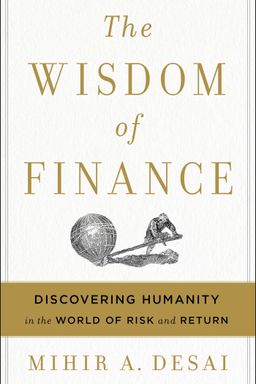
The Wisdom of Finance: Where Money Meets Meaning
What if the tools and ideas of finance could help you live a better, more meaningful life? In The Wisdom of Finance, Harvard professor Mihir A. Desai argues that finance is not merely a system of numbers, equations, and profits—it’s a framework for understanding humanity itself. Far from being cold or calculating, the principles of finance illuminate how we deal with risk, create value, handle failure, form relationships, and pursue fulfillment. To humanize finance, Desai brings it into conversation with literature, history, philosophy, and art so we can see money and morality as interconnected rather than opposed.
Desai’s central claim is that the same ideas that guide investment decisions can guide living wisely. Risk and insurance teach us how to confront chance and uncertainty. Value creation sheds light on how to live purposefully. Leverage shows us the power and cost of commitments. Bankruptcy demonstrates how to recover from failure. By combining the analytical clarity of finance with the emotional and ethical insight of the humanities, Desai makes finance not only accessible but profoundly personal. He contends that when we understand the core values embedded in finance, we reclaim it from the greed and cynicism that now define its public image.
Finance and the Good Life
The book opens with Desai’s reflection on his “last lecture” to graduating Harvard MBAs, where he set aside data and formulas to talk about the good life. Students and executives, he realized, were longing not just for financial success but for wisdom about meaning, purpose, and virtue. The world’s deep suspicion of finance—as extractive, greedy, or soulless—has made many in the industry disengage from moral reflection about their work. Desai’s remedy is to restore finance’s dignity by reconnecting it with its underlying humanity. The stories we live and the markets we run reflect the same struggles: managing uncertainty, building trust, allocating scarce resources, and finding fairness.
Bridging Two Cultures
Drawing inspiration from C. P. Snow’s famous essay “The Two Cultures,” which lamented the divide between science and the humanities, Desai bridges the canyon between finance and moral imagination. He weaves together Aristotle’s Nicomachean Ethics, Shakespeare’s Merchant of Venice, Jane Austen’s Pride and Prejudice, John Milton, Willa Cather, and even Mel Brooks’s The Producers with financial concepts like diversification, moral hazard, and the principal–agent problem. Each chapter pairs a key idea from finance with a story from the humanities to show how practical financial logic can guide ethical and emotional life decisions.
Finance as a Mirror of Humanity
For Desai, finance is not the enemy of virtue. It is a lens for seeing humanity—a way of understanding how we deal with hope, fear, success, and failure. Every financial idea carries moral meaning. Insurance is really about empathy and the shared burden of risk. Diversification reflects the wisdom of plural relationships. Leverage teaches the delicate balance between freedom and obligation. Bankruptcy embodies forgiveness and the possibility of rebirth after failure. Value creation, when seen ethically, reveals the deepest human impulse to use our endowments—our talents—to make the world better.
From Models to Meaning
Desai critiques how finance education and practice have become mechanistic, turning living ideas into sterile formulas. Many practitioners, he argues, know the math but not the meaning behind it. By erasing the human stories that underlie money, finance becomes brittle and easily corrupted. To rebuild moral depth, we must see each formula as a story: options as choices in love, diversification as the necessity of human variety, leverage as our web of commitments, and valuation as a reflection on what truly counts as value. Only then can finance recover its original purpose —to enable human aspiration rather than enslave it to greed.
Why It Matters
Desai’s goal is both moral and practical. By learning to see finance through stories, citizens can grasp the forces shaping their lives instead of being intimidated by jargon. Practitioners can rediscover pride and virtue in their profession. And all of us can use the wisdom of finance to make sense of chance, value, failure, and commitment in our personal lives. The book is not about beating the market—it’s about understanding life’s market of choices. Finance, Desai argues, is ultimately a moral art: a study of how we turn uncertainty into meaning, how we invest our limited time and talents, and how we stay balanced between risk and reward. That is the true wisdom of finance.