
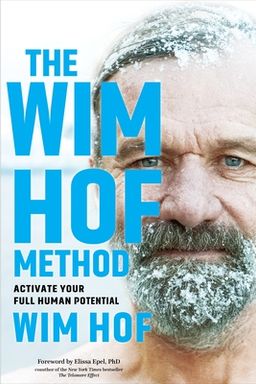
The Wim Hof Method cover

The Wim Hof Method

by Wim Hof

The Wim Hof Method reveals how to activate your full potential by embracing the cold, mastering your breath, and focusing your mind. Discover how these practices can enhance your health, unlock hidden strengths, and transform your life.

Unlocking Human Potential Through Cold, Breath, and Mind

Have you ever wondered if you could consciously control the deep, automatic processes of your body—your immune response, your mood, even your genetics? The Wim Hof Method invites you into that possibility. Wim Hof, known as “The Iceman,” argues that modern comfort has dulled our innate physical and mental powers. By reintroducing purposeful stress through cold exposure, deliberate breathing, and mental focus, we can awaken lost physiological abilities and reclaim strength, happiness, and health.

Rediscovering Ancient Strength in a Modern World

Hof begins from a powerful claim: our evolutionary biology still holds the capacity for resilience, but civilization’s convenience has numbed it. Central heating, constant comfort, and protective clothing prevent the natural training of our vascular and immune systems. As Hof puts it, “A cold shower a day keeps the doctor away.” His method is simple but revolutionary: cold exposure, conscious breathing, and mindset are the three pillars of human optimization. These practices unlock hormonal cascades, regulate temperature, and stimulate mitochondria—the very foundation of energy within cells.

By doing so, Hof contends, we can consciously influence what science once deemed involuntary: the autonomic nervous system, inflammation, even aspects of our genetic expression. His argument is both scientific and spiritual, blending measurable experiments with a call to return to nature. The book recounts studies at Radboud University, Wayne State, and other institutions that observed Hof’s control over temperature, adrenaline, and immune responses usually considered impossible.

Science Meets Spirituality

Hof’s story blends anecdote and data—the narrative of his wife’s tragic suicide in 1995 and his subsequent discovery that cold immersion and profound breathing healed his grief and stress became his mission’s origin. In labs, scientists monitored him submerged in ice for eighty minutes without lowering his core temperature. Later, twelve volunteers trained under him for four days were injected with endotoxins at Radboud University. They all consciously suppressed inflammatory markers—proving voluntary influence over immune function for the first time in recorded science. For Hof, this breakthrough validated what he had lived for decades: the mind can alter the body’s chemistry directly.

Modern Disconnection and Reawakening

The book is more than health advice; it’s a critique of modern alienation. Hof argues that technological comfort deconditions our adaptive systems, leaving us weak, anxious, and inflamed. Returning to nature—through discomfort—revives not only physical vigor but emotional and spiritual balance. As he teaches, “The cold is merciless but righteous.” Facing the elements mirrors confronting life’s stress; both demand surrender, not resistance.

In this summary, you’ll see how Hof transforms pain, exposure, and deep breathing into tools of transformation. You’ll explore his scientific collaborations proving the method’s effects on inflammation, mental health, and cellular function. You’ll also encounter his personal narrative—from his early tragedy with his wife Olaya to his ascent of Everest barefoot—and how these experiences demonstrate resilience through presence, not avoidance.

Why This Matters

Ultimately, Hof’s idea matters because it collapses the false boundary between mind and body. By consciously controlling physiological mechanisms, your thoughts can affect your hormones, immune system, and mood states directly. Scientists like Dr. Elissa Epel (author of The Telomere Effect) have joined Hof’s research to study stress resilience and cellular aging, showing that hormetic stress—the good kind of stress—reverses degeneration and strengthens life-span. The method offers a way to recalibrate modern overwhelm: instead of numbing pain or anxiety, Hof teaches leaning into sensation until transformation occurs.

“The breath is a door,” Hof writes, meaning that conscious breathing can open access to the deepest parts of ourselves—the cellular, neural, and spiritual dimensions once thought unreachable. Through the cold, the breath, and commitment, we become the scientists of our own body.”

In short, the book asserts that you don’t need pharmaceuticals or decades of spiritual practice to heal. You possess the tools already—oxygen, temperature, awareness. Hof’s journey proves that liberation from trauma and disease begins when you learn to breathe consciously, meet discomfort, and trust the power of your own biology.


The Three Pillars: Breath, Cold, and Mindset

At the heart of Hof’s philosophy lies the triad of conscious breathing, cold exposure, and mindset. He calls these the pillars that unite modern physiology with ancient spiritual practice. When practiced together, they awaken dormant systems in the body—your energy metabolism, inflammation response, and mood regulation. Each pillar supports the others, and understanding their synergy is key to unlocking what Hof calls “the power of the mind.”

Conscious Breathing

The breathing practice begins with thirty to forty deep breaths, followed by breath retention after exhaling. The technique alkalizes the blood, reduces carbon dioxide, and increases oxygen saturation, creating a temporary but profound shift in your biochemistry. Hof compares it to “a tension charge over the whole body,” charging cells with electricity and vitality. Practitioners report tingling, lightheadedness, and visions—effects that modern science ties to oxygen’s influence on the brainstem and pineal gland.

This breathing sequence, performed safely while sitting or lying down, trains control over the autonomic nervous system. When Hof and test subjects were monitored, their blood oxygen dropped to levels where ordinary people would lose consciousness—yet they remained in control and unafraid. Regular practice, he says, cleanses the lymphatic system and moves the body from acidic to alkaline states, suppressing inflammation naturally.

Cold Exposure

Cold, in Hof’s view, is the “merciless teacher.” It trains the vascular system’s millions of micro-muscles to constrict and dilate properly. Most modern people, buffered by heating and clothing, develop stiff or inactive vascular systems, causing stress on the heart. Cold water reawakens this system. A minute of cold shower a day strengthens tone, lowers heart rate, and reduces cortisol—the stress hormone. After ten days, Hof says, “You’ll crave it.” Cold immersion also activates brown fat, the energy-burning tissue that maintains body heat and is associated with longevity (echoed in studies published in the New England Journal of Medicine).

Mindset and Commitment

The third pillar—mindset—ties the physical practices together. Without mental commitment, the cold and breath are just sensations. Hof defines mindset not as positive thinking but as total presence. Through visualization, meditation, and letting go of ego, you align thought and body. He recounts raising his skin temperature by one degree through willpower alone during a Wayne State experiment, proving the brain can influence thermoregulation. Confidence and belief aren’t abstract virtues here—they are measurable physiological forces.

“Whether you think you can or you think you can’t, you’re right.” Hof quotes Henry Ford to show that the human nervous system responds directly to belief, turning mindset into biology.

The Synergy

When combined, these three elements—breath, cold, and commitment—create hormetic stress, a beneficial challenge that strengthens resilience. The body adapts to small doses of controlled discomfort by becoming more efficient. Hof’s collaboration with Dr. Elissa Epel explores how hormetic stress affects telomeres, the protective end caps of DNA related to aging. Early results suggest the method could slow cellular aging and improve mental health outcomes for depression and anxiety.

This triad turns simple routines into transformation. The cold shower becomes a meditation, the breath a reset switch, and mindset the engine driving all change. Through them, Hof’s method transforms comfort into vitality and fear into freedom.


The Body as the Laboratory

Unlike self-help teachers who rely on metaphor, Hof insists on proof. He treats his body as a laboratory and himself as both subject and scientist. His life is a succession of experiments pushing the edges of physiology—running barefoot half-marathons in the Arctic, immersing in ice for hours, and ascents of Everest in shorts. Each act isn’t a stunt but a hypothesis: That conscious control can override automatic bodily responses once thought impossible.

Scientific Validation

Hof’s research collaborations have become milestones of modern biology. In the Radboud University studies, twelve volunteers trained by him resisted endotoxin injections without symptoms. Their immune systems actively suppressed inflammatory proteins IL-6 and IL-8 while enhancing anti-inflammatory IL-10. That effect—voluntary suppression of inflammation—contradicted decades of medical textbooks. Subsequent replication studies published in Nature and PNAS confirmed the method’s ability to influence autonomic and immune function.

Real Stories, Real Evidence

The book vividly narrates transformations. In Sweden, Andreas Gustafsson used Hof’s method to manage bipolar disorder, replacing medication with breath and cold that moderated manic cycles. In Amsterdam, Henk van den Bergh, once crippled by rheumatoid arthritis, regained mobility after decades of pain. His story—doing forty push-ups pain-free within minutes of practice—became the proof of concept for self-healing. Hof labels such cases “the true miracles of biology reborn.”

The science extends beyond individuals. At Wayne State, researchers measured Hof raising his skin temperature despite cold exposure, indicating direct control of the periaqueductal gray—the brain’s pain center. German physiologists monitored his metabolic rate tripling during ice immersion, showing heat generation without shivering, sustained by breathing and focus.

The Mission Behind the Experiments

Behind the endurance trials lies a moral mission. Hof lost his wife Olaya to suicide, an event that propelled his quest to heal emotional pain without drugs. His public challenges—such as swimming under polar ice or standing in glass boxes packed with ice—were never about theatrics; they were demonstrations for humankind. Each record became a proof point against helplessness. He reminds readers, “This isn’t religion—it’s science.” Yet his tone remains mystical, merging measurable biology with reverence for nature’s unity.

Science, Hof argues, is catching up to the soul. The body can adapt, heal, and express consciousness if we remove the walls between physiology and spirituality.

Through data and story, Hof transforms acts of endurance into a new understanding of human potential. If one man can control inflammation, temperature, and pain, perhaps any person can. That’s his experiment’s ultimate hypothesis—and its invitation.


Healing Through Breath and Emotion

Breath is not just physiology—it’s emotion in motion. Hof proposes that every emotion leaves biochemical residue within the body, shaping disease and mood. His breathing techniques act as emotional cleansing, freeing “trapped spirits” stored in genetic memory. Though this sounds mystical, Hof supports it with scientific speculation: stress hormones and inherited gene expressions can be modulated through epigenetic changes activated by breath and cold.

Emotional DNA

Dutch immunologist Dr. Pierre Capel, author of The Emotional DNA, collaborated with Hof to explore how emotions encoded in gene expressions can be altered by conscious physiological influence. Capel posits that feelings “don’t exist; they emerge,” carried by proteins that we can influence through hormonal and inflammatory pathways. Together, they argued that hormetic stress—short, beneficial stress like cold exposure—rebalances genetic activity tied to inherited trauma.

Freeing Ancestral Burden

In Chapter 11, Hof connects science with ancestral healing. Studies have shown, for instance, that the sons of Civil War POWs died younger due to inherited trauma. Hof expands on this, claiming that altering gene expression today might free both our descendants and ancestors’ spirits—a poetic but potent metaphor for transgenerational healing. Using hormesis, we can suppress negative transcription factors and reawaken positive proteins, restoring what Hof calls “the original cell condition from 3.77 billion years ago.”

Examples of Emotional Liberation

Hof recounts stories from his retreats: Michel Sardon, a carpenter burdened by grief for his mother, broke down on a windy Polish mountain and felt he “was talking to his mother all the way down.” Another participant in Barcelona told Hof, “You gave me back my soul.” These experiences, Hof insists, are not illusions or faith healing but physiological release—rebalancing inflammation and neurochemistry to dissolve emotional trauma.

After deep breathing, Hof says, “You dial in the combination, open the safe, and free all the spirits locked within your DNA. Generations and generations.”

This approach mirrors psychoanalytic catharsis but replaces talk with biology. Trauma, he notes, “has nothing on the soul.” Science, spirituality, and biology converge here to redefine healing as a full-body event. Hof’s method becomes less about coping and more about liberation—from inherited pain to personal peace.


The Power of Purpose and Love

For Hof, science serves love. His experiments, records, and teaching are guided by the belief that purpose and love are biological forces—electrical, measurable, and real. Love, he writes, activates the neurology of the heart and synchronizes it with the brain. When practiced through breath and presence, love turns into physiological coherence, a state measurable in heart rate variability and oxytocin levels. More simply, love is energy alignment.

Mission as Biology

Hof’s mission began when his mother invoked divine protection at his birth: “Let this child live; I will make him a missionary.” He carries this invocation as emotional DNA. Turning pain into purpose, he teaches that adopting a mission—something larger than the ego—energizes the body. When he climbed Everest barefoot, his goal wasn’t conquest but communion. Purpose harmonizes neurochemistry by mobilizing adrenaline and dopamine not through fear but devotion.

Love as the Conductor

Throughout the book, Hof asserts that “love is the conductor.” It translates spiritual energy into physical resilience. He compares love’s effect on physiology to electricity that animates life. When people practice his method in groups, shared breathing evokes laughter, tears, and spontaneous empathy—the biochemical experience of love. This collective resonance, Hof says, awakens “tribal connection” missing from modern individualism.

Beyond Ego

Love also dissolves ego. Hof contrasts the cold’s merciless purity with human greed and cruelty, lamenting exploitation and indifference. “The hell with that,” he declares. “I’m here for the light.” His conviction resembles the philosophies of Gandhi and Whitman—the belief that enlightenment is collective, not personal. His practices aim to restore humanity’s natural empathy, proving that biology can serve ethics.

“Without the soul, there is only darkness, black matter, war. We are the bearers of light.” Hof’s spiritual empiricism transforms love from sentiment into measurable vitality.

In his worldview, love operates as both science and salvation. The method—anchored in breath and cold—becomes a way to practice love physically, to manifest unity through biology. This is Hof’s ultimate mission: to call people back to love as the governing principle of life and health.


Applications for Health and Performance

Hof extends his method from healing to performance. Cold and breath, when mastered, not only cure but amplify physical ability. Athletes, soldiers, and everyday people can use his techniques to improve endurance, recovery, and focus. Hof trained U.S. Navy SEALs in Hawaii, helping them manage stress, sleep deprivation, and emotional overload. His approach made even elite soldiers feel peace rather than adrenaline.

Athletic Energy and ATP

Biochemically, the method multiplies ATP, the cellular energy molecule. Conscious oxygenation boosts aerobic metabolism and breaks down lactic acid faster, delaying fatigue. Viennese researcher Wilfried Ehrmann confirmed that “more breathing means more ATP.” For athletes, this means longer endurance and shorter recovery. Steve Weatherford, a Super Bowl champion, practiced the method daily to improve oxygen saturation, focus, and immunity, calling it “the recalibration of my brain.”

Mind Over Pain

Beyond energy, Hof teaches that mindset determines recovery. In one study, practitioners of his method recycled lactic acid into glucose through the Cori cycle, effectively metabolizing fatigue as fuel. Hof himself held a horse stance in snow for three hours after a beer to demonstrate biochemical control over acidity in muscles. Later, scientists documented that his breathing reactivates natural opioids and cannabinoids—the body’s painkillers—making him “high on his own supply.”

Everyday Healing

The health applications are vast. Patients with autoimmune diseases like Crohn’s, arthritis, MS, and even cancer have reported remission. Suzanne Boersma from Ibiza tripled her white blood cell count after chemotherapy through Hof’s breathing, inspiring her to teach others. The probable mechanism? The method suppresses chronic inflammation—the root of nearly all modern diseases—by activating adrenaline and calming the immune system simultaneously.

Hof often repeats: “Health care should be self-care.” His model challenges pharmaceutical dependency by teaching people to be their own healers through oxygen and cold.

Through these applications, the Wim Hof Method becomes more than wellness—it’s evolution training, restoring primal capacities we rarely use. Whether you’re healing pain or enhancing performance, Hof’s method replaces limitation with choice. Cold and breath, guided by focused mind, turn biology into freedom.


Returning to Nature and the Soul

At the book’s close, Hof circles back to nature—the essence of his philosophy. He insists that true healing and enlightenment emerge only from returning to the wild elements, where the body’s innate intelligence wakes up. “We are kings and queens,” he says, “but the crown belongs to the soul.” In the chaos of modern life, the soul is hidden, buried under layers of comfort, politics, and ego. The Wim Hof Method serves as a direct route back to that soul through breath and cold.

Beyond the Five Senses

In Chapter 12, Hof introduces the idea of expanding senses beyond sight or touch. Practices awaken interoception—the ability to feel internal processes like heartbeat and oxygen flow—and proprioception, the awareness of bodily movement. Through these inward senses, we access a “seventh sense”: the immune system itself. As neuroscientist Jonathan Kipnis supports, the immune system communicates directly with the brain. Hof’s breathing and cold exposure train this connection, empowering conscious control over immunity and stress responses.

Liberation and Light

His later chapters merge science and mysticism, guiding meditation through what he calls the “stroboscope” exercise—visualizing inner light at the forehead while breathing deeply. This connection, he says, is the experience of the soul—timeless awareness beyond ego. Quoting Patanjali, Hof redefines yoga as “silencing the modifications of the mind so the seer dwells in his own nature.” He claims his method achieves that state not through decades of temple practice but twenty minutes of breathing in your living room.

A Philosophy of Awakening

Ultimately, Hof’s teachings are about awakening from separation. Disease, depression, and fear all arise from the same alienation—from self and nature. The cold and breath reunite us with both. “No ego, we go,” he tells his climbing retreat groups. By shedding intellectual pretense and rejoining natural forces, we gain simplicity, peace, and unity. The reward is liberation—moksha, as the yogis say—but rooted in scientific oxygenation rather than dogma.

“We can change the world,” Hof concludes. “The true revolution begins within ourselves—through the breath, through the cold, through the love that commands our biology.”

In the end, Hof’s call is both scientific and spiritual: humanity must return to nature to survive—not by abandoning technology, but by reawakening consciousness through the living laboratory of our own bodies.

Dig Deeper

Get personalized prompts to apply these lessons to your life and deepen your understanding.

Go Deeper

Get the Full Experience

Download Insight Books for AI-powered reflections, quizzes, and more.