
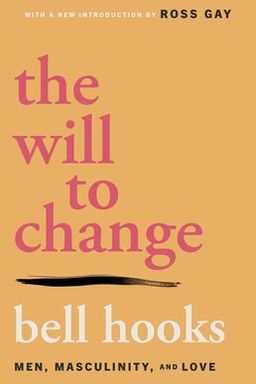
The Will to Change cover

The Will to Change

by bell hooks

The Will to Change by bell hooks delves into the damaging effects of patriarchy on men, highlighting how social norms inhibit emotional expression. This insightful exploration offers a path to healing and genuine connection by embracing vulnerability and love.

Men, Love, and the Crisis of Patriarchy

Why do so many men seem afraid to love — or even to feel? In The Will to Change: Men, Masculinity, and Love, bell hooks invites you to look honestly at this question. She argues that patriarchy has emotionally crippled men by teaching them from birth that to be masculine means to repress feeling, deny vulnerability, and assert dominance. The cost of this distortion is profound: men lose the ability to love, to nurture, and to know themselves as whole human beings.

Hooks contends that the liberation of men is critical not only for feminism but for the survival of love itself. She explains that patriarchy—an interlocking system of domination bound up with racism and capitalism—dehumanizes both men and women. While men often appear to benefit from their dominance, the truth, she says, is more tragic: patriarchy demands emotional self-mutilation from boys and men, who become estranged from their hearts to maintain control. This wound is passed between fathers and sons, enforced in schools, workplaces, and relationships, until men learn that feeling pain or tenderness is weakness.

The Emotional Cost of Patriarchy

Hooks opens the book by naming the unspoken hunger that shapes modern relationships: everyone, especially women, desires love from men, yet few men know how to give or receive it. Patriarchal culture rewards men for power, aggression, and disconnection, while punishing emotional honesty. The result is that men often equate dominance with worth and control with love. They turn to work, sex, or addiction to fill the void of emotional isolation. Hooks points out that even when men have material success, their inner lives remain impoverished — a truth echoed in studies of “male depression” and the quiet despair of corporate and working-class men alike (similar to the themes in Terrence Real’s I Don’t Want to Talk About It).

For instance, she recounts how her own father’s authority and violence defined her childhood. Through fear and control, he enacted the patriarchal script that equated manhood with domination. Her mother defended him as a ‘provider,’ affirming that patriarchal logic equates material provision with love — even when affection and empathy are absent. This family pattern, she argues, mirrors how society teaches men that their value lies not in who they are but in what they do.

Healing the Wound: The Will to Change

The “will to change,” for hooks, is the heart of transformation. It begins when men confront their pain and acknowledge that patriarchy harms them. She calls for a revolution of values grounded in love—what she, following Martin Luther King Jr. and Erich Fromm, calls a love ethic. Love, she insists, is not a feeling alone but a disciplined practice anchored in care, trust, respect, knowledge, and responsibility. For men, learning to love requires unlearning the patriarchal definitions of masculinity that deny their emotional wholeness.

Hooks speaks directly to men who sense something missing “within,” who remember a boyhood of openness before the social conditioning of manhood closed their hearts. She argues that men do have the capacity for love—it has simply been suppressed. To awaken this capacity, men must reconnect to their emotions, learn to speak their pain, and reject the myth that power and love can coexist. “Love and domination,” she writes, “can never dwell in the same heart.”

A Feminist Vision for Men

Hooks challenges both men and women to move beyond the belief that feminism is “anti-male.” True feminism, she explains, is a movement to end sexism, not to reverse it. Its goal is the liberation of everyone from domination. She argues passionately that men need feminist thinking to reclaim their humanity. Without it, they will continue to live truncated lives defined by violence, alienation, and fear—what she calls a “psychological cage.” The antidote is not guilt or shame, but a new model of feminist masculinity: integrity without domination, strength through empathy, and courage in vulnerability.

Throughout the book, hooks integrates psychology, popular culture, and personal narrative to show how patriarchy seeps into every dimension—from work to media to sexuality. Yet she also paints a hopeful picture of transformation. Men, she notes, are already beginning to change: in therapy groups, recovery circles, new fatherhood, and evolving spiritual practices. The task now is to build communities that support men’s emotional recovery and redefine power not as control but as connection.

Why It Matters

Hooks invites you to see the liberation of men as a moral and emotional necessity for everyone who wants to end violence and cultivate love. “Patriarchy has no gender,” she warns—women too internalize and perpetuate it. But there can be no lasting freedom or intimacy between women and men until patriarchy is dismantled. By the end of The Will to Change, you are left with both a diagnosis and a vision: men suffer not because they feel too little, but because they are forbidden to feel enough. To heal, they must reclaim the power to love. And we, collectively, must reimagine what it means to be human beyond domination.


Understanding Patriarchy’s Grip

Hooks defines patriarchy as a political-social system that insists males are inherently dominant and entitled to control others through power and violence. For men, this means learning from birth that their worth depends on suppressing vulnerability. She describes it as a disease—one that damages men’s emotions, relationships, and mental health while appearing to reward them materially.

The Making of Patriarchal Men

Hooks traces this conditioning to childhood. In a powerful story, she recounts her father beating her for playing marbles with her brother—a ‘boy’s game.’ That moment, she writes, was her initiation into patriarchy: pain and violence used to enforce gender roles. Her brother learned that feeling gentle or avoiding violence was shameful, that real men were strong and detached. She concludes that most boys experience similar trauma, even if less visible, through shaming, teasing, or parental neglect.

This indoctrination is not solely imposed by men. Mothers and female caregivers often reinforce patriarchal values, fearing that raising an emotionally expressive son will make him “soft” or unmanly. In both male- and female-headed households, women are often the first teachers of patriarchy, perpetuating the same hierarchies that oppress them. Hooks cites therapist Terrence Real’s term “psychological patriarchy” to describe this mutual complicity—an internalized system of contempt for vulnerability that infects both sexes.

The Price of Denial

Most men deny that patriarchy shapes their lives. Hooks notes that many cannot even define the word, though it governs their daily existence. This ignorance sustains systemic domination because what remains unnamed cannot be challenged. Men’s silence about patriarchy—not their power—reveals how powerless they truly feel. They avoid the topic because confronting it would mean acknowledging both their privilege and their pain. Instead, they retreat to defensive narratives that blame feminism for men’s suffering.

Patriarchy as Emotional Terrorism

Hooks describes patriarchy as a system maintained by fear and secrecy, especially in families. Violence, she argues, is coded as love: “I beat you because I care.” This emotional terrorism normalizes domination. The rule of silence—never exposing what happens inside the family—protects the patriarchal order. She urges both men and women to break this silence by naming and rejecting the behaviors that sustain male supremacy, from authoritarian parenting to emotional withholding.

Ultimately, hooks insists that dismantling patriarchy must begin at a personal level but reach into institutions—schools, workplaces, media—that reinforce these norms. Patriarchy survives, she writes, because most people continue to believe it’s necessary for order and safety. Ending it demands courage: for men to admit vulnerability; for women to stop defending patriarchal power; and for society to embrace a partnership model based on interdependence rather than domination.


Boyhood and the Loss of Feeling

Hooks calls boyhood the first battlefield of patriarchy. Even before they can speak, boys are taught that love will be withdrawn if they express too much emotion. Parents, influenced by sexist beliefs, often comfort girls but tell boys to stop crying, to ‘man up.’ By adolescence, most boys learn that being emotional is a threat to survival in a patriarchal culture that rewards dominance and punishes tenderness.

Emotional Abandonment

Drawing on research from Raising Cain by Dan Kindlon and Michael Thompson, hooks notes that boys begin life deeply emotional but are quickly conditioned out of it. Patriarchy orchestrates a “normal traumatization”: the forced separation from empathy, nurturance, and motherly love. Fathers often distance themselves, modeling stoicism as manhood. Boys respond by burying emotion beneath anger—because anger, unlike sadness, earns respect. As one boy tells her, he learned to avoid humiliation by staying angry.

The Cycle of Rage

Hooks explores how repressed vulnerability becomes rage. Teenage boys are especially prone to isolation and violence, from school shootings to intimate partner abuse. Society tolerates their explosions as “boys being boys,” even romanticizing aggression in movies, games, and rap music. Meanwhile, boys who resist aggression are shamed as weak. Hooks emphasizes that violent behavior often masks grief over lost emotional connection—grief they were never allowed to express.

Motherhood and Patriarchal Conditioning

Many mothers, consciously or not, participate in this conditioning. Afraid their sons will be “sissies,” they withhold warmth, modeling emotional hardness. Others redirect anger against men onto their sons. Thus maternal love often becomes the instrument that delivers boys into patriarchy’s grip. Hooks argues that interventions must begin here—by educating parents to nurture empathy and emotional literacy in boys rather than preparing them for dominance. Without this change, future men will remain alienated from themselves and those they love.

Hooks ends the chapter with hope: if boys are loved holistically—taught that tenderness is strength, that feeling does not betray manhood—they can grow into loving men. Creating homes and schools as sanctuaries for boys’ feelings, she says, is revolutionary work. “To love boys rightly,” she writes, “is to value their inner lives enough to protect them from patriarchy.”


Male Violence and Emotional Disconnection

Hooks declares that “every day in America, men are violent,” not because they are born that way but because patriarchy teaches them that to be a man is to control others through force. Violence becomes the chief outlet for feelings men are forbidden to name — fear, shame, helplessness, grief. Instead of understanding male violence as pathology, our culture romanticizes it as heroism or passion. Hooks dismantles this illusion, revealing it as the logical consequence of emotional suppression.

Learning Violence as Manhood

From childhood, boys are initiated into violence through shaming, corporal punishment, and competitive dominance. Hooks describes patriarchal fathers who use fear to define authority and mothers who comply, believing that enforcing obedience makes boys strong. This combination teaches that love and violence can coexist — a contradiction that poisons intimacy across generations. Later, emotional abuse replaces physical punishment: silent withdrawal, mockery, or threats maintain the dominator’s power.

The Myth of the Provider

Even in adulthood, violence is normalized through gender roles. Men are told their worth lies in providing, not connecting. When work or status fails to offer fulfillment, rage erupts at home. Hooks points to the hypocrisy of a society that condemns male violence publicly while glamorizing it in sports, film, and war. She relates stories of women excusing abuse as an inevitable part of male behavior — “boys will be boys.” This passivity, she warns, keeps women complicit in their own domination.

Breaking the Cycle

For healing, hooks insists men must confront the first violence patriarchy demands: the killing of their emotional selves. Only by reclaiming feeling — through therapy, community, and self-critique — can men end external violence. Addressing abusive men, she urges them to understand that love and harm cannot coexist: “You cannot hurt and love at the same time.” Women, too, must stop idealizing endurance and instead demand relationships rooted in nonviolence. Real strength, she says, lies in the courage to be gentle.

Her call echoes other writers on male recovery, like Terrence Real and Donald Dutton, who frame intimacy as men’s greatest fear and need. Hooks goes further, reframing anti-violence work as a spiritual task — a process of restoring what patriarchy stole: the capacity to love without domination.


Sex, Shame, and the Search for Connection

In a culture that confuses sex with love, hooks argues, men turn to sexual conquest to fill emotional emptiness. Patriarchy teaches them that their worth depends on controlling desire — both their own and others’. As a result, male sexuality becomes compulsive yet hollow, driven more by fear and shame than pleasure. Hooks links this to the epidemic of loneliness among men and the normalization of sexual violence in society.

Sex as a Substitute for Intimacy

Hooks dismantles the cliché that “men want sex, women want love.” Men, she writes, actually hope sex will bring them love — that it will make them feel connected and alive. But patriarchal conditioning ensures it rarely does. When vulnerability is forbidden, sex becomes the sanctioned form of tenderness. Yet because it is divorced from emotional honesty, it leaves both partners unfulfilled. This cycle of craving and emptiness often turns sex into addiction, a “drug” that dulls pain rather than heals it.

Pornography and Patriarchal Fantasy

Hooks critiques mass pornography as the clearest expression of what she calls “patriarchal sex.” Borrowing from Robert Jensen and Michael Kimmel, she notes that in pornography, sex and violence are conflated; the language of domination (“to fuck”) reveals that pleasure is tied to conquest. Men consume these fantasies not because they are powerful, but because they feel powerless. Patriarchal masculinity promises them control — at least in fantasy — when real life leaves them voiceless, overworked, or emotionally famished.

Toward Erotic Freedom

Healing male sexuality, hooks says, requires separating masculinity from domination. Sex can become sacred only when it reconnects with empathy and mutual pleasure. She cites thinkers like Gary Zukav, who describe loving sexuality as mutual giving, not taking — where partners nurture each other’s spirit rather than reenact power struggles. To achieve this, men must accept vulnerability and learn that passion without compassion is just another form of violence.

When men allow sex to express love rather than replace it, they rediscover eros as a life force — a source of connection rather than escape. This transformation, hooks believes, is possible for everyone willing to confront shame, reject domination, and practice emotional honesty.


Work, Capitalism, and the Death of Love

Hooks dissects how capitalism reshaped patriarchal masculinity by tying male worth to labor and wealth. Earlier eras told men their purpose was to provide; now, work itself defines their identity. When jobs vanish or fail to fulfill, men experience humiliation and despair. This crisis, hooks writes, is not new — it simply reveals what was always false about patriarchy’s promise: that productivity could replace love.

The Provider Myth

Hooks critiques the cultural myth that men are natural providers. Many men resent this burden yet cling to it as proof of manhood. Even those who fail financially seek control elsewhere — through sexual dominance or emotional withdrawal. During economic recessions, men’s self-worth collapses, and patriarchal society responds by offering “addictions to ease the pain” — pornography, alcohol, and violence. These become narcotics for men estranged from love.

Work Versus Love

Hooks observes that corporate culture demands emotional deadness: long hours, competition, and disconnection from family. Men learn to value control over compassion. Work becomes both refuge and prison — a socially acceptable way to flee feeling. Those who lose jobs or retire often face an existential collapse, having no self beyond performance. Hooks challenges this system, envisioning a future where emotional well-being is valued as much as productivity and where men can see work as part of life, not life itself.

Reimagining Labor

Hooks imagines a nonpatriarchal economy that honors care work, self-reflection, and community connection. She suggests that men could spend periods of unemployment reeducating themselves — developing literacy, emotional intelligence, or creative skills. When men bring love to work, she writes, “the workplace will no longer demand that their hearts be broken to get the job done.” This vision turns labor from alienation into self-actualization, echoing humanist thinkers like Erich Fromm and Dean Ornish, whom she cites extensively.

For hooks, transforming work is essential to freeing men. Capitalism and patriarchy reinforce each other’s logic: exploit others, don’t feel, keep producing. The antidote is holistic living — integrating emotion and purpose. When men redefine success as the capacity to love rather than the ability to accumulate, both genders can reclaim joy from the machinery of domination.


Feminist Manhood and the Possibility of Change

Hooks envisions a new kind of masculinity—one rooted in integrity, empathy, and mutuality, not dominance. She calls this feminist manhood: a model that redefines strength as responsibility, power as care, and courage as the willingness to feel. Men, she argues, must reject the dominator model not by becoming weak or passive but by embodying ethical wholeness.

Misunderstanding Feminism

Hooks critiques the misconception that feminism is anti-male. Popular culture framed it as man-hating, masking its real message: that patriarchy, not men, is the problem. She notes that many women with privilege sought power within patriarchy rather than its abolition, leaving working-class men and women behind. True feminism, she insists, must call men to liberation too—inviting them to join the work of ending sexism rather than casting them as enemies.

Defining Feminist Masculinity

Hooks offers clear principles of feminist masculinity, echoing therapist Olga Silverstein’s notion of “good men”: empathy, integrity, relational skill, and emotional awareness. Instead of measuring worth through domination or achievement, men grounded in feminist thought seek connection and justice. They can be “autonomous and connected, assertive and tender.” Violence and control are replaced with accountability and compassion. This is not the end of manhood—it is its transformation.

From Domination to Partnership

Hooks aligns her vision with Riane Eisler’s “partnership model,” which replaces hierarchy with interdependence. Feminist men practice power with, not power over. They learn to discern when life requires fierceness and when it calls for tenderness—what a Masai elder in the book calls wisdom, knowing “which moment is which.” This balanced manhood frees men from the fear of losing control. Instead of being feared, they become trusted and loved.

Ultimately, hooks reminds readers that shifting masculinity will save lives. Men die younger, suffer higher rates of suicide, and live disconnected lives because of patriarchal norms. Feminist masculinity offers a path back to love, sanity, and joy—a world where no one must prove humanity through domination.


Healing the Male Spirit

Hooks calls the healing of men’s emotional lives “the work of the soul.” Boys who were taught to suppress feelings, she says, must learn again how to weep, reflect, and connect. This spiritual recovery is not about weakness but wholeness. She sees healing as both psychological and sacred—a reclamation of the soul from patriarchal death.

Facing Emotional Wounds

Many men, hooks writes, suffer from “divided selves.” They carry unresolved pain from mothers who withheld affection or fathers who modeled control instead of love. Unable to express grief, they mask it with rage or addiction. The cure begins when men name their suffering aloud. Support groups, therapy, and recovery programs like AA become sanctuaries where men can break the silence and feel seen without shame.

Learning Intimacy

Hooks challenges women, too, to face their complicity in men’s emotional silence. Many women demand that men “open up” but recoil when they do, seeing vulnerability as weakness. Healing thus requires new models of mutual openness. Drawing on Gary Zukav and Linda Francis, hooks defines intimacy as aligning personality with soul—replacing control with authenticity. Only when men can be intimate with themselves, she says, can they truly love others.

The Spiritual Path to Wholeness

Hooks finds hope in spiritual teachers like the Dalai Lama and Thich Nhat Hanh, who teach men compassion as the antidote to domination. Caring for the soul, she writes, means treating one’s emotional life as sacred work. Love and compassion become disciplines, not luxuries. In this way, she bridges feminist healing with spiritual growth: to love is to live fully, and to dominate is to destroy the self.

“Men need to hear that their souls matter,” hooks concludes. Healing begins when they believe this truth—and when the world stops equating masculinity with emotional death.


Reclaiming Integrity and Wholeness

Hooks describes integrity as the foundation of healed masculinity. Patriarchy divides men from their own feelings, forcing them to create a “false self” that performs strength while concealing pain. To regain integrity means to integrate these split parts — to live truthfully, with the same self in public and private. This process, she says, is painful but necessary for genuine self-esteem and love.

The False Self

Drawing from John Bradshaw and Nathaniel Branden, hooks explains that boys learn early to betray their authentic selves to fit patriarchal ideals. This betrayal breeds shame and despair. To appear controlled, they must suppress empathy and hide fear. The result is emotional compartmentalization: men act honest at work but deceitful in love, moral in public but cruel at home. Patriarchy normalizes this division as masculine stoicism.

Practicing Integrity

To heal, men must face the discomfort of vulnerability. Hooks echoes M. Scott Peck: integrity is painful because it exposes illusions. But through honesty, accountability, and self-critique, men experience renewal. She shares stories of men confronting their depression, learning to mourn, and finding joy in empathy. Wholeness comes when men replace denial with truth and perfectionism with compassion for their own wounds.

Joy, Service, and Responsibility

Hooks redefines strength as the capacity to serve. Drawing from her grandfather’s example—a man who met life with tenderness—she imagines men who heal others through presence and care. Integrity, she writes, births joy: a state sustained not by achievement but by compassion. Men of integrity affirm others, practice forgiveness, and embrace responsibility for their choices. They know that love, not domination, is the truest sign of maturity.

By reclaiming integrity, men can bridge the divide between their hearts and their actions. In doing so, they become whole — and make wholeness possible in everyone they love.


Loving Men, Loving Humanity

Hooks closes the book by widening her vision: saving the hearts of men is essential for the survival of love itself. In a world addicted to war and domination, men must discover that true power lies in nurturing life, not destroying it. From fathers to sons, soldiers to lovers, she envisions communities of resistance built on care, partnership, and peace.

Beyond the Warrior Way

Modern masculinity glorifies the warrior—competitive, hardened, emotionally distant. Hooks contrasts this with the “husbandman,” the peacemaker who protects life instead of taking it. She draws from Barbara Ehrenreich’s Blood Rites to show how patriarchal societies sanctify war as the highest expression of manhood. Yet men who embrace peace, she writes, show truer courage. The greatest act of rebellion is choosing love where violence was expected.

Family as a Site of Resistance

Hooks calls for reimagining family as the foundation of liberation, not hierarchy. Homes should nurture boys and girls equally, teaching empathy rather than control. By modeling mutual respect, families can break the intergenerational chain of domination. Partnership, not patriarchy, becomes the seedbed of peace.

The Future of Love

Hooks ends with a moral challenge: women cannot heal alone, nor can men. Only collective love—built through honesty, compassion, and shared resistance—can end the war between the sexes. She invites you to imagine a culture where men return to the circle of love, supported by those who welcome their healing. “Men who love,” she writes, “will save the planet.” It is both prophecy and call to action: love is the final revolution.

In the end, The Will to Change is not only a manifesto for men but a hymn to humanity. It insists that transformation begins with tenderness and that when men reclaim love as their birthright, the world will finally remember what it means to be whole.

Dig Deeper

Get personalized prompts to apply these lessons to your life and deepen your understanding.

Go Deeper

Get the Full Experience

Download Insight Books for AI-powered reflections, quizzes, and more.