
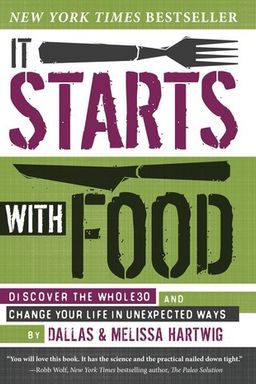
The Whole30 cover

The Whole30

by Dallas Hartwig

The Whole30 is a groundbreaking dietary program designed to transform your health by identifying and eliminating problematic foods for 30 days. Discover a personalized diet that boosts your energy, enhances well-being, and fosters a healthier relationship with food.

The Whole30: A 30-Day Food Experiment for Awareness and Renewal

The Whole30, created by Melissa and Dallas Hartwig, is more than a diet—it’s a self-experiment in food awareness and behavior change. Over thirty days, you eliminate certain food groups—such as sugar, alcohol, grains, legumes, and most dairy—to observe how your body and mind respond. The program functions as a dual-phase experiment: first elimination (to create a clean baseline) and then reintroduction (to identify how each food affects energy, digestion, mood, and inflammation).

What distinguishes this book from other health or diet plans is its scientific yet behavioral focus. The Hartwigs argue that your food choices influence not only your physical health but also your psychology—craving cycles, reward patterns, and emotional associations with food. The Whole30, they emphasize, is not about deprivation or discipline for its own sake, but about curiosity and data. You’re learning how to read your own signals.

Why thirty days matter

The thirty-day duration arises from both biology and psychology. Physiologically, thirty days is enough to calm inflammation, rebalance hormones, and heal the gut after removing common triggers. Behaviorally, it aligns with habit research showing that three to four weeks is sufficient to disrupt patterns—like emotional eating or constant snacking—that dominate your daily life. The result is often profound awareness: participants report better sleep, stabilized moods, reduced pain, clearer skin, and, most importantly, the rediscovery of what “normal” feels like.

The goal: discovery, not dieting

The authors insist: the Whole30 isn’t a weight-loss program. They actively discourage scale use during the 30 days, arguing it distracts from meaningful signs of progress like energy, mood, digestion, and confidence. Instead, it’s a process of learning whether foods you eat daily—bread, cheese, wine—are helping or hurting you. You emerge empowered to make evidence-based dietary choices, free of diet culture’s emotional baggage.

The “Good Food Standards”

At the program’s core are what the authors call the Good Food Standards: foods that promote healthy hormonal function, support gut integrity, calm systemic inflammation, and foster a positive psychological relationship with food. Anything that violates one of these—like sugary drinks (hormonal disruption), grains (gut impact), or ultra-processed snacks (psychological dysfunction)—is eliminated during the reset. What remains is whole, unprocessed food: meats, seafood, eggs, vegetables, fruit, and natural fats.

A blueprint for behavioral change

Behavioral psychology weaves throughout the book. The Hartwigs highlight that willpower is fragile; what sustains you is environment and planning. You’re taught to prepare your home, allies, and mind before starting—because cravings and fatigue will arise (especially during “Kill-All-the-Things” week and the inevitable sugar withdrawal). Public commitments, meal prep routines, and removing tempting foods lay the groundwork for endurance when motivation dips. The reset’s strict rules—no cheats, no gray areas—are deliberate: a single “just a bite” erases the clarity of the experiment, both biologically and psychologically. You are gathering information, and that requires clean data.

The deeper promise

By Day 30, most people have done more than eliminate food sensitivities—they’ve rewritten their inner script around eating. The “Sugar Dragon” (the authors’ metaphor for compulsive eating) quiets. You rediscover agency—what psychologist Kelly McGonigal (in The Willpower Instinct) calls “self-efficacy”—and realize that food can serve you rather than control you. The real transformation isn’t in your plate but in your mindset: mindfulness replaces autopilot, curiosity replaces guilt, and self-respect replaces shame.

Core insight

The Whole30 is not a diet—it’s an awakening. Through elimination, reflection, and structured reintroduction, you reclaim authority over your biology and emotions, learning what truly fuels you and what doesn't.


Rules, Boundaries, and the Spirit of Whole30

The Whole30 operates on clear, non-negotiable rules. This isn't about moderation; it’s about control and clarity. The book emphasizes that if you break the rules—intentionally or not—you must start over. This zero-tolerance policy isn’t punishment but an experimental safeguard: even a small amount of a banned food can trigger inflammatory or hormonal reactions that cloud your results.

The black-and-white list

Eliminate all added sugars (natural or artificial), alcohol, grains, legumes, and most dairy for 30 days. You’ll also exclude carrageenan, MSG, and sulfites. Exceptions are rare: clarified butter or ghee (lactose-free), certain pod legumes like green beans and snap peas, and vinegar (except malt). These exclusions align with the Good Food Standards—if it disrupts hormones, gut health, or your psychological relationship with food, it’s out.

The spirit over the letter

Whole30 extends beyond technical compliance to mindset. A compliant cupcake made from almond flour still feeds the same reward loops you’re trying to break. The authors call this “SWYPO”—Sex With Your Pants On—a shorthand for cheating yourself of true transformation. You’re meant to change your mental wiring, not just ingredients. Saying no to remade comfort foods builds resilience, awareness, and self-control.

Why discipline matters

Strictness serves both biology and psychology. Biologically, elimination only works when total—your body must experience zero exposure to triggers to reset effectively. Psychologically, you prove to yourself that you can honor a commitment without loopholes. By practicing absolute adherence, you build the self-trust that anchors long-term behavior change. The reframing is crucial: rules are not restrictions but tools for self-discovery.

Takeaway

The Whole30’s strength lies in its clarity: strict boundaries temporarily free you from temptation, noise, and ambiguity. That simplicity lets you observe how real food affects your real life, one honest bite at a time.


Preparation: Building the Environment for Success

Willpower fades; systems persist. That’s a central mantra of the Whole30’s preparation philosophy. Before you begin, you create an environment that minimizes temptation, supports success, and aligns your daily routines with your goal. In practice, this means setting a start date, building a support team, prepping your space, and planning meals in advance.

Choose your start and go public

You pick a realistic start date—avoiding weddings, holidays, or other social landmines—then tell others. Public accountability matters: announcing your plan to friends, family, or online communities makes it real. The authors recommend using hashtags like #Whole30 or posting updates to harness positive peer pressure. Going public converts motivation into commitment.

Clean the house, curate the fridge

You physically remove temptation. That half-open bag of chips will win when you’re stressed, so it must go. The Hartwigs introduce the “Future You” concept: prepare the environment so that your weaker future self can’t self-sabotage. Designate one cupboard for non-participant foods, and fill your own with compliant staples—protein, vegetables, nuts, and healthy fats. This structural change supports your psychology far more effectively than sheer restraint.

Plan your meals and backups

Meal planning transforms the Whole30 from chaos into rhythm. The authors recommend planning three to seven days, noting recipes, ingredients, and leftovers. They supply templates, shopping lists, and prep day routines—for example, roast vegetables, make mayo, and prep proteins on Sunday to reduce weekday pressure. You also create “emergency meals” you can assemble quickly—scrambled eggs with avocado or canned salmon over greens—when life gets messy.

Toss the scale

The Whole30 bans daily weigh-ins. The scale, they insist, shifts focus back to vanity metrics rather than holistic wellness. Instead, track non-scale victories: improved energy, clearer skin, reduced cravings, or better mood. This shift reframes success around how you feel, not just how you look—making the process more sustainable and rewarding.

Essential belief

A successful Whole30 isn’t fueled by heroic willpower—it’s engineered by smart preparation. You design for success rather than depending on motivation to save you.


Navigating the 30 Days: The Timeline and What to Expect

Every Whole30 participant experiences a predictable emotional and physical curve. The Hartwigs’ 30-Day Timeline maps this sequence so you understand that your ups and downs are normal. Knowing what’s coming helps you endure early discomfort and celebrate small wins when the 'Tiger Blood' arrives.

The first week: novelty and the hangover

Days 1–3 are fueled by excitement—you finally said yes to the reset. But sugar withdrawal often brings the “hangover”: headaches, fatigue, irritability. Days 4–7 introduce the famous “Kill All the Things” phase as your brain recalibrates from sugar dependency to fat metabolism. You may also need more sleep. These reactions are not failure—they’re chemistry rebalancing itself.

The challenging middle

By Days 8–12, digestion wobbles—bloating, constipation—but normalizes as gut bacteria adapt. Days 10–11 are the most common quitting point. You’re far enough in to miss comfort foods but not yet transformed. The book counsels empathy: remind yourself why you started, lean on your support team, and reward yourself with non-food pleasures like massages or hikes.

The breakthrough weeks

Between Days 12–27, cravings subside, energy stabilizes, and sleep improves. The 'Tiger Blood' phase emerges—clear thinking, steady energy, elevated mood. You feel empowered. Your body, having adjusted to fat metabolism, runs efficiently. Yet complacency can creep in, so maintain your structure: consistent meals, hydration, and rest.

The final stretch and transition

Days 28–31 trigger ambivalence: pride mixed with anxiety about what’s next. The book urges restraint—don’t celebrate with a binge. Instead, plan an intentional reintroduction. That reintroduction, whether Fast Track or Slow Roll, transforms your month into lifelong wisdom about food’s impact.

Key takeaway

Expect turbulence early and triumph later. The Whole30 timeline lets you normalize discomfort and recognize that every phase moves you closer to clarity, energy, and freedom from cravings.


Reintroduction and Building Lifelong Balance

Your experiment doesn’t end on Day 30—it begins. Reintroduction teaches you which foods truly serve you. Without it, the Whole30 is just deprivation. The book offers two methods: the Fast Track for structured observation and the Slow Roll for gradual, flexible reintegration. Both emphasize mindfulness and evidence-based eating.

Fast Track: the ten-day test

The Fast Track introduces food groups sequentially: alcohol, legumes, non-gluten grains, dairy, and finally gluten. Each test day is followed by two days of clean eating to assess reactions. This method gives quick, clear results. You might learn, for instance, that legumes cause bloating while dairy triggers congestion or fatigue. Many are surprised to find certain foods tolerated in small doses but problematic in combination.

Slow Roll: anchored flexibility

The Slow Roll extends the Whole30 baseline indefinitely, reintroducing foods only when they feel emotionally or socially 'worth it.' For example, you might test a slice of your grandmother’s pie at Thanksgiving, not random cookies at the office. It’s a model for sustainable living—maintaining your hard-won vitality while reintroducing joy deliberately.

Life After Whole30

Once reintroduction is complete, the authors encourage adopting an 80/20 philosophy through what they call Nutritional Off-Roading—intentionally relaxing certain rules for foods that are “worth it” and cause minimal consequence. Their three-step framework—eat Whole30-ish most of the time, pause before indulgence, and eat mindfully—teaches discernment rather than restriction. If life derails you, return to the program anytime for a reset.

Core idea

Reintroduction is how you transform temporary rules into lifelong mastery. It’s where you learn that food freedom isn’t about eating everything—it’s about knowing what’s worth it and making those choices consciously.


Cooking Mastery: Practical Skills for Real Food Living

A crucial half of the Whole30 book is dedicated not to theory but execution—how to make real food easy, delicious, and routine. You become the kind of cook who can nourish yourself anywhere. From setting up your kitchen to mastering proteins and sauces, this section merges culinary education with nutritional intention.

Kitchen fundamentals and tools

Start with mise-en-place: prep all ingredients before cooking. The authors show how this single habit shortens cook time and reduces stress. Essential tools include a sharp knife, cast-iron skillet, meat thermometer, and blender. With these basics you can follow almost every Whole30 recipe—from Romesco Garlic Shrimp to Cauliflower Rice—without needing professional equipment.

Mastering protein techniques

The Hartwigs teach methods that bring consistency: get the pan hot, sear without moving the meat, finish in the oven, and rest before slicing. Chicken hits 160°F before resting to 165°F; shrimp curl to a “C” when done. Understanding heat, timing, and texture turns every meal into a success. Brining chicken, searing steaks, or braising beef all become repeatable weekday skills.

Vegetables and sauces: the secret weapons

Vegetables anchor every Whole30 plate. The book demystifies roasting, grilling, sautéing, and steaming with temperature charts and timing guides—for example, roasting at 425°F for caramelization or steaming for tenderness. Sauces then elevate everything: Basic Mayo spins into dozens of variants like Garlic Aioli or Cilantro-Lime Dressing; Romesco, Pesto, and Curry Sauce bring variety. Most keep several days or freeze in cubes, turning weeknight meals from bland to bold.

Meal templates and bone broth

The book also gives a simple meal template—protein, vegetables, and fat—replacing calorie counting with portion awareness (1–2 palms protein, lots of veg, thumb of fat). You’re taught weekly prep—like a Sunday batch of roasted squashes and mayo-based sauces—to save time. Bone broth rounds out the nutrition section, praised for nourishing collagen, minerals, and gut-healing amino acids. The slow-simmered broths become both an ingredient and a ritual, offering comfort and sustainability.

Practical insight

Cooking real food isn’t complicated—it’s consistent technique plus intention. The Whole30 teaches not only what to eat but how to prepare it, empowering you to sustain the reset long after 30 days end.


Real-World Strategies for Eating, Travel, and Social Life

Real life rarely pauses for a nutrition reset. Therefore, the Whole30 equips you with scripts and strategies to navigate social settings, restaurants, and travel while staying both compliant and sane. The authors acknowledge that success depends not just on rules but on adaptability and confidence.

At restaurants

Do your homework—research menus, call ahead about cooking oils, and politely request modifications. The Hartwigs encourage positive framing: lead with what you can eat (“could you steam the veggies and serve olive oil on the side?”) rather than listing restrictions. Being "that person" is fine; gratitude and tipping keep interactions smooth. Order simple dishes like grilled fish with vegetables, hold the sauces, and avoid hidden sugars or grains.

While traveling

Travel preparation focuses on protein access—boiled eggs, chicken, compliant jerky, or canned salmon. If possible, book hotels with mini-fridges or kitchenettes. Pack portable staples like almonds, olives, and cut fruits; even small knives and flexible cutting boards make compliance easier. The goal is self-sufficiency so hunger never forces compromise.

In social settings

The authors remind you that food is social. They coach empathy: explain the program as a short-term experiment, not a moral stance. Offer to bring compliant dishes to gatherings. Emphasize inclusion, not asceticism. Framed positively, your commitment can inspire rather than alienate others.

Essential perspective

Sustainability arises not from isolation but from integration. The Whole30 teaches you to live in the real world—an environment full of food pressures—while still staying aligned with your goals and values.

Dig Deeper

Get personalized prompts to apply these lessons to your life and deepen your understanding.

Go Deeper

Get the Full Experience

Download Insight Books for AI-powered reflections, quizzes, and more.