
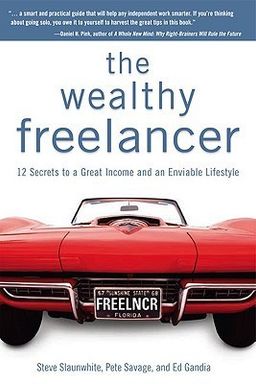
The Wealthy Freelancer cover

The Wealthy Freelancer

by Steve Slaunwhite, Pete Savage, Ed Gandia

The Wealthy Freelancer unveils 12 powerful secrets to mastering the freelance landscape. Learn how to market effectively, manage your time wisely, and secure a fulfilling lifestyle with a consistent income. Ideal for freelancers seeking both professional success and personal satisfaction.

Creating the Wealthy Freelancer Life

What if you could design work around your ideal life rather than fitting your life around your work? That question anchors The Wealthy Freelancer by Steve Slaunwhite, Pete Savage, and Ed Gandia—a practical, encouraging guide for independent professionals who want not just to survive freelance life but to build wealth, autonomy, and fulfillment from it. The authors argue that freelancing should not be a synonym for instability or “doing odd jobs.” Instead, with the right mindset and structures, it can rival or surpass traditional careers in income and life satisfaction.

Their core argument is that the secret to becoming a wealthy freelancer is mastering four interconnected pillars: the right mindset, client acquisition systems, profitable pricing, and balanced lifestyle design. Each dimension calls for deliberate design, not happenstance. The authors’ trademark framework—“The Big Four”—defines wealth not merely as money but as the perpetual ability to attract the projects, clients, income, and lifestyle you want.

A Philosophy of Work Freedom

The opening chapters challenge cultural assumptions about work. The authors argue that the traditional corporate model—stable salary, long hours, little flexibility—is no longer the only or best path to security. The rising tide of self-employment, supported by technology, has made freelancing a sustainable and even aspirational choice. They compare this transformation to a post-industrial renaissance where individuals trade dependence for creative autonomy. Success no longer depends on scaling up a company, but on scaling up value, reputation, and specialized expertise.

But mindset is everything. Freelancers who think like “starving artists,” operating from scarcity and improvisation, remain stuck in cycles of fear and undercharging. Wealthy freelancers, by contrast, adopt an entrepreneurial mindset—they view their work as a business with functional areas such as marketing, operations, sales, and R&D. This mindset parallels the philosophy in Michael Gerber’s The E-Myth Revisited, where entrepreneurs must work on their business, not just in it.

Mastering the Client Journey

Client acquisition, the book insists, must be a system rather than a gamble. Central to this is their Master Marketing Formula—a step-by-step pipeline moving prospects from total strangers to loyal clients: finding high-probability leads, generating interest with authentic outreach, converting opportunities into projects, closing sales, and nurturing relationships that aren’t “ready yet.” Instead of relying on luck or referrals alone, freelancers are guided to build a continuous funnel. This strategic discipline turns sporadic work into predictable revenue, reducing the infamous feast-and-famine cycles.

Throughout their careers, the authors show that higher income flows not from cold calling harder but from positioning smarter—by developing credibility tools like a “buzz piece,” a value-adding article or report that showcases expertise. This transforms marketing into education, similar to Robert Cialdini’s principle of reciprocity: give genuine value first, and clients come to you.

Financial Mastery and Intelligent Work Habits

A defining pivot in the book is pricing. Many freelancers struggle with hourly billing; the authors warn that time-based pricing caps income and undermines professionalism. Instead, wealthy freelancers set project-based fees based on value delivered, not time spent—echoing Alan Weiss’s philosophy in Value-Based Fees. With a solid fee schedule and confident communication, freelancers signal expertise and avoid being commoditized.

They extend financial literacy with the Wealthy Triangle™: the balanced intersection of time, income, and freedom. Real prosperity lies in breaking the inverse relationship between earnings and autonomy. Through savings, insurance, and boundary-setting, freelancers can create security while expanding flexibility—a counterpoint to the myth that freedom always costs stability.

Balance, Productivity, and Meaning

Beyond mechanics, the authors explore how freelancing can support human flourishing. Drawing on real stories—from the consultant who designed her business around motherhood to the copywriter who travels six months each year—the book reframes freelancing as life design. Chapters on productivity, balance, and purpose urge readers to cultivate sustainable rhythms, such as the “50-minute focus” technique or the “Jigsaw Puzzle Visual” for managing workload without burnout. Rather than chasing constant output, freelancers should measure wealth by alignment with personal values.

Ultimately, The Wealthy Freelancer is as much a call to self-respect as to self-employment. It celebrates professionalism, boundaries, and intentional living. As the authors write, “Wealthy freelancers don’t just make a living; they design a life.” That blend of pragmatism and inspiration—supported by templates, examples, and vivid stories—makes this manual an enduring playbook for anyone seeking both freedom and fulfillment in their work.


Master the Mental Game

The authors begin by reminding you that freelancing is as much a psychological journey as it is a business one. The first secret, “Master the Mental Game,” urges you to cultivate emotional resilience, self-discipline, and goal-setting habits that sustain you through inevitable setbacks. Pete Savage illustrates this through his own experience of financial uncertainty and moments of self-doubt—familiar terrain for any independent worker.

Goal-Setting through Visualization

Instead of abstract resolutions, Savage introduces an “ideal day” exercise. Picture yourself from the moment you wake to when you go to bed: where you work, what projects energize you, how you spend free time. This visualization becomes a blueprint for your goals. Echoing Napoleon Hill’s advice in Think and Grow Rich, he argues that clarity magnetizes opportunity. Once articulated, your goals can be broken into specific, prioritized actions—bridging imagination to daily execution.

Standards, Not Scraps

Savage recounts an early humiliation: as a new copywriter, he accepted absurd gigs—including walking around downtown handing out tickets beside a Cher impersonator. That experience birthed a revelation: freedom without standards equals slavery to circumstance. Wealthy freelancers, he insists, define boundaries—what work they refuse, whom they’ll collaborate with, their payment terms. This “business code” commands respect and filters out draining clients. His personal list included “No spec work,” “No weekend emergencies,” and “No projects misaligned with my niche.”

(Similarly, Cal Newport’s So Good They Can’t Ignore You argues that craftsmanship and selectivity—rather than blind hustle—create career autonomy.)

The Four Tenets of Mindset Mastery

Savage distills mental fortitude into four enduring habits captured by the acronym IDEA: Invest in learning, Develop unshakable self-belief, Expect challenges to test you, and Absorb success when it arrives. Together, these create psychological balance across performance and stress levels—visualized in the “IDEA Matrix.”

When stress is high and performance low, you develop belief; when both soar, you consciously absorb fulfillment instead of racing to the next task. This dynamic approach reminds you that freelancing is cyclical, not linear. By monitoring where you are on this matrix, you sharpen self-awareness instead of reacting to panic or procrastination.

From Fear to Focus

Freelancers often surrender to what Savage humorously calls “Easier Said Than Done–itis.” The antidote is expectation management: accept that meaningful work always requires effort and discomfort. Each obstacle is an invitation to evolve, not a verdict of failure. Replace internal dialogues of fear (“I’m not ready”) with pragmatic inquiry (“What’s the next small action I can take?”).

By mastering the mental game—through standards, visualization, and adaptive thinking—you build the resilience that turns freelancing from a precarious gig into a self-directed career trajectory. The battlefield may be psychological, but the victories translate directly into income, credibility, and peace of mind.


Simplify the Process of Getting Clients

Ed Gandia reframes client acquisition as a skill anyone can learn. Instead of hustling endlessly or waiting passively for work, he offers the Master Marketing Formula—a system with five stages: find prospects, generate leads, get opportunities, close sales, and nurture future clients. Think of it as a funnel: wide at the top, narrowing toward clients who fit you best.

Finding High-Probability Prospects

Start by targeting industries and job titles that routinely hire your service. For instance, Gandia targeted marketing managers in midsize technology firms because they need recurring copywriting help. He recommends creating a list of 150–200 such “high-probability” names—sourced from LinkedIn, trade directories, local business journals, and association rosters. Quality trumps quantity: good research now prevents months of wasted outreach later.

Generating and Converting Leads

A lead, Gandia explains, is a prospect who has signaled interest—downloaded a report, replied to a message, or exchanged cards. From there, the freelancer’s goal is to identify their specific pain points through empathic questioning: What results are they seeking? What happens if they don’t solve this problem? This conversational focus contrasts with pushy sales tactics. His 4-step follow-up method (thank, identify, verify budget, clarify timeline) ensures momentum.

Gandia’s human-first approach mirrors consultative selling frameworks—like Neil Rackham’s *SPIN Selling*—tailored for creative professionals: listen deeply before proposing solutions.

Closing with Confidence

A lead matures into an “opportunity” once you’re discussing scope or pricing. Here Gandia warns against quoting blindly. Always ask the “expected results” question—“What do you want this project to accomplish?”—to anchor your proposal to measurable value. Send clear estimates, follow up decisively, and treat rejection as future opportunity: often prospects circle back months later after budgets shift.

Nurture, Don’t Nag

Finally, Gandia emphasizes the power of nurturing “not today” leads—those intrigued but not ready to hire. By periodically sharing useful insights or articles, you stay top of mind without pressuring them. Research shows that half of all buyers purchase within 18–24 months of first contact. This long-term follow-through differentiates wealthy freelancers from desperate ones. It’s the patient farmer’s mindset: cultivate relationships instead of chasing transactions.

In short, client attraction becomes predictable when you systematize it. Gandia’s formula transforms selling from nerve-wracking guesswork into calm, repeatable mastery—making freelancing less about luck and more about leadership.


Price for Profit and Respect

Steve Slaunwhite demystifies one of freelancing’s greatest anxieties: how to price your work. His central insight is simple—stop charging by time and start charging by value. Hourly billing, he warns, is a trap that punishes efficiency and caps earning potential. Like Alan Weiss’s value-based pricing philosophy, Slaunwhite argues that project fees communicate expertise while hourly rates signal insecurity.

From Hours to Outcomes

When you price by the hour, clients mentally compare your rate to their salary and fixate on cost. When you quote a project fee—“$2,000 for a website rewrite”—they focus instead on results. This shift changes everything: you’re no longer selling time but transformation. To reinforce this mindset, develop a written fee schedule listing common services and typical price ranges. It showcases professionalism and filters out bargain hunters before they waste your time.

The Courage to Ballpark

Waiting until a formal proposal to reveal pricing risks losing engagement. Instead, Slaunwhite advises giving a “ballpark” figure early in conversation. It invites transparent discussion and reveals budget alignment immediately. “My typical range for this kind of project is $1,500–$2,000—does that fit your expectations?” If yes, great; if not, you’ve saved hours. This proactive communication models confidence rather than defensiveness.

Negotiating with Integrity

When clients protest prices, don’t discount reflexively. Negotiate value instead: adjust scope, speed, or extras. For example, shorten delivery time, bundle complementary tasks, or extend payment terms. A respectful exchange maintains worth while addressing real constraints. He even outlines email templates for follow-ups—like his playful “multiple-choice” message—where clients check boxes for next steps. This blend of professionalism and humor keeps conversations human.

From Commodities to Consultants

Ultimately, pricing is positioning. The freelancer who charges thoughtfully is seen as a consultant rather than a vendor. Project pricing, combined with value-framed conversations, affirms mutual respect. As Slaunwhite notes, clients often admire freelancers who stand firm—it signals competence. The goal isn’t to compete on cost but to collaborate on outcomes. When value leads, wealth follows.


Cultivate Repeat and Referral Business

Pete Savage insists that the easiest way to grow revenue is to stop losing past opportunities. The most profitable freelancers aren’t those landing endless fresh leads—they’re those turning satisfied clients into steady patrons. “Advertising pays,” he writes, recalling a fan who got pulled onstage at a U2 concert thanks to a bold sign. Visibility earned opportunity. Likewise, freelancers must continually signal what they offer, even to existing clients.

Proactive Relationship Building

Too many clients forget what freelancers can do. That’s why Savage recommends itemizing services on your website and email signature, sharing fee schedules, and sending brief “update” letters a few times a year. Like Seth Godin’s concept of permission marketing, consistent yet genuine reminders keep you memorable. A design client who hired you for a logo might not know you also design websites—or newsletters—until you tell them.

Deliver the Quintuple Standard

Wealthy freelancers, Savage says, live by five nonnegotiable habits: be a joy to work with, act professionally, deliver outstanding work, remain flexible, and thank clients frequently. A handwritten note or small gift—a coffee card, a personal thank-you—turns mere transactions into trust. Small courtesies compound over time, shaping long-term loyalty.

Ask, Don’t Assume

Most freelancers wait for referrals to appear. Savage flips that: ask explicitly—but gracefully—for introductions right after delivering value. “You’ve been happy with this campaign—would you mind introducing me to two colleagues who might need similar help?” This directness respects both parties. It also leverages what psychologists call the “moment of peak satisfaction,” when clients are most open to reciprocate.

Similarly, nurturing nonclient referral partners—designers, consultants, or agencies—can yield steady pipelines. One coffee meeting led Slaunwhite to $200,000 in referred work over eight years. The most powerful marketing, it turns out, is sincere collaboration.


Boost Productivity Without Burnout

If you equate productivity with punishment, Steve Slaunwhite wants you to think again. In “Boost Your Productivity—Without Perspiration,” he reveals that working smarter—not longer—is the foundation of wealth. After years of over-discipline, he realized that robotic routines suffocated creativity and relationships. His new philosophy: efficiency that supports joy.

Structure Your Workday

Freelancers sneak freedom at the cost of discipline, drifting in pajamas till noon. Slaunwhite suggests reclaiming professionalism through set work hours—not corporate rigidity but personal rhythm. “If you don’t go to work,” he warns, “you can’t be productive.” He personally “commutes” 20 seconds from breakfast to his desk, starting at 7 A.M., structuring projects in scheduled blocks using Google Calendar.

Low-Tech Organization and Focus Blocks

Forget over-engineered systems. Slaunwhite favors folders, index cards, and a corkboard for tracking projects and short tasks. Each card represents a concrete commitment. He couples this with the 50-minute focus: an ultra-concentrated session of deep work followed by a 20-minute break. It mirrors the scientifically-backed Pomodoro technique. Three to four such sessions daily outpace marathon, distracted days.

Honor the Muse and Incubation

Creativity, he reminds, can’t be timed. When inspiration strikes (“the Muse”), ride it—skip the timer. Conversely, tough problems often yield to incubation—stepping away so the subconscious can solve them. Whether walking the block or sleeping on it, letting go paradoxically speeds progress. As productivity expert David Allen also notes, clarity thrives in mental stillness.

Delegate and Motivate

Finally, Slaunwhite breaks freelancing’s lone-wolf myth. Hiring a virtual assistant, even part-time, multiplies your time. Administrative help at $30/hour frees you to earn several times that rate. Motivation, he adds, is personal—keep energy “buttons” handy, such as favorite books, music, or mentors. Productivity is less about squeezing hours than amplifying what fuels you.


Live and Work in the Wealthy Triangle™

Ed Gandia’s capstone concept, the Wealthy Triangle™, answers the freelancer’s eternal tension: can you earn well and still have a life? The Triangle represents an ideal equilibrium between income, freedom, and time. Most freelancers, Gandia warns, live on an inverted curve—more income brings less leisure, and more leisure brings less income. Breaking that trade-off is the hallmark of the truly wealthy freelancer.

A Tale of Two Achievers

The parable of Mike and Joe anchors this vision. Mike, the corporate executive, tripled his income but lost his marriage and family time. Joe, the freelancer, earned less but gained freedom and emotional wealth. Gandia uses their stories to pose a challenge: can you relocate your professional identity to the sweet spot beyond the time–income curve? The answer, he insists, is yes—through financial foundation, strategic pricing, and life design.

Build a Financial Foundation

Freedom requires stability. Gandia’s first step is pragmatic: six months of living expenses in savings, adequate insurance (health, disability, life, liability), and long-term retirement planning. Think of these as shock absorbers during freelance turbulence. He categorizes savings into three “buckets”: emergency, income shortfall, and cyclical expenses. Each defends your freedom from random crises that derail the self-employed.

Design a Meaningful Life

The Triangle isn’t just financial—it’s existential. Gandia profiles diverse freelancers who used autonomy to nurture family, health, travel, and creative passion. From PR consultant Margie Yansura, who grew her business around childcare, to adventurer Jenny Leonard, who works while backpacking through South America, these stories prove wealth includes experience. Freelancing becomes a vessel for purpose, not just profit.

Shift from Earning to Designing

Ultimately, living in the Wealthy Triangle means asking not “How can I make more?” but “What kind of life do I want my work to fund?” Gandia echoes Jim Rohn’s sentiment: don’t just make a living—design a meaningful life. By solidifying finances and aligning work with values, freelancers can enjoy the paradoxical luxury of both income and time. The Wealthy Triangle becomes not a destination but a compass for sustainable success.

Dig Deeper

Get personalized prompts to apply these lessons to your life and deepen your understanding.

Go Deeper

Get the Full Experience

Download Insight Books for AI-powered reflections, quizzes, and more.