
Idea 1
Eating in the Age of Abundance
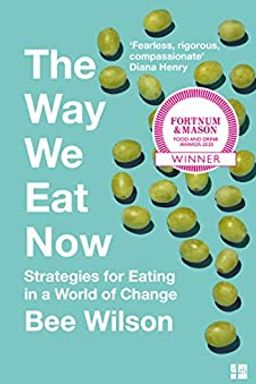
What does it mean to eat in a world where food has never been more plentiful, yet our health and environment have never been more strained? Bee Wilson’s work explores that paradox. She argues that you now live amid a global nutrition transition—a shift from scarcity and home cooking to industrial abundance, convenience, and homogenization. What and how you eat are no longer purely personal choices; they are the outcome of economics, biology, culture, and policy intertwined.
Across the book, Wilson maps how the global diet emerged, how biology and economics shape food habits, and how culture and policy can reclaim a saner relationship with food. The argument unfolds as both diagnosis and hope: the food system that bred abundance also holds the potential to support better health if redesigned around quality, diversity, and time.
From Scarcity to Over-Supply
Economist Barry Popkin’s framework of the “nutrition transition” underpins much of Wilson’s story. Humanity has passed through stages—hunter-gatherer, agricultural, famine-receding, and now industrial abundance—where diets evolve alongside economies. In stage four, you eat from a food system dominated by refined sugar, vegetable oils, animal products, and uniform crops such as wheat, rice, and soy. The shift produced enormous gains: global calories per person rose from about 2,200 in 1961 to nearly 2,800 by 2009, ending many historical forms of famine. Yet the same abundance has seeded chronic problems: obesity, diabetes, and ecological strain.
The “Global Standard Diet,” described by Colin Khoury and colleagues, reflects this compression: most of the world’s energy now comes from just six sources. Diversity shrinks as marketing, trade, and logistics create near-identical grocery shelves from London to Lagos. A Cavendish banana in Reykjavík tastes the same as one in Nairobi—and that sameness, Wilson notes, is both comforting and impoverishing.
Body, Biology, and Mismatch
Your body has not caught up with your food environment. Evolution wired you for scarcity—craving sugar, salt, and fat as rare prizes. When those same tastes now surround you in limitless form, ancient instincts misfire. Wilson draws on research by Dr. Chittaranjan Yajnik in Pune, India, who discovered the “thin-fat baby”: small infants born to malnourished mothers yet predisposed to metabolic disorders once exposed to rich diets. This intergenerational mismatch shows how fast food environments can overwhelm biological programming.
Biologists David Raubenheimer and Stephen Simpson’s “protein leverage” model extends this: when protein becomes diluted by fats and sugars, you overeat to reach a protein target. Add to this the modern separation of thirst and hunger—liquid calories from sodas or frappés that don’t satisfy—and you see why overeating isn’t about weak willpower but about misaligned signals in an engineered food supply.
The Invisible Hand of Economics and Industry
If biology supplies the mismatch, economics amplifies it. Subsidies, industrial policies, and trade created cheap calories and profitable ultraprocessed foods. In the United States only about 10% of the food dollar goes to farmers, while more than 15% goes to processing. Companies earn more transforming corn and soy into snacks than selling vegetables. Marketing strategies hone in on “heavy users”—the 20% of buyers who consume 80% of sugary drinks—and design products to keep those customers hooked. Foreign direct investment then spreads these products globally, from Coca-Cola in rural Mexico to Nestlé’s fortified puddings in Brazil. What feels like cultural choice often begins as corporate design.
Time, Culture, and the Disappearing Meal
Wilson widens the frame beyond ingredients to rhythm. The old habit of three shared meals has dissolved into continuous grazing. In northern Europe and the US, time-use studies show fragmented eating—snacks instead of shared lunches. The result is not only nutritional but social erosion: eating together once regulated appetite and fostered connection. Now many workers eat at desks; hospital nurses manage entire shifts without a sit-down break. Digital life offers faux companionship—mukbang streams or recipe videos—but not the physiological balance that communal meals once provided.
Fads, Fraud, and the Mirage of Wellness
In the chaos of abundance, trends promise clarity—“clean eating,” “superfoods,” or “biohacked” meal replacements like Soylent and Huel. Some innovations, like high-protein yogurts or skyr, adapt cultural traditions; others, like detox diets, slide into orthorexia and moral perfectionism. Wilson shows how the global enthusiasm for quinoa made it unaffordable for the Bolivians who once relied on it, while avocado demand spurred deforestation and cartel control in Mexico. Wellness branding can mask inequality and exploitation. Even the quest for efficiency—swapping meals for shakes—risks reducing food to fuel and stripping it of pleasure and community.
Possibilities of Change
Yet the book is not pessimistic. Wilson’s examples from South Korea and Denmark show that culture and policy can bend the curve. Korea sustained vegetable-rich meals through public education and pride in traditional dishes; Denmark led with trans-fat bans and organic procurement laws. Chile and Mexico demonstrate that taxes and labels can shift consumption, while local initiatives like Amsterdam’s Healthy Weight Programme show multi-level change works when schools, cities, and industries align. The metaphor she ends with—“crossing to the sweet green grass”—calls for redesign, not renunciation. If you help create environments where vegetables taste good, meals are shared, and industry profits from quality instead of excess, abundance could finally serve health rather than harm.
Central message
Eating well in the modern world is not just about willpower—it is about redesigning the everyday systems that shape what is visible, affordable, and normal on your plate.