
Idea 1
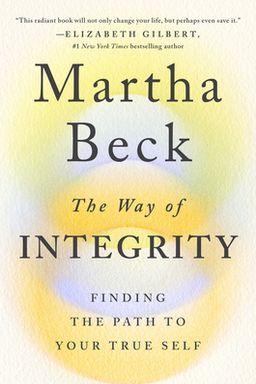
The Way of Integrity: Finding Wholeness in a Divided World
Have you ever felt that despite doing everything "right"—working hard, keeping commitments, striving for success—you still carry a quiet unease or sense that something’s not quite clicking? In The Way of Integrity, Martha Beck contends that this discomfort arises from one simple but profound cause: we’re out of alignment with our true selves. Using Dante Alighieri’s The Divine Comedy as an allegorical map, Beck invites you on a journey through the psychological equivalents of hell, purgatory, and heaven to restore what she calls integrity—the state of being whole, undivided, and fully connected to truth.
Integrity as Wholeness, Not Morality
Beck redefines integrity away from judgmental moralism and toward its original meaning: integer, or “whole.” To live with integrity is to be one thing—your thoughts, emotions, body, and spirit aligned rather than battling each other. Like an airplane whose parts must work together to fly, your life functions properly when all aspects of self act in harmony. When divisions appear—between what you feel and what you think you should feel, between your desires and your cultural conditioning—you lose power, focus, and joy. Beck reminds us that suffering isn’t a punishment but a signal, the body’s way of alerting you that you’ve departed from truth.
Culture vs. Nature: The Source of Division
According to Beck, the root cause of our unhappiness lies in the perpetual clash between our nature, which instinctively knows what makes us happy, and our culture, which tells us how we should behave to belong and succeed. From childhood, we learn to please others—parents, teachers, peers—and often override our genuine impulses. Culture rewards conformity, but nature demands authenticity. When culture wins, we become divided: one part striving to meet external expectations while another yearns for freedom. This battle produces symptoms ranging from physical illness and depression to addictions and chronic relationship trouble—what Beck calls “dark wood of error syndrome.”
The Four Stages of the Journey
Drawing inspiration from Dante’s epic quest, Beck lays out four stages to return to wholeness:
- The Dark Wood of Error – The state of confusion, fatigue, and misalignment when life feels meaningless or off-course.
- Inferno – Facing the hell of personal suffering, examining false beliefs, and questioning thoughts that cause distress.
- Purgatory – Cleansing away habits and lies, aligning outer actions with inner truth.
- Paradise – Achieving full integrity: complete peace, purpose, and joy.
This metaphorical roadmap transforms self-help into an adventure story. Beck becomes a modern Virgil, guiding readers through the psychological equivalent of Dante’s landscapes—from despair to renewal, from lies to truth, from fragmentation to unity.
Suffering as a Teacher
Beck insists that suffering isn’t to be avoided or numbed; it’s a corrective mechanism. Like physical pain’s warning system, emotional turmoil signals a split within us. When you lie—to yourself or others—you create internal dissonance, and your body responds through fatigue, anxiety, or illness. Beck’s own story illustrates this vividly: raised in a devout Mormon family yet educated at Harvard, she felt torn between conflicting cultures and developed intense physical pain and depression. Following truth led her to healing and wholeness. (Similarly, Carl Jung and Joseph Campbell emphasize the hero’s journey as a descent into the unconscious for integration.)
Truth as the Path to Freedom
The way out of the dark wood begins with a deceptively simple act: telling the truth. Even admitting “I am lost” restores alignment. From there, Beck teaches methods to identify and dissolve lies—the psychological equivalents of Dante’s infernal demons. Using questioning tools akin to Byron Katie’s “The Work,” she urges readers to challenge every thought that brings suffering, asking “Is it true?” and “Can I absolutely know it’s true?” Each honest answer releases a layer of falsehood and creates space for joy.
Integration and Awakening
As readers progress, they confront cultural expectations, cleanse away self-deceptions, and begin living in harmony with their internal compass. Eventually, integrity becomes effortless—Beck calls this “flying,” when life flows naturally and work feels joyful. In the final stages, enlightenment appears not as an abstract theology but as everyday freedom: health, creativity, compassion, and connection. The book ends with an expansive vision of personal integrity rippling outward to societal transformation, suggesting that by healing ourselves, we help heal humanity.
Why It Matters Now
Beck argues that humanity itself faces a collective loss of integrity—stressed, divided, misaligned with nature. By reclaiming individual truth, we can spark the restoration of balance on a global scale. The Way of Integrity isn’t just a manual for happiness; it’s a spiritual and practical framework for survival in a fractured world. With humor, empathy, and hard-won wisdom, Beck invites us to stop hustling for approval and start living as what we already are: whole, real, and free.