
Idea 1
The Great Migration and the Remaking of America
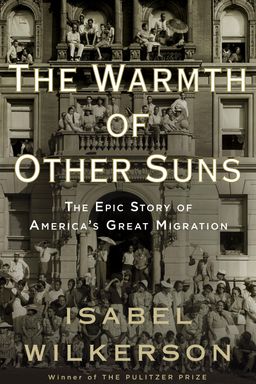
How do six million people quietly change a nation? Isabel Wilkerson’s The Warmth of Other Suns answers this question through a sweeping narrative of the Great Migration—the massive exodus of Black Americans from the rural South to northern, midwestern, and western cities between 1915 and the 1970s. Wilkerson argues that this movement was not just a demographic shift but a re‑founding of American life: it reshaped cities, altered culture and politics, and transformed what freedom could mean for those who risked everything to seek it.
Flight from a Closed World
You cannot understand the Great Migration without first understanding what people were fleeing. Jim Crow made the South a closed caste system: signs, laws, and the threat of violence defined every human interaction. Lynchings in Waco, Texas and Marianna, Florida; the everyday humiliations of back doors and separate stair rails—these were not quirks of custom but tools of control. Wilkerson shows that when Ida Mae Gladney’s cousin is beaten for a trivial offense, the family’s decision to flee north is a moral act of self‑preservation. Leaving becomes resistance.
Economic Traps and Invisible Chains
Beneath the violence lay an economic system designed to hold people in debt. Sharecropping and peonage ensured that each harvest returned them deeper into dependency. Even as they picked thousands of cotton bolls or crates of citrus fruit, they owed landlords and groves so much that freedom seemed impossible. When wartime factories up north called for labor at higher wages, that call became a lifeline. The migration was an economic jailbreak as much as a social revolution.
Trains, Routes, and the Ritual of Escape
Wilkerson paints departure as both practical and ceremonial. People left secretly, carrying food wrapped in waxed paper—cold chicken, biscuits, eggs—for trains that doubled as the last sites of Jim Crow humiliation. The Illinois Central and the Silver Meteor became escape routes and symbols: once you crossed the Ohio River or rolled through El Paso, segregation signs vanished. The porters and the Chicago Defender newspaper served as a covert communication network guiding travelers toward safety and work. Even in the act of crossing, they rehearsed freedom’s choreography.
Lives that Make History Human
Through three migrants—Ida Mae Gladney, George Starling, and Robert Pershing Foster—Wilkerson gives you the Migration’s human texture. Ida Mae’s Mississippi exodus captures the 1930s wave of rural flight. George Starling’s escape from Florida’s citrus fields amid union threats exemplifies the wartime surge. Robert Foster’s 1950s drive west in pursuit of professional independence represents the educated wave seeking belonging beyond Jim Crow. Together they show that the Migration’s millions were not faceless; they were thinking individuals, each weighing fear, dignity, and hope.
Arrival, Resistance, and Reinvention
Northern cities promised legal freedom but delivered new barriers. Migrants faced redlining, overcrowded tenements, exploitative rents, and racial hostility. Yet they built new institutions—churches, clubs, business leagues—and spearheaded cultural transformations that shaped twentieth‑century America. The cultural alchemy of the Migration produced jazz, gospel, and later R&B; it underpinned the rise of authors, artists, and activists who gave America new language for justice. At the same time, violence followed—bombings of Black homes, riots in Cicero, and systemic exclusion proving that the color line had simply shifted north.
A Nation Transformed
By the 1970s, nearly half of all Black Americans lived outside the South. Cities like Chicago, Los Angeles, and Detroit owed their demographic, political, and artistic identities to this exodus. The Migration paved the way for civil rights victories, Black mayors in major cities, and a transformed cultural mainstream. Yet, Wilkerson reminds you, segregation outlived law—re‑emerging as white flight, urban disinvestment, and what sociologists later called hypersegregation. The Great Migration both liberated and revealed: it showed what individual courage could achieve and what structural racism could re‑invent to maintain inequality.
Ultimately, The Warmth of Other Suns tells you that the Great Migration is a story of agency disguised as movement. Millions of quiet acts—packing a bag, buying a ticket, boarding a train—constituted one of the largest grassroots rebellions in modern history. It is the history you still live in every day: in the cities you inhabit, the music you hear, and the freedoms that remain unfinished.