
Idea 1
The War on Warriors: Power vs. Politics in the Ranks
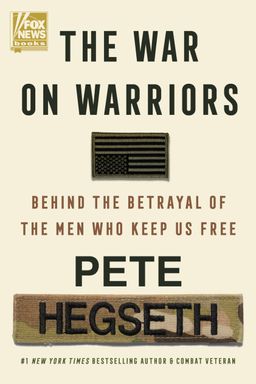
What happens to a nation when the very institution designed to deter enemies and win wars is told that its first job is social engineering? In The War on Warriors, Pete Hegseth argues that America’s fighting force has been captured by a political project that puts ideology before lethality. He contends that in the last decade—accelerating under the Obama and Biden administrations—the Pentagon has shifted from forging powerful, disciplined warfighters to policing language, prioritizing quotas, and labeling traditional patriots as threats. In his view, that shift is not just misguided; it’s strategically dangerous. And it’s reversible only if citizens, veterans, and especially the next generation of warriors re-commit to constitutional first principles and re-take the high ground from within.
Hegseth’s thesis is simple and uncomfortable: when the military treats “diversity” and “extremism” as its central problems, it stops doing the hard, unglamorous work of training tougher units, holding feckless generals accountable, and preparing to deter China, Iran, Russia, and non-state terror networks. Instead of “more lethality, fewer lawyers,” we got the reverse. He believes this is why recruitment is falling, trust is collapsing, and readiness is sliding—from the Heritage Foundation’s rating of the force as “weak,” to the Air Force’s inability to meet aircraft mission-capable rates under leadership that simultaneously mandates DEI metrics.
What You’ll Learn in This Summary
You’ll see how a Pentagon-wide “stand-down” after January 6—nominally to fight extremism—enshrined the myth that the ranks were crawling with radicals, despite studies showing veterans’ support for white supremacists is significantly lower than the public’s (RAND, 2023). You’ll examine how a race-obsessed working group led by Bishop Garrison set the tone for surveillance of troops’ views, how Gen. Mark Milley’s public musings on “white rage” became a policy signal, and how renaming bases and removing photos from promotion boards were treated as operational priorities.
You’ll also look at the policies that most directly change who fights and how well they can fight: the women-in-combat push (including the Marine Corps’ 2015 Ground Combat Element Integrated Task Force results), the Pentagon’s transgender service directive (DoDI 1300.28) with long non-deployable periods and medical-dependency risks, and the lowering or bifurcating of physical standards to hit representation targets instead of fielding deadlier teams. Hegseth layers in specific stories—his air-assault into a Baghdad mortar cell, his S-5 intelligence grind in Samarra, and his night in DC on a riot line taking bricks and urine bottles—showing how discipline, purpose, and unit trust, not politics, are what keep soldiers alive.
Why It Matters Now
He argues this is a “now or never” moment. Unlike public schools or corporations, there’s only one Pentagon; if you cede it, you lose the immune system of the Republic. The author sketches what he calls “cowboys led by cowards”—trigger-pullers disciplined and selfless, overseen by an upper class of careerist generals who evade accountability for catastrophic failures (Afghanistan’s Abbey Gate, the botched Kabul drone strike, $7B in equipment left to the Taliban), then cash out to defense contractors (echoing Eisenhower’s warning about the “military-industrial complex”).
Running through the book is a covenantal argument: soldiers swear an oath to the Constitution—not to parties or passing fads. Drawing on biblical imagery (particularly Gideon), Hegseth says a healthy military starts by tearing down internal idols—critical race theory, forced pronouns, quota-first promotion—so it can face external threats. The “laws of war,” he warns, shouldn’t be misapplied to shackle those who risk their lives for us with lawyered hesitation against enemies who hide among civilians and break every norm. (Compare to Victor Davis Hanson’s arguments in Carnage and Culture and The Savior Generals, and John McWhorter’s Woke Racism on ideological capture.)
The Big Promise—and the Hard Ask
The promise is that warfighters, not word-police, secure peace. The hard ask is to stop abandoning the services to activists. He urges parents to raise strong, faithful, patriotic sons—and yes, to consider elite combat arms units where merit still carries weight—and to demand political and senior military leaders who restore leadership, training time, and standards. If you want a military that protects your kids, you must send leaders and soldiers who love the Constitution—and who’d rather be judged for stacking bodies of America’s enemies than stacking DEI slides.
Bottom Line
This isn’t a memoir of grievances; it’s a call to arms. The War on Warriors says you can still save the force—from the inside and the outside—by recommitting to merit, mission, masculinity rightly channeled, and a single oath: the Constitution of the United States.