
Idea 1
Building Empathy in a Fractured World
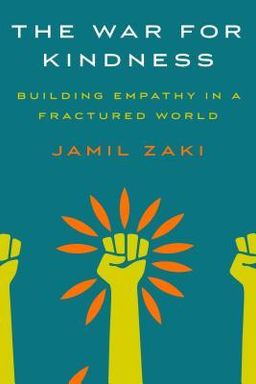
When was the last time you truly felt someone else’s pain—or deliberately chose not to? In The War for Kindness, psychologist Jamil Zaki argues that empathy, far from being a fixed trait we’re born with, is a skill that can be strengthened. Against the backdrop of rising polarization, social isolation, and cruelty, Zaki makes a simple but radical claim: empathy is not dying—it’s under attack, and we can fight for it.
Zaki challenges centuries of thinking—from Plato’s view of emotions as uncontrollable forces to modern neuroscience that frames empathy as something hardwired into the brain. He calls this the Roddenberry Hypothesis (after Star Trek’s Deanna Troi, the telepathic empath), the belief that some people are born empathic while others are coldly rational. But Zaki dismantles this idea through decades of research, showing that empathy is a choice governed by context, motivation, and culture. We can turn it up or down like a volume dial.
Why Empathy Matters More Than Ever
Zaki starts from a painfully relevant observation: empathy levels have dropped dramatically over the past few decades, particularly among younger Americans. We are more connected online than ever—but less connected emotionally. Political divisions have hardened, and outrage has become currency. In this moral climate, indifference feels safe. Many people argue that empathy is biased or irrational (as Paul Bloom does in Against Empathy), but Zaki insists that the problem isn’t empathy itself—it’s how we practice it.
Empathy, Zaki explains, is not just one thing. It has three components:
- Cognitive empathy—understanding others’ thoughts and perspectives.
- Emotional empathy—sharing others’ feelings as if they were your own.
- Empathic concern—wanting to ease someone’s suffering or help them thrive.
Most of us naturally empathize with people like ourselves—our family, friends, or political tribe—but Zaki shows that empathy can stretch much further: to strangers, enemies, and even future generations. This capacity helped our species survive; cooperation and compassion were evolutionary assets, not liabilities. But in modern life, empathy has gotten harder. Urbanization, digital living, and tribalism have created an “empathy deficit.” We see suffering everywhere but are too overwhelmed or cynical to care.
Empathy as a Muscle, Not a Reflex
One of Zaki’s most important interventions is his argument that empathy is like physical fitness—a muscle that weakens with neglect but grows through deliberate practice. You can train it in the moment by choosing to imagine others’ feelings or by reframing emotional experiences. You can also strengthen it long-term through repeated habits, such as reading fiction, volunteering, or cultivating curiosity about others. This “psychological mobility” challenges the assumption that emotions are instinctive and uncontrollable.
Zaki introduces “mobilism” as the antidote to fixism—an idea drawn from Carol Dweck’s work on growth mindsets. Just as people who believe intelligence can grow actually become smarter, those who believe empathy can improve work harder to understand others. In experiments with students, teaching that empathy is a skill—not a fixed trait—made them more engaged, less biased, and more socially connected months later. This insight reframes empathy as a form of agency: you can decide the kind of person you want to be.
The War for Kindness
The “war” in Zaki’s title is both internal and societal. Our biology tells us to protect our tribe; our better selves urge us to widen the circle of care. His book explores this struggle through deeply human stories—a former neo-Nazi who found redemption, police departments that retrain officers as “guardians” instead of “warriors,” doctors who learn compassionate detachment, and virtual reality engineers who use technology to evoke empathy rather than erode it.
Across these cases, Zaki reveals a paradox: empathy thrives where it is hardest. It grows amid suffering, conflict, and division, not despite them. Survivors of trauma often become the most altruistic; people who learn to care for enemies or strangers become more whole. This insight turns empathy from sentimentality into courage. It means that choosing kindness is not naive—it’s revolutionary.
Why You Should Fight for Empathy
Zaki’s call to action is clear: don’t let empathy collapse under cultural pressure. In your own life, empathy determines whether you connect or withdraw, heal or harm. In politics, it defines whether nations fragment or reconcile. The world you create tomorrow depends on the empathy you practice today.
Key Message
Empathy isn’t a scarce resource—it’s a renewable one. When we learn to build it deliberately, we can reshape relationships, institutions, and even history. That’s how we fight—and win—the war for kindness.