
Idea 1
Fragile Worlds: Law, Survival, and the Wooden Machine
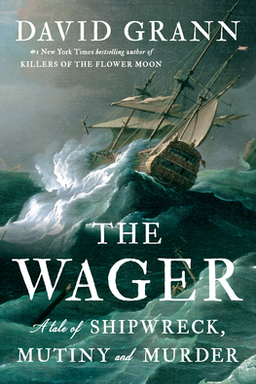
How do fragile wooden ships turn into entire societies under duress? In this narrative reconstruction of the Wager disaster—embedded within George Anson’s circumnavigation—you see how technology, weather, hunger, and law converge to test the limits of human organization. The book argues that every plank, rope, and rule aboard an eighteenth-century man-of-war is woven into a moral system: when the hull fractures, so does the hierarchy.
You begin with the ships themselves—the Wager and the Centurion—as living machines that embody imperial ambition and its vulnerabilities. These vessels devour forests for timber; they depend on strict naval hierarchy enforced by the Articles of War and by violent discipline. Each part of the ship mirrors British social order: the captain’s quarterdeck is a throne, the lower decks are colonies of constrained humanity. Yet rot and worm undermine this architecture long before storms appear. The Wager, converted from a merchant East Indiaman, carries structural weakness that will translate into mistrust and catastrophe when it reaches the Furious Fifties.
Material Fragility and Human Hierarchy
The book reveals the ironic pairing of grandeur and decay. A ship is a technological marvel but transient: teredo worms, damp timber, and the corrosive salt air shorten its life to barely a dozen years. This fragility shapes behavior—officers fear their ship as much as they command it. Press gangs fill its crew with unwilling men, creating a floating social experiment under duress. The Wager sails with hundreds pressed from the streets, a few volunteers like John Campbell, and professionals like the gunner John Bulkeley, whose technical skill contrasts with his low rank. The vessel thus becomes a microcosm of empire, a hierarchy of necessity held together by wood and discipline.
Navigation and the Limits of Knowledge
When the squadron confronts Cape Horn, you encounter the physical limit of eighteenth-century science. Latitude can be determined; longitude cannot—John Harrison’s chronometer is still a fledgling hope. Dead reckoning, sandglasses, and memory substitute for precision. The sea beyond fifty degrees south is chaos incarnate: the Roaring Forties and Furious Fifties assault the fragile ships with storms that feel like judgments. The saying 'below fifty degrees, there is no law' becomes literal, as scurvy and typhus hollow crews and collapse the routines meant to sustain naval order.
Wreck and the Birth of New Society
The Wager wrecks in the Golfo de Penas, its masts gone, hull crushed, Cheap injured and broken. From that wreckage, a new society forms on Wager Island: makeshift huts, salvaged casks, and rudimentary ranks reasserting themselves on frozen ground. You watch the crew transplant naval law onto wilderness—trials, lashes, and maroonings attempt to curb theft. But hunger unravels these pretenses. A pound of flour for three men, then less. You see how deprivation shortens moral horizons until survival outweighs obedience. When Cheap shoots midshipman Henry Cozens in a quarrel, the authority of command collapses entirely. Law becomes pathology.
Mutiny and Moral Choice
The struggle between Captain Cheap and Bulkeley dramatizes the break between institutional duty and existential necessity. Cheap insists on pursuing Anson’s strategic mission toward Chiloé; Bulkeley advocates escape via the Strait of Magellan to Brazil. The petition that Bulkeley drafts transforms raw dissent into a legal act—it redefines mutiny as justified rebellion. Ink becomes authority where rank has failed. When Bulkeley’s party departs in the Speedwell, leaving Cheap behind, the moment crystallizes a haunting moral question: is abandoning one man treason or survival?
Deliverance, Memory, and Narrative Power
Bulkeley navigates the Speedwell through the labyrinth of the Strait with improvisational genius, reaching Brazil against extreme odds. Anson, meanwhile, triumphs elsewhere by capturing the Spanish galleon Covadonga. The juxtaposition is deliberate: individual suffering on Wager Island is erased beneath imperial spectacle. The prize of silver restores Britain’s naval prestige, and the Admiralty uses this victory to mute scandal. Trials in England render evasive verdicts—Cheap and his men are neither condemned nor celebrated fully. Instead, you witness how politics and narrative rewrite catastrophe into national myth.
Voices at the Margins
Amid this grand story are silenced presences: Kawésqar canoe masters who save castaways, the Chono guide Martin who navigates dangerous channels, and John Duck, an African sailor sold into slavery after surviving the voyage. Their wayfinding and resistance expose a deeper truth about empire—that survival often depended on those erased from its records. Even the rebellion led by Orellana aboard a Spanish ship testifies to indigenous courage unseen in official annals.
The book’s central idea
The wooden world of ships embodies empire’s paradox: an organized society afloat that disintegrates when its structures meet elemental reality. On Wager Island and beyond, you learn that law and leadership survive only as long as faith in them does.
By following timber, disease, hunger, authority, and narrative through their collapse and reconstruction, the book shows that survival at sea and survival of reputation are twin experiments. Wood decays, bodies fail, and truth fragments—but the ways people rebuild meaning afterward define the real voyage.