
Idea 1
Moral Courage in a Machinery of Death
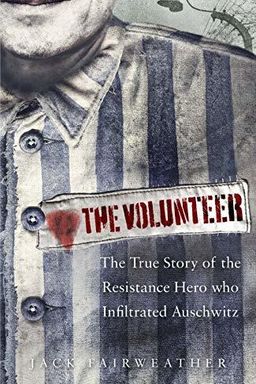
What does it mean to choose conscience over survival? The book follows Witold Pilecki, a Polish officer who in 1940 volunteered to be imprisoned in Auschwitz to gather intelligence and build a resistance network. His act—deliberately entering the heart of totalitarian destruction—frames a moral and political story about what courage, duty, and truth mean when every human instinct demands self-preservation.
At one level, the narrative is historical: the birth of the twentieth century’s most efficient murder system and the Polish resistance’s attempt to bear witness from within it. On another level, it is deeply ethical: it examines how ordinary men navigate extraordinary evil and how moral choices scale into collective action—or paralysis.
Witold’s Choice
Pilecki begins as a farmer and family man from Sukurcze, devoted to Maria and their children. When Poland collapses under German and Soviet invasion in 1939, duty becomes his compass. In Warsaw he joins the underground and, when presented with a plan to infiltrate Auschwitz, he agrees. The sacrifice is total: he deceives his wife, prepares false papers, and allows himself to be caught in a German roundup. His logic is neither fanatical nor suicidal—it’s pragmatic idealism. In his calculation, joining the suffering might create a channel of truth powerful enough to save others.
(Note: Historian Timothy Snyder calls such acts a “moral permeability”—a willingness to let responsibility penetrate where death seems inevitable.)
Auschwitz as System
When Witold enters Auschwitz in September 1940 as prisoner no. 4859, the camp is still an experimental colonial outpost, not yet the vast death complex it will become. Its daily routines—registration, shaving, beatings, roll calls, hunger—strip people of identity while teaching them to police one another’s pain. Pilecki learns that brutality is bureaucratic: kapos enforce labor quotas; doctors conduct selections and experiments; and commandants like Rudolf Höss refine administration, not ideology. By observing how cruelty becomes procedural, he begins to see that resistance must find leverage within structure—through documents, smuggling, and trust.
The camp evolves during his imprisonment. At first, killings are local: beatings, phenol injections, shootings of Soviet POWs. Then industrialization begins—Karl Bischoff’s construction office and Karl Fritzsch’s Zyklon B tests transform the site into a mechanized extermination apparatus. By 1943, Birkenau’s chimneys mark a new logic: murder on a timetable. Witold documents the technical details—buildings, schedules, personnel—turning observation into weaponized data.
Resistance Within Horror
Inside that machinery he builds something no one expects: an underground army. Beginning with a handful of trusted men—Dering in the hospital, Surmacki in the construction office, Virion and Zagner in logistics—he constructs a multi-cell network. The objectives are modest but radical: share food with the weakest, record atrocities, and prepare for uprising. Trust becomes currency; gossip kills. Radios and microfilms replace weapons. Recruits memorize names and events for couriers who will carry those memories to Warsaw.
Each act of resistance has moral weight. A smuggled vial of glucose, a forged line in a Stärkebuch ledger, a dough imprint of a key—these small gestures invert the camp’s logic of dehumanization. As one later historian notes, Pilecki’s underground reclaims usefulness as a form of dignity: to feed, to record, to help endure.
Intelligence and Global Deafness
Through carefully choreographed channels—couriers like Aleksander Wielopolski, Julia Lubomirska, and Napoleon Segieda—reports reach Poland, Geneva, and London. They include copies of death books, architectural blueprints, and eyewitness testimony. Yet the moral shock they contain fades into diplomatic process. Allied leaders from Sikorski to Air Marshal Portal discuss bombing Auschwitz and reject it as a “diversion.” Strategic calculus smothers moral clarity. Witold’s intelligence becomes, heartbreakingly, data without action.
Escape and Testimony
In April 1943, after nearly three years, Witold escapes with Jan Redzej and Edward Ciesielski through a bakery, using homemade tools—dough molds, keys, a cut telephone wire—and a storm for cover. Their flight through forests and rivers leads to Krakow and Warsaw, where Pilecki proposes a full uprising to destroy crematoria. He is told no. His reports circulate, but bureaucracy and fear silence him again. Still, he persists, joining the Warsaw Uprising in 1944 and later reentering Poland after the war to gather intelligence on Soviet repression.
From Witness to Martyr
In 1947 the Communist security service arrests him. Tortured and tried as a traitor, he refuses to renounce his cause. Executed in 1948, he disappears from public record for decades. Only after 1989 do his reports reemerge, rediscovered by historian Adam Cyra and his son Andrzej. His story forces you to see how regimes—Nazi or Communist—depend on rewriting courage into guilt.
Ultimately the book argues that in systems designed to erase individuality, moral resistance begins with choosing to see and to record. Pilecki’s leap into Auschwitz transforms ordinary duty into radical truth-telling. His life poses a haunting question: when institutions kill truth, who will volunteer to enter the darkness and bring it back out?