
Idea 1
The Evolution of the Genetic Imagination
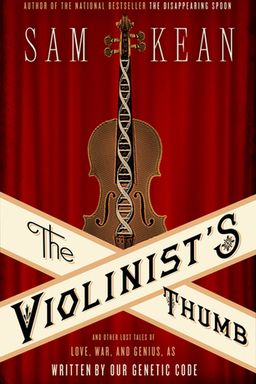
Imagine tracing life’s blueprint from a monk’s pea plants to the double helix and into the digital age. The story told across this book is how humanity discovered not just what genes are, but how they work—and how that knowledge transformed biology, medicine, and even the way you think about art, intelligence, and ancestry. This is the story of DNA as both molecule and metaphor, blending experiments, accidents, and revolutions across centuries.
From patterns to molecules
Gregor Mendel’s simple pea experiments revealed that heredity followed rules—factors that behave predictably. Meanwhile, Friedrich Miescher, scraping pus from bandages, isolated a mysterious nuclear substance later named DNA. Their works—one statistical, one chemical—were unlinked for decades. Only later did biologists realize Mendel’s ‘factors’ were encoded in Miescher’s molecule. This conceptual union between information and matter is where modern genetics began.
From peas to flies to humans
Enter the Columbia fly room, where Thomas Hunt Morgan and his students transformed Mendelian theory into chromosome maps. They showed that genes line up on chromosomes like beads, recombine during meiosis, and mutate under radiation—a quantitative leap that joined Mendel’s and Darwin’s ideas into one grand synthesis. In essence, they turned inheritance into a measurable, physical science.
From there, breakthroughs cascaded: Hershey–Chase proving DNA carries genes; Watson and Crick proposing its helical structure; Crick’s central dogma explaining the flow from DNA to RNA to protein. The genome emerged as both archive and machine code—a chemical that writes, reads, and repairs itself. Life became legible as information.
DNA as code, language, and song
The next turn was conceptual: scientists realized that describing DNA isn’t just chemistry—it’s math, linguistics, and even music. From Shannon’s information theory to Zipf’s law and knot theory, biology merged with computation and art. DNA behaves like a language with redundancy and rhythm, a self-correcting message transmitted across generations. You can read life as code—compressed, error-tolerant, and occasionally poetic.
From cells to symbiosis
To explain complexity, Lynn Margulis proposed that mitochondria and chloroplasts originated as symbiotic bacteria inside early eukaryotic cells. Her idea of endosymbiosis redefined evolution as cooperative rather than purely competitive. Mitochondria gave cells vast energetic capacity, enabling larger genomes and multi-cellular life. Their DNA preserves evolutionary history and allows scientists to reconstruct human maternal ancestry—the story of “Mitochondrial Eve.”
From static genomes to restless ones
Barbara McClintock’s maize experiments exposed a dynamic genome: genes can move. Transposons, viruses, and mobile DNA reshuffle code, creating novelty and risk. Rous’s tumor virus hinted that infections can drive cancer and evolution alike. Our own genome harbors ancient viral remnants that now regulate essential processes, including placenta formation. In short, your DNA is a palimpsest of microbial borrowings.
From fossils to forgotten cousins
In the twenty-first century, paleogenetics cracked open human prehistory. Ancient DNA revealed that Homo sapiens interbred with Neanderthals and Denisovans. These genetic echoes tell you that evolution is not a clean branching tree but a braided network of encounters, bottlenecks, and survival gambles. Paleogenomics replaced myth with measurable ancestry and showed how tiny populations shaped global diversity.
From meat to mind
Genes like apoE reveal how diet and survival coevolved: mutations traded infection resistance for cholesterol risk, then rebalanced for longevity. Others, like ASPM, microcephalin, and FOXP2, shaped brain architecture, speech, and cognition—yet every gain carried vulnerability. Intelligence, language, and art emerged from this delicate negotiation between mutation, development, and culture. In Paganini’s flammable tendons or Toulouse-Lautrec’s brittle bones, biology expressed itself through creativity and limitation alike.
From sequencing to meaning
The Human Genome Project promised salvation through data but instead delivered humility: 25,947 genes—not 100,000—and endless regulatory complexity. Craig Venter’s race against the public consortium embodied science as spectacle, revealing both the speed and perils of privatized discovery. The core lesson: sequencing a genome is easy; interpreting it is an unending task of pattern, probability, and patience.
That humility deepened with epigenetics. Chemical “marginalia” on DNA—methyl marks or histone acetylation—allow experiences like famine, stress, or exposure to ripple across generations. Such marks fade yet matter: they remind you that genes are scripts performed differently depending on context. Biology, it turns out, remembers more than sequence—it remembers circumstance.
The book’s central idea
The genome is not a fixed library; it is a living conversation among molecules, microbes, and minds. It evolves not only through mutation and selection but through cooperation, error, recombination, and interpretation. Understanding it requires the languages of chemistry, computation, history, and art—all woven into one story of how life became aware of its own code.
By bringing together Mendel’s peas, Morgan’s flies, Margulis’s mitochondria, McClintock’s jumping genes, and Crick’s helix, this book teaches you one moral: knowledge—like DNA itself—grows through recombination. Each scientific breakthrough was once an audacious intersection of old ideas rewritten in a new sequence.