
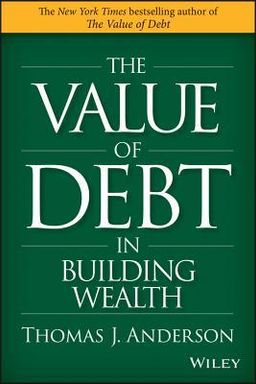
The Value of Debt in Building Wealth cover

The Value of Debt in Building Wealth

by Thomas J Anderson

Discover how to transform debt from a financial burden into a strategic asset. Thomas J. Anderson''s guide offers practical advice on managing personal finances, leveraging debt wisely, and achieving long-term wealth. Learn to navigate financial challenges with confidence and build a secure financial future.

The Value of Debt in Building Wealth

When you think of debt, what emotion rises first—fear or possibility? Most of us have been taught that debt is dangerous, a burden to be shed as quickly as possible. Thomas J. Anderson’s The Value of Debt in Building Wealth flips that belief upside down. He argues that, if handled strategically and responsibly, debt can actually build wealth, reduce stress, and increase financial flexibility. Rather than treating debt as a villain to be eliminated, Anderson shows how it can become a vital instrument for achieving long-term success.

Anderson’s central claim is daring but mathematical: well-managed debt can compound your wealth faster than the no-debt approach ever could. He makes this case through data, detailed scenarios, and the metaphor of a financial “glide path”—a series of phases of financial growth he calls L.I.F.E: Launch, Independence, Freedom, and Equilibrium. Each phase has a balance range for debt relative to income, guiding you toward optimal wealth building while maintaining liquidity and stability.

Debt as a Strategic Tool

Anderson begins by dismantling conventional wisdom. In the same way that successful corporations use debt to manage opportunity and risk, he believes individuals should do the same. Companies with prudent debt levels aren’t reckless—they’re strategic. Debt helps them maintain liquidity and invest in profitable ventures. Similarly, for individuals, debt can serve as a lever to increase net worth when the rate of return on investments exceeds the after-tax cost of borrowing.

The author draws on Nobel Prize–winning finance theory by Modigliani, Miller, and Markowitz, combining their insights about capital structure and portfolio optimization to show that a balanced approach incorporating both assets and liabilities can create diversification with less overall risk. A household balance sheet, he insists, deserves the same holistic treatment as a corporate one.

The Glide Path: Four Phases of Financial Life

To make his argument concrete, Anderson organizes life’s financial progression into four stages. The Launch phase is for beginners, focused on eliminating oppressive debt (like credit cards) and building a cash cushion. The Independence phase introduces good or “working” debt—low-interest loans linked to assets such as homes or education. The Freedom phase focuses on reducing debt ratios not by paying down loans, but by aggressively building assets, harnessing compound growth. Finally, in Equilibrium, debt becomes minimal, serving mostly for liquidity and tax benefits rather than necessity.

Across these phases, debt transforms from threat to tool. Early on, avoiding oppressive debt builds financial stability; later, strategic borrowing amplifies returns while preserving flexibility. The glide path is pragmatic: it acknowledges life’s messiness—career shifts, family changes, crises—and provides adaptable ratios and examples showing how to rebalance between debt reduction and wealth accumulation.

Why This Matters

Anderson’s approach challenges the moral undertones around debt. He aims to redefine “financial responsibility” from debt avoidance toward intelligent debt utilization. In his view, America’s obsession with being debt-free has contributed to under-saving—an epidemic backed by data showing that half of Americans have less than $800 in savings. By reframing debt as a calculated instrument, Anderson offers a potential cure for the savings crisis.

Beyond math, he also appeals to behavioral economics. The book encourages self-awareness: strategic debt only works if you have discipline. If you borrow and spend frivolously, you destroy value. But if you borrow thoughtfully, maintain liquidity, and invest wisely, you capture “the spread”—the difference between your investment returns and the after-tax cost of debt. That spread, compounded over decades, can mean financial freedom instead of a meager nest egg.

A Scientific, Philosophical, and Human Approach

One of Anderson’s surprising inspirations comes from nature and art. In the book’s appendices, he connects finance to the golden ratio (phi) and the Fibonacci sequence—natural patterns of balance that appear in galaxies, flowers, and architecture. He uses them metaphorically to represent harmony between debt and assets. Perfection, he reminds readers, is not the goal—balance is.

Ultimately, The Value of Debt in Building Wealth isn’t about living dangerously—it’s about living intelligently. It invites you to stop fearing debt and start mastering it. By following the L.I.F.E. glide path, understanding the difference between oppressive and enriching debt, and embracing compounding as your ally, you can move from financial survival to sustainable prosperity. Anderson’s message is clear: used wisely, debt doesn’t just buy time—it buys freedom.


Three Types of Debt You Must Know

According to Anderson, not all debt is created equal. Understanding the differences among oppressive, working, and enriching debt is foundational to building wealth responsibly. Each type has distinct characteristics, risks, and purposes, and knowing how to handle them can make or break your financial health.

Oppressive Debt: The Financial Poison

Oppressive debt includes payday loans, high-interest credit cards, or any loan exceeding inflation plus 6 percent interest. These debts drain wealth and trap you in a cycle of repayment with little to show for it. Anderson calls oppressive debt the “trans-fat” of your financial life—consuming it regularly will ruin your wellness.

For instance, a $15,000 credit card balance at 14 percent interest costs far more than a mortgage at 4 percent. Paying down oppressive debt should be your first priority because the guaranteed “return” from eliminating it equals the interest rate itself. If you pay off a 15-percent credit card, you effectively earn a guaranteed 15-percent return—something almost no investment can match.

Working Debt: The Productive Middle Ground

Working debt is used to acquire assets like homes, education, or a business—things that enable growth. It’s moderate in cost, generally between 2 percent and 8 percent after taxes. A mortgage or student loan can qualify if the purpose increases earning power or long-term value. For example, a small business loan at 5 percent that funds expansion can generate returns far above its cost, adding to wealth rather than subtracting it.

Anderson highlights the behavior of corporations: they often carry working debt deliberately to fuel operations. He argues that individuals can mimic this philosophy by treating debt as a financing tool rather than a personal failure.

Enriching Debt: The Strategic Advantage

Enriching debt is the holy grail—debt you could pay off anytime but choose not to, because it lets your investments earn more than the cost of the loan. At low rates close to inflation, enriching debt can increase returns, reduce taxes, and provide liquidity. It’s the debt used by the “Radicals” in Anderson’s examples: people with the discipline to borrow cheaply and invest the difference for long-term gain.

Key takeaway

Debt is neither inherently bad nor good—it’s simply a magnifier. Used wisely, it multiplies opportunities; handled recklessly, it amplifies mistakes.

Anderson’s simple but powerful framework gives you a clear starting point: eliminate oppressive debt, use working debt strategically, and embrace enriching debt only once you have the liquidity and discipline to manage it. This tiered understanding reframes debt from curse to capability, positioning it as a core element of intelligent financial design.


The Four Phases of L.I.F.E.

Anderson organizes financial life into four progressive stages called L.I.F.E.: Launch, Independence, Freedom, and Equilibrium. Each phase defines how much debt you should hold relative to income, and how you should balance saving versus spending. Together, they create a roadmap that transitions you from survival to sustainability and eventually to mastery.

1. Launch – Build Stability and Liquidity

This phase applies if your net worth is less than half your annual income. The mission: eliminate oppressive debt and create a cash reserve equal to three months of income. Saving even modestly (10-15%) while avoiding credit card traps breaks the paycheck-to-paycheck cycle. Anderson’s case study of Jason and Amy demonstrates how a small liquidity buffer transforms vulnerability into security. The core message: before you chase returns, build resilience.

2. Independence – Introduce Working Debt

When your net worth reaches 50% to 2x your income, you begin to use debt intelligently—typically a home loan or business investment. The key principle is balance: maintain liquidity, even with debt. Brandon and Teresa’s example shows that owning a home too early can be risky; waiting until you have reserves changes debt from a trap into a tool.

3. Freedom – Grow Assets, Don’t Rush to Repay

At this stage, with net worth between 2x and 5x income, paying off debt aggressively can backfire. Anderson recommends building assets rather than reducing debt, allowing compounding to work its magic. For instance, Brandon and Teresa’s debt ratio falls from 65% to 38% even without paying down a dime on the mortgage—simply by saving and investing consistently. This phase embodies the tortoise’s wisdom: slow, steady accumulation beats frantic payoff.

4. Equilibrium – Achieve Balance and Flexibility

When your net worth surpasses five times your annual income, debt becomes optional. Some choose to eliminate it; others keep “enriching debt” for tax planning and liquidity. Brandon and Teresa retire with both a mortgage and impressive assets, proving that smart borrowing can coexist with freedom. Equilibrium means financial peace—having assets sufficient to pay down debt anytime, and the wisdom not to rush.

Lesson in balance

The L.I.F.E. model works because it adapts to reality. Debt ratios reduce naturally as assets grow; liquidity ensures survival; and patience ensures prosperity.

Through the L.I.F.E. phases, Anderson encourages treating your finances like a dynamic ecosystem—not a rigid plan. Over time, this glide path transforms average earners into comfortable retirees, and financial anxiety into equilibrium.


Liquidity: The Unsung Hero of Wealth

Anderson insists that cash is king—not because it earns much, but because it buys peace and flexibility. Liquidity is the foundation upon which all strategic debt rests. Without cash reserves, you can’t ride out volatility, emergencies, or opportunities. This insight alone distinguishes his philosophy from traditional personal finance, which often prioritizes debt elimination over liquidity.

Cash as Insurance

Cash functions like insurance. It may earn less than your loan costs, yet it safeguards survival. Anderson’s vivid example compares two homeowners: Terry, who rushes to pay down his mortgage, and Diana, who keeps $100,000 in cash. When they lose their jobs, Terry’s net worth is trapped in home equity, while Diana’s liquidity lets her weather storms with confidence. The lesson is clear: liquidity neutralizes risk better than being debt-free ever could.

The Psychological Benefits of Liquidity

Liquidity also reduces stress, a recurring theme in Anderson’s work. Behavioral economics shows that financial anxiety doesn’t stem from debt alone—it comes from lack of control. A cash buffer changes your mindset. It shifts decision-making from reactive to proactive, giving you options. In this sense, liquidity is both psychological and practical capital.

Corporate Parallels

Anderson analogizes personal finances to Apple Inc., which holds billions in cash despite having billions in debt. Why? Because liquidity enables precision: companies can seize opportunities or survive disruptions. Individuals should adopt the same philosophy—never fully deplete cash to pay off low-rate loans. As he puts it, “Having cash and debt enables you to run both offense and defense.”

Bottom line

Liquidity might seem unexciting, but it’s what allows every other wealth-building strategy to function. Protect your cash flow first—profits come second.

By prioritizing liquidity, Anderson helps you see financial safety not as being debt-free, but as being prepared. Cash is a shield, and those who value it are rarely caught off guard.


Harnessing Compounding for the Long Game

Compounding is the engine behind Anderson’s philosophy. The earlier and longer your money stays invested, the faster wealth multiplies. In multiple examples, Anderson demonstrates how small consistent savings outperform large late efforts—a truth that many debt-averse strategies ignore.

Using the classic example of Jennifer and Josh, he shows that starting at 20 with modest annual savings yields more wealth than starting at 30 with triple the contributions. The takeaway: time trumps return.

Compounding vs. Paying Off Debt

Most people race to pay off debts before saving, believing it’s responsible. Anderson reveals the flaw—by paying down low-interest debt, you lose years of compounding growth. In his case study, Brandon and Teresa’s choice to invest rather than rush to pay down their mortgage doubles their net worth compared with debt-free couples earning even higher returns. The math proves patience is more profitable than purity.

Behavioral Patience

Patience is the hardest financial skill to master. Compounding rewards delayed gratification and steady discipline. Anderson acknowledges that people often sabotage long-term potential through impulsive payoffs or risky investments. His advice: automate savings and treat time as an ally. Over 35 years, consistent 4–8% average returns reliably beat sporadic bursts of high returns followed by droughts.

Simple truth

Compounding is not just math—it’s behavior. Those who start early and stay consistent win, even if their returns are modest.

Anderson’s compounding philosophy encourages an investor mindset for ordinary earners: build assets early, let time do the heavy lifting, and debt will shrink naturally relative to your wealth.


The Math and Mindset of Capturing the Spread

The heart of Anderson’s wealth-building strategy is capturing “the spread”—earning a higher return on your investments than your after-tax cost of debt. This concept applies universally, whether you’re borrowing for a home, business, or portfolio leveraging.

The Simple Equation

If your investments yield 6% and your after-tax borrowing cost is 3%, the 3% difference compounds annually as added value. Anderson demonstrates mathematically that even modest spreads (2–4%) can produce enormous lifetime gains. Over 35 years, this spread could mean a difference of hundreds of thousands of dollars.

When the Spread Shrinks

He candidly notes that markets change: in low-return environments, spreads narrow. Yet, paradoxically, this makes balanced debt more essential. If returns are low, you need more assets working for you—not fewer. That means building asset bases early instead of prematurely paying down low-cost debt. In his scenario analysis, even equal return and borrowing costs (2.5%) still yield flexibility and liquidity benefits that outperform hyper-conservative strategies.

The Psychological Spread

The “spread” is not only financial—it’s mental. It’s the gap between anxiety and preparedness. Those who understand how to balance debt and assets sleep better knowing they can weather shocks without panic. As Anderson says, “Liquidity gives freedom; freedom yields peace.”

Practical advice

Don’t fear borrowing at inflation-level costs. Fear missing the compounding opportunity that debt allows when paired with disciplined savings and investment.

By internalizing the spread concept, you shift from reactive debt avoidance to strategic wealth leverage—a mindset that distinguishes those who merely survive financially from those who thrive.


Strategic Debt Is a Behavioral Challenge

Anderson’s optimism about debt comes with a warning: it demands discipline. Strategic debt requires you to act rationally amid emotional triggers—something behavioral economics reveals as rare. He acknowledges this limitation upfront: if you can’t resist spending freed-up cash, debt will destroy value instead of adding it.

The Slippery Slope of Cash Flow

In his cautionary tale, Jeremy saves $1,000 monthly by using an interest-only mortgage instead of an amortized one. The plan works mathematically—until Jeremy spends the difference. Anderson assumes discipline, not indulgence. Thus, before adopting interest-only loans or delaying payoffs, ask yourself: can you handle the freedom?

Debt as Forced Discipline vs. Freedom Tool

Amortizing loans act as forced savings because every payment reduces principal. Anderson compares this to a behavioral restraint—useful for impulsive spenders. But for disciplined savers, that same structure limits flexibility. The goal is to reach a stage where saving and investing happen automatically, freeing debt management for strategic use.

Rational vs. Emotional Finance

Behavioral biases—overconfidence, fear, and impatience—can sabotage plans. Anderson encourages acknowledging emotion without surrendering to it. Set automated transfers, build accountability, and keep separate accounts for savings versus spending. When systems replace willpower, strategy replaces anxiety.

Human insight

Debt doesn’t demand perfection—it demands honesty. If you can’t trust yourself to reinvest savings, stick with forced repayment structures until you can.

This psychological realism elevates Anderson’s work above theory. He knows the math works—but only if your mindset does. Financial freedom, in his view, begins with self-awareness as much as with strategy.


Debt, Art, and the Fibonacci Balance

One of Anderson’s most imaginative sections connects personal finance to patterns found across art, nature, and mathematics. His “Fibonacci inspiration” transforms math into a metaphor for balance. Just as the proportions of a nautilus shell follow the golden ratio (1.618), he sees the same perfection in a well-structured financial life.

Phi and Financial Balance

Anderson argues that debt ratios in the 30–40% range mirror nature’s golden mean—neither too heavy nor too light. He integrates Fibonacci numbers into his L.I.F.E. glide path formulas, using them to guide asset and liability proportions. In the Launch phase, numerical patterns like 0, 1, 1, 2 translate into months of cash reserves; later phases scale up to ratios like 8/21 or 5/13 to represent ideal debt levels. The genius of this analogy lies in its simplicity: balance, not precision.

He reminds readers that nothing in nature—or finance—is perfectly symmetrical. “Perfect is boring,” he writes. What matters is organic harmony, the ability to flex with growth without losing proportional stability.

Mathematical Beauty and Emotional Calm

By linking Fibonacci patterns to wealth management, Anderson adds a poetic dimension to economics. The math becomes art. Financial life, like art, is beautiful when balanced—when liquidity, debt, savings, and freedom form a curve rather than a rigid line. This metaphor helps people visualize stability not as numbers but as proportions of peace.

Idea to remember

Financial beauty isn’t perfection—it’s sustainable proportion. Debt can coexist with serenity when ratios reflect natural balance.

Anderson’s philosophical twist makes his work remarkable among finance books. He doesn’t just teach how to earn or save—he teaches how to design a life in mathematical and emotional equilibrium.

Dig Deeper

Get personalized prompts to apply these lessons to your life and deepen your understanding.

Go Deeper

Get the Full Experience

Download Insight Books for AI-powered reflections, quizzes, and more.