
Idea 1
Living Urgently: Love, Loss, and the Width of Life
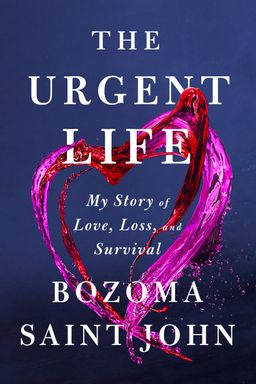
How do you live fully when life keeps breaking your heart? In The Urgent Life, Bozoma Saint John asks—and answers—that question through a searing memoir of love, loss, resilience, and spiritual awakening. Well-known as a marketing powerhouse at Netflix, Apple, and Uber, Saint John dives beneath her success story to explore how tragedy shaped her instincts for living with intention. Her core argument is that we must live not just the length of life but its width, echoing the Diane Ackerman quote on her epigraph: to occupy every moment rather than let it slip by.
The Heart of an Urgent Life
Saint John contends that urgency isn’t about rushing—it’s about presence. Losing her first love, Ben, to suicide, and later her husband Peter to cancer, alongside the death of her child Eve, forced her to confront time differently. Each loss amplified her awareness that tomorrow is not promised. To face fear and grief, she learned to act decisively, speak her truth, and appreciate the beauty woven through everyday existence. The book moves from tragedy to transformation, illustrating how urgency can become a spiritual compass that directs every choice.
Love, Grief, and Survival
At its core, Saint John’s story is a dialogue between love and loss. She falls deeply for two men—first Ben at Wesleyan University, a creative spirit who wrestled with mental illness, and then Peter, a white advertising executive she met in Spike Lee’s agency. Both relationships challenge her ideas of identity, race, and belonging. When Ben dies suddenly, Saint John learns that grief can be violent and transformative; when Peter dies years later, she discovers how to channel gratitude into action. Through these experiences, she redefines the meaning of survival—not merely enduring tragedy but allowing it to expand your capacity for love and empathy.
The Intersection of Identity and Resilience
Saint John writes from the intersection of many worlds: Ghanaian heritage and American upbringing, faith and corporate ambition, motherhood and loss. Her identity as a Black woman navigating predominantly white spaces deepens the book’s urgency. Whether facing subtle racism in professional settings or societal judgments around interracial love, she insists on inhabiting her truth without apology. The memoir mirrors the dual energy found in other modern Black narratives—unflinching sorrow balanced by fierce self-celebration (similar to works by Jesmyn Ward or Michelle Obama).
Faith, Signs, and Spiritual Awakening
Faith threads through every chapter. Raised in both Ghanaian tradition and Christian belief, Saint John weaves together stories of ancestors, spirits, and divine signs—from hearing God’s voice after losing her job to seeing Peter’s presence in a rainbow after his passing. These mystical encounters prompt her to believe that grief connects us to something larger. Living urgently means living spiritually, trusting unseen forces while acting boldly within the physical world.
Why It Matters
Saint John’s experiences remind you that urgency can follow heartbreak rather than precede it. Instead of letting trauma harden her, she uses it to soften—to claim gratitude, creativity, and emotional honesty. For anyone navigating loss or searching for purpose, her story offers a roadmap: face what breaks you, tell the truth without embellishment, and keep moving toward the dawn. In doing so, you learn to live not for longevity but for depth—to measure life, as she says, not by its length but by its width.