
Idea 1
Living as an Urban Monk in a Modern World
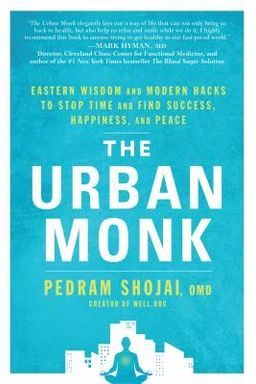
Have you ever felt like life is speeding up—your bills, your phone, your obligations—while you’re slowing down inside? In The Urban Monk, Dr. Pedram Shojai argues that in an age of constant motion, the ancient monastic wisdom of mindfulness, balance, and self-mastery isn’t a luxury—it’s the only way out. He contends that we’ve mistaken busyness for purpose and distraction for vitality. The result: stress, burnout, obesity, debt, loneliness, and a pervasive sense that something vital is missing.
Shojai’s central claim is that you don’t have to move to a monastery to find peace. You can do it right here in your apartment, your office, or even during your morning commute. By learning to live like an “Urban Monk,” you can rediscover energy, connection, meaning, and joy without retreating from modern life. The mission isn’t to renounce the world—it’s to wake up within it.
The Crisis of the Modern Householder
Shojai begins with a question familiar to anyone living in a city: “Why, with all our comforts and technology, do we feel so tired, rushed, anxious, and empty?” He sees the problem as a spiritual one. For centuries, monks across cultures have worked to master their bodies and minds, while householders—ordinary people with jobs and families—focused on survival. But now, survival is no longer the challenge; staying awake is. We’ve traded physical scarcity for spiritual poverty.
Instead of fleeing responsibility, the Urban Monk adapts the monk’s discipline, clarity, and mindfulness to everyday life. Shojai’s life embodies this synthesis: he’s a Taoist abbot, a doctor of Oriental medicine, a husband, and a father of two. His teaching draws from Buddhism, Taoism, modern neuroscience, and functional medicine. Each chapter tells the story of a person trapped by modern conditions—stress, stagnation, debt, or loneliness—and shows how simple, sensible transitions can restore equilibrium.
Bridging Ancient Wisdom and Modern Reality
Modern gurus often idolize asceticism—meditate for ten hours a day, eat nothing but kale, move to the Himalayas. But Shojai insists that enlightenment must occur where we live. As he tells his patients, “The monks renounced money, sex, and jobs. You have all three—so you need a different plan.” The Urban Monk strategy is based on mastering ten intertwined areas: stress, time, energy, sleep, movement, food, nature, community, money, and meaning. Together, these dimensions form the practical spiritual ecology of modern life.
The book moves through these ten gates systematically. Each chapter profiles a struggling modern archetype—Robert the overworked lawyer, Ashley the exhausted mom, Jessica the burned-out professional, or Natalie the indebted stylist—and uses their journeys to illustrate ancient lessons. For Robert, the cure for stress is not escape but presence; for Ashley, time mastery requires slowing down, not squeezing more in; for Jessica, energy begins with qi and balanced nutrition; for Natalie, abundance comes from purpose, not possessions.
Shifting from a Culture of Doing to a Practice of Being
A recurring theme in Shojai’s writing is the tyranny of modern efficiency. We measure life in productivity metrics: how many e-mails sent, calories burned, minutes saved. Yet we’re exhausted and disenchanted. Ancient traditions call this imbalance a loss of qi—life force. Without restoring it, no diet or time-management strategy will work. Shojai introduces the reader to qigong (energy work), mindful breathing, and simple pauses throughout the day. Even five minutes of intentional stillness can shift the nervous system from “fight or flight” into “rest and digest.”
He also reframes daily habits as spiritual rituals. Eating becomes an act of reverence: “Our plates are altars where life transforms into life.” Movement becomes kung fu—not just martial art but the spiritual discipline of “hard work.” Earning money becomes a practice of energetic stewardship, not greed. These small shifts bring the transcendent into the mundane. As Shojai writes, “We don’t need to ascend; we need to descend into our lives.”
From Individual Healing to Collective Renewal
Shojai’s philosophy extends beyond self-help into planetary ethics. Modern stress, obesity, and debt are not personal flaws—they’re symptoms of a sick society. Industrial farming poisons the food supply, consumerism drives anxiety, technology hijacks attention, and social isolation fractures communities. Healing ourselves means also healing the systems we participate in. Thus, an Urban Monk buys sustainably, supports local food, walks more than drives, listens more than speaks, and treats the world as a living web, not a marketplace.
Ultimately, The Urban Monk is a manual for integration: body and spirit, science and mysticism, solitude and service. It’s about becoming resilient in a chaotic world—not by trying to control it, but by mastering your reactions to it. As Shojai writes, “You can’t run to peace—you must bring peace where you stand.” Every breath, meal, and conversation becomes a chance to practice awareness. That’s the paradoxical heart of the Urban Monk’s path: by grounding deeply in the ordinary, you awaken the extraordinary.