
Idea 1
Escaping the Downward Spiral: How Neuroscience Can Lift You Up
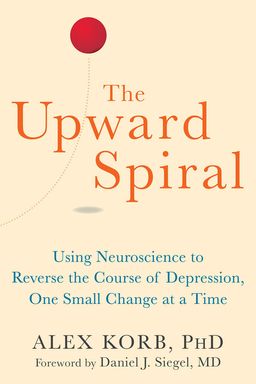
Why do some people seem to spiral downward into stress, anxiety, and exhaustion—while others manage to pull themselves out and feel joy again? In The Upward Spiral, neuroscientist Alex Korb asks and answers that life-changing question. His central argument is that depression isn’t a moral failure or a purely psychological affliction—it’s a product of how specific brain circuits interact, and crucially, how small changes in your daily life can reshape these circuits to reverse the spiral.
Korb contends that depression is sustained by loops between brain regions like the prefrontal cortex, amygdala, anterior cingulate, and striatum. Negativity and inactivity feed neural patterns that deepen hopelessness. But—and here’s the hopeful twist—the same feedback system can spiral upward. Small, well-chosen actions—like moving your body, improving your sleep, practicing gratitude, or connecting with others—create measurable brain changes that amplify motivation and joy.
The Science of Spirals
Korb uses accessible neuroscience to frame depression as a “pattern of activity,” rather than an incurable state. The limbic system (your emotional brain) and the prefrontal cortex (your thinking brain) interact like dance partners—if one stumbles, the other follows. When the prefrontal cortex loses its ability to calm an overactive limbic system, emotions like anxiety and guilt become overwhelming. The striatum then reinforces habits that comfort you temporarily (like overeating or procrastination), wiring the brain even more deeply into despair. This is the downward spiral.
But Korb flips this model into empowerment: once you understand these brain circuits, you can intentionally influence them. Just as negative behaviors reinforce negative wiring, positive behaviors—however small—reinforce neural circuits that lead toward resilience and contentment. Walking outside, smiling, taking deep breaths, or recalling a happy memory activates neurotransmitters like serotonin, dopamine, and endorphins. Over time, these biochemical shifts rewire the very circuits that depression weakened.
Why Tiny Steps Matter More Than Big Leaps
A recurring message in The Upward Spiral is that you don’t need an overhaul to feel better. In fact, Korb argues that grand resolutions often fail because a depressed brain simply doesn’t have the energy or focus for sweeping change. Instead, a single positive action—even one that seems insignificant—can nudge the brain’s chemistry in a better direction.
For instance, exercise releases endorphins and serotonin, which enhance mood and increase energy. Better sleep resets the limbic system and improves emotional regulation. Expressing gratitude raises dopamine, improving motivation. Each small step feeds the next, forming a reinforcing feedback loop—an upward spiral—toward wellness. (This echoes James Clear’s idea in Atomic Habits that incremental improvement compounds into transformation.)
Bridging Science and Daily Life
Korb’s framework connects dry neuroscience with relatable human experience. He vividly illustrates brain processes by describing relatable stories, such as feeling paralyzed by indecision before a dinner party or craving solitude during depression—only to realize isolation worsens the mood. His anecdotes show how cognitive patterns, neurotransmitters, and habits interact moment-to-moment.
To make this practical, Korb organizes the book into two parts. Part 1 explains how depression traps the brain in negative cycles—through anxiety, pessimism, rumination, and habitual coping. Part 2 then demonstrates tools for reversing these cycles: exercise, decision-making, sleep improvement, biofeedback, gratitude, social connection, and therapy. These aren’t self-help clichés; each one is mapped to specific brain systems. For example:
- Exercise increases BDNF (a growth factor that strengthens neural connections).
- Decision-making activates the prefrontal cortex, restoring motivation and clarity.
- Gratitude lights up dopamine circuits and suppresses worry centers.
- Social interaction boosts oxytocin, reducing anxiety and loneliness.
From Broken Loops to Empowerment
At its heart, The Upward Spiral is about restoring agency. Depression often convinces you that effort is pointless and emotions are beyond control. Korb dismantles that illusion with biology: every action sends ripples through neural networks that can gradually shift mood and motivation. Even reading about how the brain works provides a faint dopamine reward—reminding you that understanding itself is a step out of helplessness.
“You can’t always change where you are, but you can change where you’re going.”
Korb’s guiding principle encapsulates his message: even the smallest movement—physical or emotional—begins to reorient the brain’s trajectory.
By combining psychology, neuroscience, and practical exercises, Korb empowers readers to treat their minds as flexible systems—not static prisons. Whether you start by walking around the block, calling a friend, or writing a small thank-you note, each intentional act changes brain chemistry enough to make the next step easier. That’s the essence of the upward spiral: hope made visible in the wiring of your brain.